


Custom Landscape Design in St. Petersburg, FL: What to Know
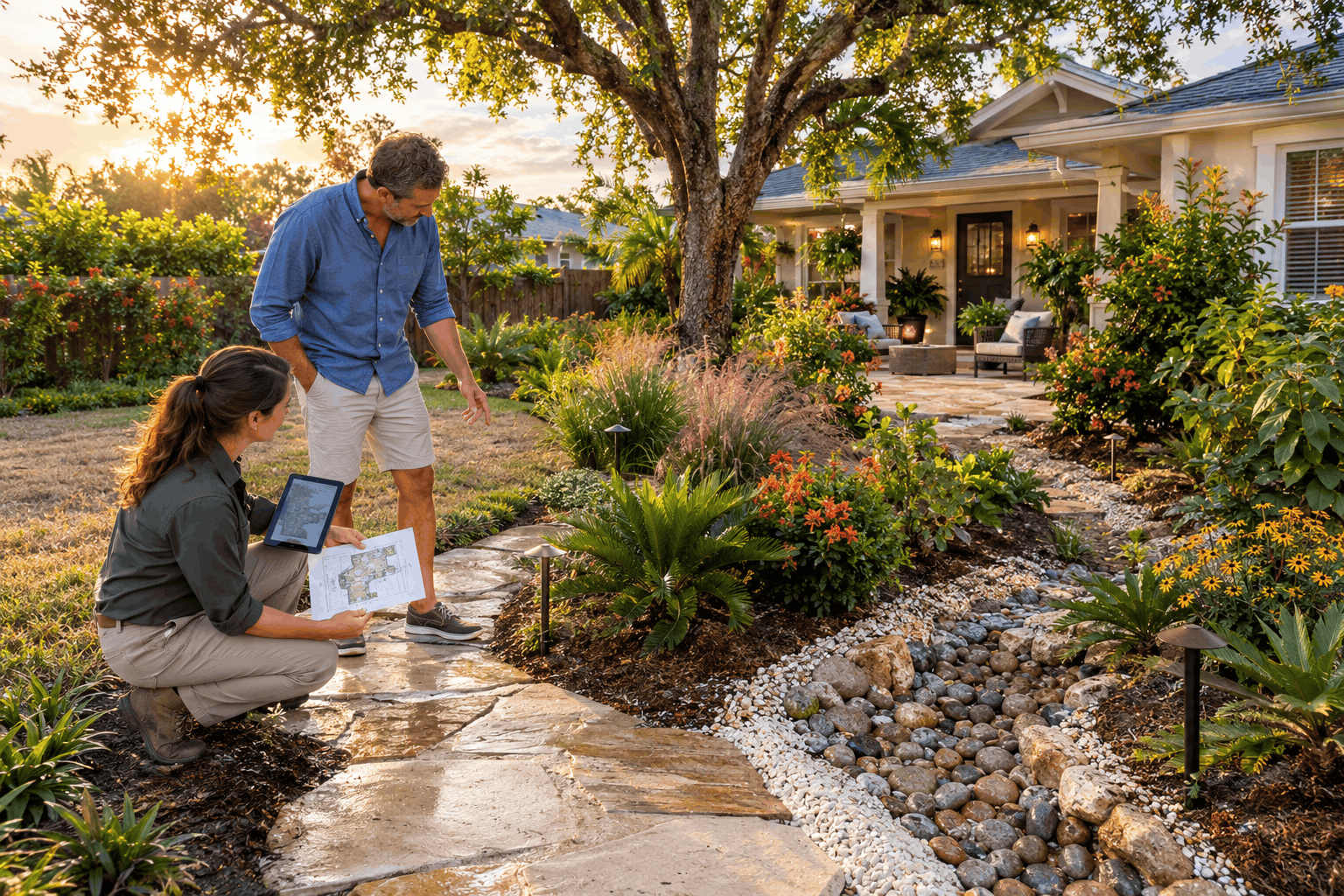
A homeowner buys a bungalow near the water and pictures a lush, green yard. By August the lawn has brown patches, the flower beds are washing into the driveway after afternoon storms, and the water bill keeps climbing. This is a very common first year in Florida.
That pattern explains the growing interest in Custom Landscape Design in St. Petersburg, FL. Instead of copying a generic plan, a custom design starts with the property itself: its soil, sun, drainage, and how the people living there actually use the space.
This guide explains what custom design involves, why it matters on the Gulf Coast, and how homeowners can approach it. It also covers real-world examples and answers common questions.
Why Generic Landscaping Struggles on the Gulf Coast
Much of the standard landscaping advice online was written for cooler, wetter, or less sandy places. Florida's west coast follows different rules.
St. Petersburg sits mostly in USDA hardiness zones 9b and 10a. Summers bring heavy afternoon rain, while spring can be surprisingly dry. Many neighborhoods have sandy soil that drains fast and holds few nutrients.
Homes near Tampa Bay or the Gulf also deal with salt spray and wind. A plant that thrives in Orlando may struggle a few blocks from the water. Add hurricane season, which runs June through November, and the margin for error shrinks quickly.
A cookie-cutter plan ignores these details. A custom plan is built around them.
What Custom Landscape Design Actually Involves
Custom design is less about fancy features and more about fit. Good designers usually begin by studying the site before suggesting a single plant.
That early work often includes:
-
Mapping sun and shade at different times of day
-
Checking where water collects or runs off during storms
-
Testing soil type and pH
-
Noting existing trees, utilities, and slopes
-
Talking with homeowners about how they use the yard
From there, the plan takes shape. It might group plants by water needs, a principle the University of Florida's Florida-Friendly Landscaping program calls "right plant, right place." It might also add hardscape elements such as walkways, patios, or stone beds to handle drainage and cut down on maintenance.
The key difference is intent. Every choice in a custom plan solves a specific problem on that property.
The Real Benefits of a Tailored Approach
Lower Water Use
Grouping plants by their water needs means irrigation zones can run on different schedules. Drought-tolerant beds stay drier, while thirstier areas get what they need.
That matters in a region where watering restrictions are common. A well-planned yard often stays healthy on less water than a traditional lawn-heavy layout.
Better Storm Resilience
Summer downpours can flood low spots and wash soil away. Custom designs often include swales, rain gardens, or gravel channels that guide water where it can soak in.
Plant choices matter too. Native trees like live oak and sabal palm usually handle high wind better than many imported species.
Less Maintenance Over Time
Many homeowners assume a beautiful yard requires constant work. In reality, a thoughtful design often reduces weekly chores.
Native plants like coontie, firebush, and muhly grass adapt well to local conditions. They need less fertilizer, fewer pesticides, and less frequent trimming once they're established.
More Usable Outdoor Space
A yard is more than something to look at. Families want shaded seating, play areas, room for a grill, or a quiet corner for morning coffee.
Custom planning turns those wishes into a layout. The result feels like an extension of the home rather than a strip of grass to mow.
In short: a tailored plan saves water, handles storms better, cuts upkeep, and makes the yard more enjoyable to use.
The Growing Role of Stone and Hardscape
Stone has become a favorite material across Pinellas County. It doesn't wash away like some mulches, it doesn't need watering, and it works well with coastal styles.
Homeowners often use river rock, crushed shell, limestone, or natural pavers. A dry creek bed made of stone can look decorative while quietly moving stormwater away from the foundation.
This trend isn't limited to one city. Demand for Stone Landscaping Services in Largo, FL and nearby communities reflects the same practical goals: fewer weeds, less upkeep, and better drainage. Stone also pairs naturally with drought-tolerant plants, which makes it a common feature in custom plans.
Still, stone needs careful planning. Too much of it in full sun can raise surface temperatures near the house. Designers often balance rock with shade trees and planted beds to keep things comfortable.
Real-World Examples From Local Yards
The Waterfront Bungalow
Picture a small home in Old Northeast with a front yard that floods after every storm. A custom plan replaces part of the lawn with a shallow rain garden filled with native grasses and wildflowers.
The water now has somewhere to go. The yard also draws butterflies and stays greener through the dry spring months.
The Busy Family Backyard
A family in a mid-century neighborhood wants space for kids, a dog, and weekend cookouts. Their old yard was mostly patchy St. Augustine grass.
The new design keeps a durable turf area for play, adds a paver patio, and surrounds the space with low-maintenance shrubs. Mowing time drops, and the yard actually gets used.
The Retiree's Low-Effort Garden
A retired couple wants color without constant weeding. Their designer suggests stone-lined beds with firebush, coreopsis, and dwarf yaupon holly.
After the first year, the garden mostly takes care of itself. A light trim each season keeps it neat.
Choosing the Right Professional
Homeowners exploring Custom Landscape Design in St. Petersburg, FL often start by looking at local portfolios. Photos of finished projects show whether a designer's style matches what the homeowner has in mind.
It also helps to ask how a designer handles drainage, plant selection, and long-term care. Someone who knows local conditions will usually bring up salt tolerance, sandy soil, and storm planning without being asked.
Many regional firms, including OCD Landscape & Lawns LLC, work across several Pinellas communities. That kind of local experience helps them spot problems that a newcomer to the area might miss.
Most people pick based on price alone. The better approach is to compare how well each designer understands the property.
Final Thoughts
A great Florida yard rarely happens by accident. It comes from understanding the climate, the soil, and the people who will spend time outdoors.
Custom Landscape Design in St. Petersburg, FL gives homeowners a way to work with local conditions instead of fighting them. The payoff includes lower water bills, fewer storm headaches, and outdoor space that fits daily life.
For anyone planning a change, a good next step is to walk the yard after a heavy rain. Note where water pools, where plants struggle, and where the family naturally gathers. Those observations make a strong starting point for any design conversation.
Frequently Asked Questions
How much does custom landscape design cost?
Costs vary widely based on yard size, materials, and project scope. A design plan alone may cost a few hundred to several thousand dollars, while full installation often costs much more.
What plants grow best in St. Petersburg?
Native and Florida-friendly plants usually perform best. Popular options include coontie, firebush, muhly grass, sea grape, saw palmetto, and sabal palm.
Is stone landscaping good for Florida yards?
Yes, in many cases. Stone doesn't wash away like mulch, needs no water, and helps with drainage. It works best when paired with shade and plants to limit heat buildup.
When is the best time to install a new landscape in Florida?
Many experts suggest late fall through early spring. Cooler temperatures reduce plant stress, though the start of the rainy season can help new plants root with less watering.
How long does a landscape design project take?
Small projects may take a few weeks from design to finish. Larger yards with hardscaping, irrigation changes, or permits can take one to three months.

 English
 Arabic
 French
 Portuguese
 Deutsch
 Turkish
 Dutch
Dutch
 Italiano
 Russian
 Romaian
 Portuguese (Brazil)
 Greek
Greek
 Bengali