


Rodent Control in Houston, TX: What Homeowners Should Know
It often starts with a faint scratching sound in the ceiling late at night. A few days later, someone finds a chewed corner on a cereal box or small dark droppings behind the stove. For many families, that is the moment rodent control in Houston, TX stops being something they've only heard about.
Houston's warm, humid climate makes it one of the more rodent-friendly cities in the country. Mild winters, heavy rain, dense tree cover, and steady growth give rats and mice plenty of food, water, and shelter all year.
Why Rodents Thrive in the Houston Area
Most residential problems in the region come from three species: roof rats, Norway rats, and house mice. Each one behaves a little differently, which affects how an infestation shows up.
Roof rats are especially common in Houston. They are strong climbers that move along fences, tree branches, and utility lines. They often nest in attics and wall voids, which is why the first sign is usually noise from above.
Norway rats stay closer to the ground. They burrow under slabs, sheds, and woodpiles and tend to enter through gaps near foundations or plumbing. House mice are smaller and need very little space. An opening about the size of a dime can be enough.
Weather plays a big role too. After major storms or flooding, rodents often leave flooded burrows and look for higher, drier ground. That ground is frequently a garage, crawl space, or attic. Cooler fall and winter nights also push more of them indoors.
More Than Just a Nuisance
Many people treat rodents as an annoyance, but the risks go further than that. Rats and mice can contaminate food and surfaces with droppings and urine, and they can spread bacteria linked to illnesses such as salmonellosis and leptospirosis.
Property damage is another real concern. Rodents chew constantly to keep their teeth in check, and electrical wiring is a common target. Chewed wires in attics and walls can create a fire hazard that goes unnoticed for months.
Insulation also takes a hit. Nesting rodents shred and soil it, which can reduce energy efficiency. In a city where air conditioning runs for much of the year, that matters.
What Effective Rodent Control Usually Involves
Pest professionals generally agree that traps and bait alone rarely solve the problem for good. Lasting rodent control in Houston, TX tends to combine removal with prevention, so new rodents don't simply replace the old ones.
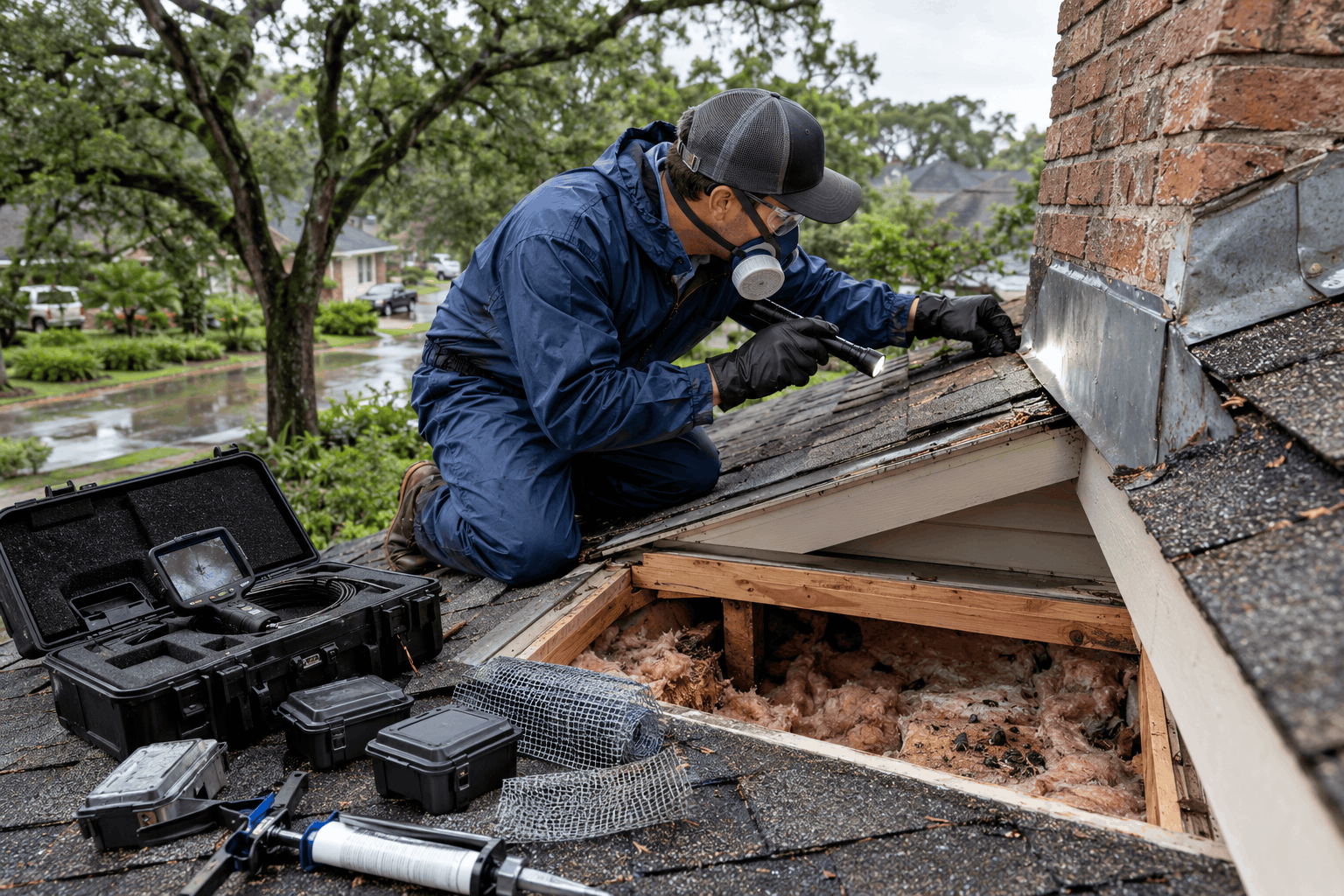
Inspection is usually the starting point. Technicians look for entry points, travel paths, droppings, rub marks, and nesting areas. Roofline gaps, AC line openings, vents, and spaces around garage doors are frequent problem spots in local homes.
Exclusion is often the most valuable part of the process. This means sealing openings with durable materials like steel mesh, hardware cloth, or metal flashing. Rodents can chew through foam, wood, and plastic, so those materials alone don't hold up well.
Sanitation and yard care round things out. Trimming tree limbs away from the roof, storing pet food in sealed containers, and clearing clutter near the house all make a property less inviting.
The Benefits of Getting Ahead of the Problem
Early action usually means a smaller, simpler job. Rodents breed quickly, and a pair of mice can turn into a sizable population within a few months. Catching activity early limits both damage and cleanup.
Prevention also protects a home's value. Buyers and inspectors notice signs of past infestations, especially chewed wiring or damaged insulation. A well-sealed home tends to raise fewer red flags.
Peace of mind is a benefit people mention often, too. Not lying awake listening for movement in the walls makes a real difference in daily life.
Real-World Situations Homeowners Run Into
Picture a family in an older Houston neighborhood with big live oaks shading the roof. Branches touch the shingles, giving roof rats an easy bridge into a small gap near the eaves. The fix in cases like this often involves both trimming trees and sealing the roofline.
Another common case involves newer suburban homes. Construction nearby can disturb rodent habitats and push them into finished houses. Homeowners are often surprised, assuming a new build would be pest-proof.
Rodents also rarely arrive alone in terms of household pest issues. Many homes dealing with rats or mice also see cockroaches, since both pests are drawn to the same food, moisture, and clutter. Residents just west of the city often look into roach control in Katy, TX alongside rodent work for this reason.
Restaurants and small businesses face similar challenges on a larger scale. Food storage areas, dumpsters, and loading docks need regular monitoring, and a single sighting can affect a business's reputation and health inspections.
Choosing the Right Kind of Help
Some homeowners handle minor issues on their own with snap traps and basic sealing. Larger or recurring infestations usually call for a licensed professional who understands local species and building styles.
When comparing providers, it helps to ask whether they focus on exclusion, what materials they use for sealing, and whether follow-up visits are included. Local companies such as AJ Pest Control Services are among the many in the area that handle both rodent work and related services like roach control in Katy, TX.
Whoever a homeowner chooses, the goal should be a long-term solution rather than a short-term fix. A clear plan, honest explanations, and attention to entry points tend to matter more than any single product.
Frequently Asked Questions
What are the most common signs of rodents in a home?
Droppings, gnaw marks, scratching noises at night, and greasy rub marks along walls are the most common signs. Some people also notice a musty odor or shredded nesting material in attics or cabinets.
Why are roof rats so common in Houston?
The area's mature trees, mild winters, and humid climate suit roof rats well. They climb easily and often move from trees and power lines straight into attics through small gaps.
How small of a hole can a mouse or rat fit through?
A house mouse can squeeze through an opening about the size of a dime. Young rats can fit through gaps roughly the size of a quarter, so even small cracks are worth sealing.
How long does it take to get rid of rodents?
Small infestations may clear up within a week or two once traps are set and entry points are sealed. Larger or long-standing problems can take several weeks and may need follow-up checks.
Can rodents and cockroaches show up at the same time?
Yes, and it happens often. Both pests are attracted to food scraps, moisture, and clutter, so conditions that invite one usually invite the other.

 English
 Arabic
 French
 Spanish
 Portuguese
 Deutsch
 Turkish
 Italiano
 Russian
 Romaian
 Portuguese (Brazil)
 Greek
Greek
 Bengali