


How Long Do Carbon Monoxide Detectors Last? Understanding Lifespan and Replacement Signs
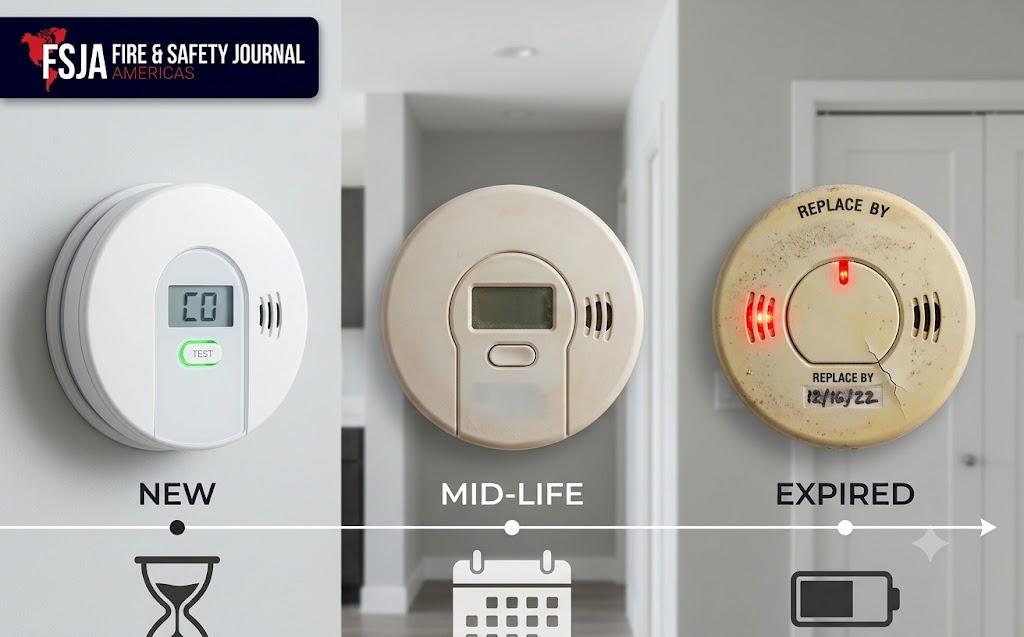
Carbon monoxide is often called a silent threat because it is colourless, odourless and impossible to detect without a suitable monitoring device. A carbon monoxide detector provides an important layer of protection by monitoring the surrounding air and warning occupants when dangerous concentrations of the gas are detected. However, installing a detector is not a one-time safety measure. Like other electronic safety devices, carbon monoxide detectors have a limited service life.
Understanding how long do Carbon monoxide detectors last is important for homeowners, landlords, facility managers and anyone responsible for maintaining a safe indoor environment. A detector can appear clean and functional while its sensing components are gradually approaching the end of their useful life. Manufacturers therefore provide service-life recommendations, and those recommendations should be treated as part of the detector's safety requirements.
The exact lifespan varies according to the model, manufacturer, sensor technology, operating conditions and product design. Many household carbon monoxide detectors are designed to provide protection for several years, with manufacturers commonly specifying a service life of around five to ten years. The manufacturer's instructions for the specific model should always take priority over a general lifespan estimate.
Why Carbon Monoxide Detectors Have a Limited Lifespan
A carbon monoxide detector relies on an internal sensing system to identify carbon monoxide in the air. Depending on the product, this may involve an electrochemical sensor or another sensing technology designed for CO detection.
Over time, the sensor can age. Electronic components can also deteriorate, and environmental exposure may affect the detector's performance. This means that replacing the batteries alone does not necessarily extend the detector's complete service life.
A detector may still produce a test sound when its test button is pressed even though the sensor is approaching the end of its specified operating period. This distinction is important: testing the alarm function is not the same as proving that the sensor will remain reliable indefinitely.
When considering how long do Carbon monoxide detectors last, users should therefore look beyond whether the device still makes a sound during testing. The manufacturer's stated replacement interval is one of the most important factors.
What Is the Typical Service Life?
There is no universal expiration period that applies to every carbon monoxide detector. Different models can have different specifications.
For many residential products, the expected service life is commonly in the range of approximately five to ten years. Some products may have a shorter or different manufacturer-specified lifespan. The correct replacement date should be determined from the product documentation, label or manufacturer's guidance.
The age of the detector should generally be measured from the date specified by the manufacturer rather than simply from the date when a battery was last installed.
For example, imagine a detector was installed in 2018 but contains a label indicating a replacement date based on its manufacturing or activation information. Replacing its batteries in 2026 does not make the sensing system equivalent to a new detector.
This is why recording installation dates and checking product labels can make household safety maintenance easier.
Signs That a Carbon Monoxide Detector May Be Nearing the End of Its Life
A detector does not always fail dramatically when it reaches the end of its service life. Some models provide specific end-of-life warnings, while others require the owner to monitor the replacement date.
Several warning signs deserve attention.
An End-of-Life Warning
Many modern detectors are designed to communicate when they have reached the end of their intended service period. The warning may involve a periodic chirp, flashing indicator or message on a display, depending on the model.
An end-of-life signal should not be confused with an actual carbon monoxide alarm. The manufacturer's manual should be consulted to determine what a particular sound or indicator means.
If the detector is giving an end-of-life warning, replacing it is generally more appropriate than repeatedly changing its battery in an attempt to silence the warning.
The Detector Has Reached Its Recommended Replacement Date
This is one of the clearest reasons for replacement.
Even if the detector appears normal, its sensing technology has a defined service period. Once the manufacturer states that the unit should be replaced, continuing to use it indefinitely is not a reliable safety strategy.
Keep a record of the installation or replacement date so that the detector does not remain in service simply because nobody remembers when it was installed.
Repeated Fault or Error Warnings
A detector that repeatedly reports a fault may have an internal problem. Depending on the model, this could relate to the sensor, electronics, power supply or another component.
If the manufacturer's troubleshooting instructions do not resolve the problem, replacing the detector may be necessary.
Physical Damage
Cracks, broken housings, signs of water exposure, corrosion or other physical damage can compromise a detector.
A damaged detector should not be considered reliable simply because its indicator light still operates. The safest approach is to follow the manufacturer's instructions regarding damaged equipment and replace the unit when required.
When Should You Replace a Carbon Monoxide Detector?
The most important replacement trigger is the manufacturer's stated service life.
However, several other circumstances can justify replacement before the normal replacement date.
A detector may need to be replaced when:
- It has reached its manufacturer-specified end of service life.
- It displays an end-of-life warning.
- It repeatedly indicates an internal fault.
- It has suffered significant physical damage.
- It has been exposed to conditions outside its specified operating range.
- Its manufacturer recommends replacement following a particular failure or condition.
- The product cannot be tested or maintained according to its instructions.
The answer to how long do Carbon monoxide detectors last therefore cannot be reduced to a single number. A detector's calendar age matters, but condition, product specifications and manufacturer guidance matter as well.
Why Battery Replacement Does Not Reset the Detector's Age
One of the most common misunderstandings about carbon monoxide detectors is that installing a new battery effectively renews the entire device.
It does not.
A battery supplies electrical power. It does not replace the sensing element or other internal components that may have aged over time.
For instance, a detector that has been operating for eight years may continue to function after receiving a new battery. That does not necessarily mean its sensor has another eight years of expected service.
Battery replacement should therefore be treated as routine maintenance rather than a way of extending the detector beyond its intended service life.
How to Check the Age of Your Detector
If you are unsure whether a detector needs replacement, start with the device itself.
Look for:
- A manufacturing date.
- An installation or activation date.
- A replacement-date label.
- A model number.
- An end-of-life marking.
- Instructions printed on the back or side.
- Information in the original product documentation.
If the detector is connected to a household safety system, documentation from the installer may also help identify when the equipment was installed.
When the age cannot be established and the detector appears to be significantly older than the manufacturer's expected service period, replacing it with a current, suitable model can be a sensible safety measure.
Does a Test Button Prove the Detector Is Still Good?
No.
The test button is designed to check specific functions of the detector, such as its alarm sound and electronic operation. It does not necessarily simulate every condition involved in detecting carbon monoxide or certify that the sensor will continue operating throughout its expected service period.
Users should follow the manufacturer's testing instructions and understand what the test actually verifies.
A detector that passes a routine test should still be replaced when it reaches its stated end of service life.
Practical Example: An Older Detector in a Family Home
Consider a family that installed carbon monoxide detectors when they moved into their home many years ago. The detectors have never produced a carbon monoxide alarm, and the family changes the batteries whenever the units chirp.
One detector begins producing an occasional warning sound. The family replaces the battery, but the warning returns.
Instead of repeatedly changing batteries, they check the manufacturer's instructions and discover that the detector has reached its specified service life.
The correct response is to replace the detector rather than assume that another battery will restore long-term reliability.
This example illustrates why knowing how long do Carbon monoxide detectors last is an important part of household safety planning.
Keeping Track of Replacement Dates
A simple replacement schedule can prevent an old detector from being forgotten.
After installing a new unit, record:
- The installation date.
- The model number.
- The manufacturer's stated service life.
- The expected replacement date.
- Any relevant maintenance information.
The date can be written in a household maintenance record or stored digitally.
For properties with multiple detectors, keeping a list of each unit can be particularly useful. Instead of waiting for a detector to produce an end-of-life warning, occupants can identify upcoming replacements in advance.
What About a Detector That Alarms?
An actual carbon monoxide alarm should always be taken seriously. Users should follow the detector manufacturer's emergency instructions and local emergency guidance.
Do not assume that an alarm is simply caused by the detector being old.
An ageing detector may need replacement, but carbon monoxide can also be produced by fuel-burning appliances, vehicles, generators and other sources. If a detector indicates dangerous carbon monoxide levels, occupants should respond according to established safety procedures rather than disabling the device.
A detector's age should never be used as a reason to dismiss an alarm.
FAQs
1. Can a carbon monoxide detector last longer if it is rarely used?
Limited alarm activity does not necessarily extend the manufacturer's specified service life. The sensing components can age with time, so the replacement interval provided for the specific product should still be followed.
2. Should I replace a carbon monoxide detector if I cannot find its manufacture date?
If the detector's age cannot be established and there is no reliable documentation showing that it remains within its specified service period, replacing it with an appropriate current model can reduce uncertainty. Check the manufacturer's guidance before making the decision.
3. Does an end-of-life chirp mean there is carbon monoxide in the room?
Not necessarily. An end-of-life signal is different from an alarm indicating detected carbon monoxide. Because sound patterns vary by manufacturer and model, consult the product instructions to identify the meaning of a particular signal.
4. Is an old carbon monoxide detector safe if its batteries are still working?
A working battery does not prove that the detector's sensor remains within its intended service life. If the unit has reached the manufacturer's replacement date or is showing an end-of-life or fault indication, it should be replaced according to the manufacturer's instructions.
Conclusion
Carbon monoxide detectors are an important part of indoor safety, but they are not designed to operate indefinitely. Their sensors and internal components have a defined service life, which varies between products and manufacturers. Understanding how long do Carbon monoxide detectors last helps property owners recognise when routine maintenance is no longer enough and replacement is required.
A detector should be monitored for its age, manufacturer-specified replacement date, end-of-life warnings, fault indicators and physical condition. Regular testing and battery maintenance remain important, but they do not reset the detector's service life.
The most reliable approach is straightforward: identify the model, check the manufacturer's stated lifespan, record replacement dates and replace the detector when its service period ends or when the manufacturer recommends earlier replacement. A carbon monoxide detector is a safety device, and maintaining it properly is just as important as installing it in the first place.
Fire & Safety Journal Americas supports practical fire and life-safety awareness by helping readers understand the equipment, procedures and maintenance practices that contribute to safer homes and workplaces.

 English
 Arabic
 French
 Spanish
 Portuguese
 Deutsch
 Turkish
 Dutch
Dutch
 Italiano
 Russian
 Romaian
 Portuguese (Brazil)
 Bengali