


How Professional Oil Change Services Help Protect Your Engine
Can an oil change really protect my engine?
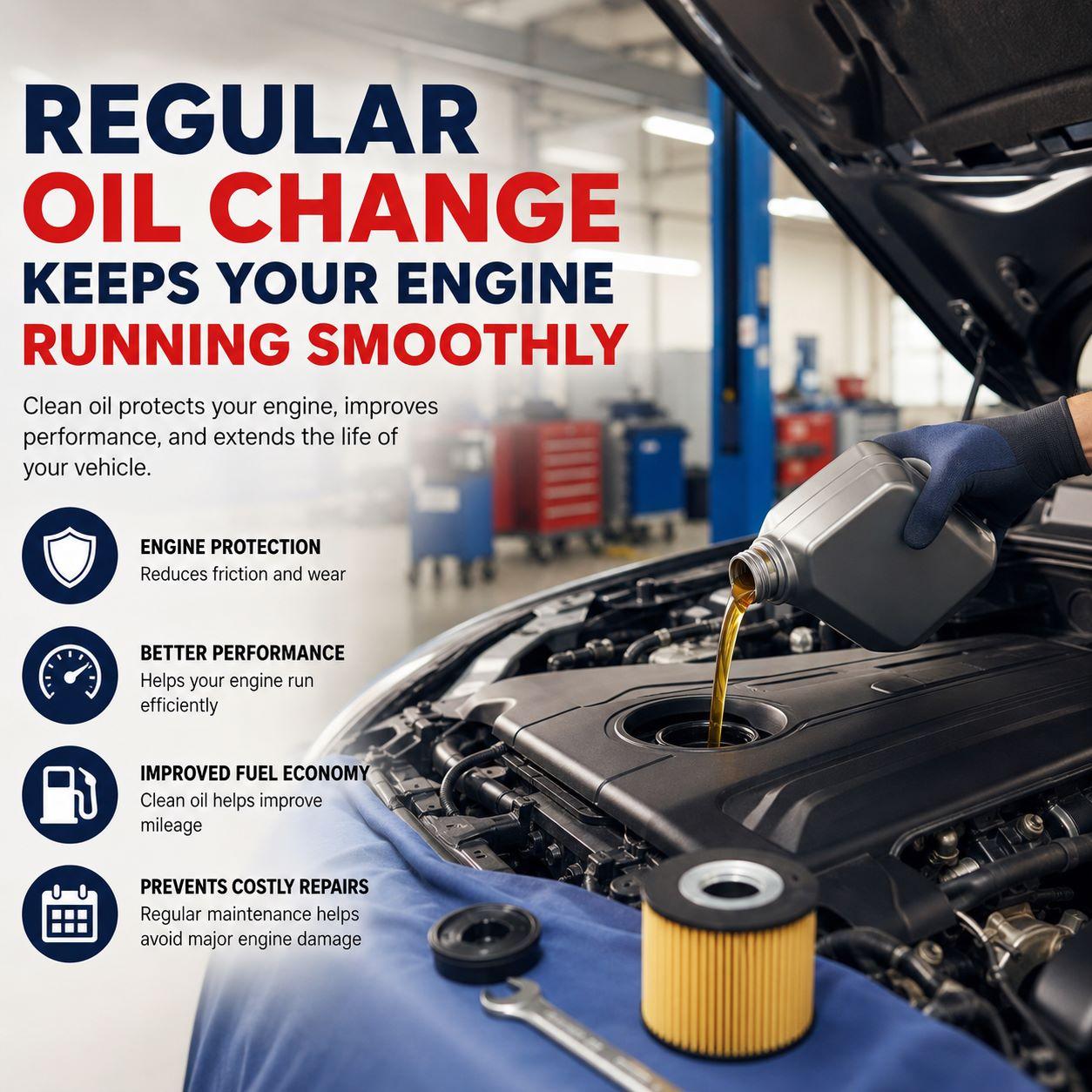
Yes. Engine oil creates a lubricating layer between moving components, helping reduce friction and heat during operation. Professional Oil Change services replace degraded oil and help ensure the engine receives the correct amount and specification of oil required for proper operation.
Inside a running engine, numerous components move at high speed while producing significant heat. Without adequate lubrication, metal surfaces can experience excessive friction and wear.
Engine oil helps reduce that contact while also performing several other important functions.
How does engine oil protect internal components?
Engine oil circulates through the engine as it operates. It reaches various components and helps lubricate areas where friction occurs.
Some of its important functions include:
- Lubrication: Oil reduces friction between moving engine components.
- Heat management: Oil can carry heat away from certain internal components.
- Contaminant control: Oil holds particles and contaminants so they can be removed through maintenance.
- Corrosion protection: Proper lubrication can help protect internal surfaces.
- Sealing support: Oil contributes to the seal between certain engine components.
Over time, however, engine oil becomes exposed to heat, combustion byproducts, dirt, and other contaminants. Its condition gradually changes.
That is why replacing oil according to the manufacturer's maintenance schedule matters.
What happens to oil as it gets older?
Oil does not remain in the same condition indefinitely. Repeated exposure to engine heat and contaminants can affect its performance.
As oil becomes degraded, it may become darker or contaminated. However, color alone is not a reliable way to determine whether oil needs to be replaced. The correct service interval should be based on the manufacturer's recommendations and the vehicle's operating conditions.
Certain driving habits can also place additional demands on engine oil. Frequent short trips, heavy traffic, towing, extreme temperatures, and extended idling may affect maintenance requirements.
If your vehicle is frequently driven under demanding conditions, check the manufacturer's guidance for the appropriate service schedule.
Why should the oil filter be replaced?
The oil filter plays an important role by trapping contaminants that circulate through the lubrication system. Over time, the filter can become loaded with debris.
Replacing the filter during an oil service allows the engine to receive clean oil through a properly maintained filtration system.
A basic oil service may therefore involve several steps:
- Confirm the correct oil specification.
- Drain the existing engine oil.
- Replace the oil filter when required.
- Install the recommended amount of fresh oil.
- Check the oil level.
- Inspect for visible leaks.
- Reset the maintenance reminder when applicable.
The exact process can vary depending on the vehicle.
Professional service can also provide an opportunity to identify other issues. A technician may notice fluid leaks, worn components, low fluid levels, or maintenance items that need attention.
This does not mean every oil change should result in additional repairs. In fact, a useful maintenance experience should clearly distinguish between routine service and actual problems that require attention.
Vehicle owners can also help protect their engines by checking the oil level between services. Some newer vehicles have electronic oil-level monitoring, while others use a traditional dipstick.
If the oil level is consistently low, adding oil may temporarily restore the level, but it does not address the reason for the loss. Repeated low oil levels can indicate a leak or oil consumption issue that should be investigated.
Regular oil maintenance is therefore more than simply replacing a fluid. It is one part of a larger strategy for maintaining the engine and identifying potential problems before they become more serious.
FAQ
Does engine oil reduce friction?
Yes. Engine oil creates lubrication between moving components, helping reduce friction and wear during normal engine operation.
Why is an oil filter important?
The filter helps capture contaminants circulating through the engine oil. Replacing it at the appropriate interval supports the vehicle's lubrication system.

 English
 Arabic
 French
 Spanish
 Portuguese
 Deutsch
 Turkish
 Dutch
Dutch
 Italiano
 Romaian
 Portuguese (Brazil)
 Greek
Greek
 Bengali