


What Is Commercial HVAC, and How Is It Different From Residential Systems?
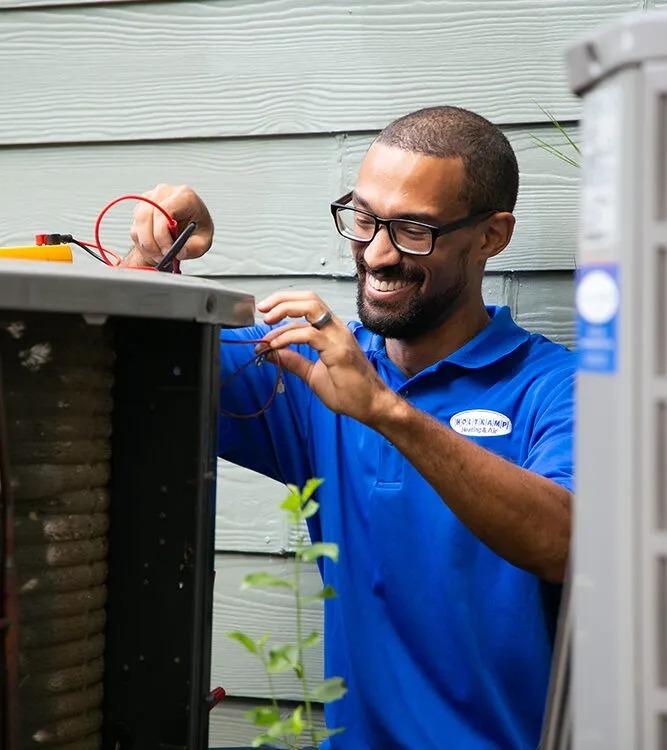
A restaurant owner and a homeowner might both call it "the AC," but the system cooling a five-thousand-square-foot dining room has almost nothing in common with the one cooling a three-bedroom house. Different equipment, different maintenance schedules, different failure points, and very different consequences when something breaks. A residential system going down means an uncomfortable night. A commercial system going down can mean lost revenue, spoiled inventory, or a business that has to close its doors for the day. Understanding what actually separates these two categories matters, especially for business owners who assume their building's system works the same way their home does.
Scale Changes Everything
The most obvious difference is size, but it goes deeper than just a bigger unit. Commercial spaces often have varying temperature needs across different zones, a server room that needs constant cooling, a retail floor with heavy foot traffic, an office area with different occupancy patterns throughout the day. Residential systems are built to condition one relatively uniform space. Commercial systems are engineered to manage multiple zones simultaneously, often with completely different requirements running at the same time.
Where the Equipment Actually Lives
Residential AC units typically sit beside the house, tucked into a side yard or backyard. Commercial systems are usually mounted on the roof, in what's known as a rooftop unit, or packaged system. This placement isn't arbitrary. Rooftop placement saves valuable interior and ground-level space in a commercial building, keeps noise away from customers and employees, and allows for easier access during maintenance without disrupting daily business operations.
Ductwork Built for a Different Kind of Space
Ductwork in a home is designed around a relatively predictable layout: bedrooms, a living room, a kitchen. Commercial buildings often require ductwork engineered around open floor plans, high ceilings, and spaces that may be reconfigured over time as tenants change or businesses expand. Commercial HVAC systems are typically designed with more flexibility built in, anticipating that the space behind those walls might look completely different in five years.
The Systems Run Longer and Harder
A home's HVAC system might run heavily during peak summer and winter months but ease off during milder seasons. Many commercial spaces run their systems nearly continuously, especially businesses with extended hours, large occupancy, or equipment that generates additional heat, like commercial kitchens or server rooms. That near-constant operation puts significantly more wear on commercial equipment, which is why it's built with heavier-duty components designed to handle that load.
Maintenance Needs Are More Frequent and More Complex
Because commercial systems work harder and often serve more people, maintenance can't be an afterthought. A single point of failure in a large commercial system can affect an entire building, not just one household. Routine maintenance for commercial HVAC typically happens more frequently than the standard biannual check most homeowners schedule, and it often involves inspecting multiple units, zones, and components rather than a single system.
Energy Efficiency Operates on a Different Scale
Energy costs for a commercial building can be a significant line item in monthly operating expenses, which makes efficiency a much bigger priority than it typically is for a single household. Many commercial systems now include advanced controls, zoning capabilities, and monitoring tools that allow building managers to track performance and catch inefficiencies before they become costly. These tools are far less common, and often unnecessary, in a typical residential setup.
Regulations and Codes Are Stricter
Commercial buildings are often subject to more rigorous codes and regulations than residential properties, covering everything from air quality standards to fire safety requirements tied to ductwork and ventilation. Businesses in certain industries, like healthcare or food service, may face additional requirements specific to their operations. Navigating this properly requires a level of expertise that goes beyond standard residential HVAC knowledge.
Downtime Has a Real Financial Cost
When a residential system fails, it's an inconvenience. When a commercial system fails, it can directly affect a business's ability to operate. A restaurant without proper cooling risks losing inventory. An office without functioning HVAC may need to send employees home. A retail store that gets uncomfortably hot or cold can see customers leave before they buy anything. This is why response time and reliability matter even more in a commercial context, where every hour of downtime carries a tangible cost.
Why the Right Expertise Matters
Not every HVAC technician who's skilled at residential work has the training or experience to properly service commercial systems. The equipment is different, the troubleshooting process is different, and the stakes of getting something wrong are considerably higher. Business owners benefit from working with a team that specifically understands commercial systems, rather than assuming any HVAC company can handle both equally well.
Making the Right Choice for Your Business
Recognizing that commercial HVAC isn't simply a bigger version of a residential system helps business owners make better decisions, from choosing the right provider to understanding what proper maintenance actually requires. The complexity, scale, and stakes involved mean this isn't an area where cutting corners makes sense.
That's the level of expertise the team at Holtkamp HVAC & Plumbing brings to every commercial project, understanding the specific demands of business environments rather than applying a one-size-fits-all approach. If your business needs a team that actually understands commercial HVAC, reaching out to Holtkamp HVAC & Plumbing is a solid place to start.

 Arabic
 French
 Spanish
 Portuguese
 Deutsch
 Turkish
 Dutch
Dutch
 Italiano
 Russian
 Romaian
 Portuguese (Brazil)
 Greek
Greek
 Bengali