


Manufacturing Processes Behind Reliable Juicing Appliances
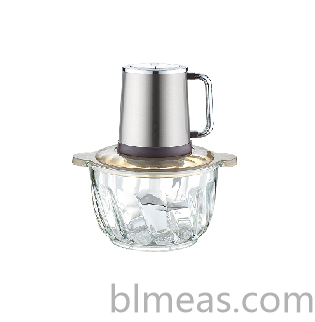
A capable Slow Juicer manufacturer must coordinate mechanical engineering, food-contact materials, motor systems, precision assembly, and quality control to create a product that performs consistently in everyday kitchen environments. Although the finished appliance may appear relatively simple, its internal extraction mechanism contains multiple components that must operate together accurately. Manufacturing quality therefore depends on both individual parts and the way the complete system is assembled and tested.
The central mechanism in a slow juicer is designed to move and process ingredients gradually. An auger or similar pressing component transports produce through the extraction chamber while applying mechanical pressure. The surrounding filter or separation structure then allows liquid to pass through while retaining a substantial portion of solid material. Geometry, surface finish, dimensional tolerance, and material properties can all affect the consistency of this process.
Food-contact materials are particularly important during product development. Plastic components need to be selected for appropriate kitchen applications, while metal parts may require corrosion-resistant construction and suitable surface treatment. Seals and gaskets also need to maintain effective contact between connected components. Good material selection is not simply about appearance; it influences durability, cleaning, assembly, and the long-term usability of the appliance.
Manufacturing precision becomes important when these components are produced in volume. Injection molding can be used for housing sections, containers, covers, and other shaped parts, while metal components may involve stamping, machining, forming, or finishing operations. Stable production conditions help maintain dimensional consistency. Even small variations in connection points or rotating components can influence assembly quality and operating behavior.
The motor and transmission system form another important engineering area. The drive mechanism needs to provide controlled rotational movement while handling the mechanical resistance created by different ingredients. Electrical components, protective systems, transmission elements, and thermal management features must be integrated into the appliance without making operation unnecessarily complicated. Manufacturers can use functional testing to identify abnormal vibration, unusual noise, overheating, or inconsistent movement.
Product assembly also requires systematic quality control. Workers or automated processes need to install rotating components, seals, filters, containers, switches, and electrical connections in the correct sequence. Inspection checkpoints can identify assembly errors before the product reaches final testing. Depending on the production program, testing may include power-up checks, operating cycles, leakage inspection, component fit verification, and visual examination.
Cleaning design is increasingly relevant because juicing can leave pulp and residue across several removable parts. A well-designed appliance should make commonly cleaned components accessible without excessive disassembly. Filter structures, pulp outlets, collection containers, and seals should be designed with practical maintenance in mind. This can improve everyday usability while also reducing unnecessary wear caused by difficult or improper cleaning.
Noise and vibration management are additional considerations. Rotating systems naturally generate mechanical movement, but balanced components and appropriate structural support can help maintain stable operation. Housing design can also influence how vibration is transmitted to the countertop. Manufacturers may evaluate operating noise and vibration during product testing to identify inconsistencies between production samples.
From a sourcing perspective, buyers should examine more than finished-product appearance when evaluating a Slow Juicer manufacturer. Production capabilities, material sourcing, tooling control, assembly procedures, testing standards, quality documentation, packaging systems, and after-sales support can all affect the suitability of a manufacturing partner. Consistent processes are especially important for distributors that need repeated production runs with comparable product quality.
Product development can also involve customization. Depending on market requirements, manufacturers may adjust housing designs, colors, accessories, control interfaces, container configurations, or packaging. Electrical specifications may also need to correspond with the intended sales region. Effective customization requires controlled engineering changes so that modifications do not compromise mechanical fit, safety, or production consistency.
For businesses exploring kitchen appliance manufacturing and product sourcing, understanding these technical factors provides a clearer framework for evaluating juicing equipment. More information about appliance development, production capabilities, and related kitchen products is available through https://www.blmeas.com/.

 English
 Arabic
 French
 Spanish
 Portuguese
 Deutsch
 Turkish
 Italiano
 Russian
 Romaian
 Portuguese (Brazil)
 Greek
Greek
 Bengali