


Managing Cash Flow and Inventory Risk: A Practical Guide for Resellers
Introduction
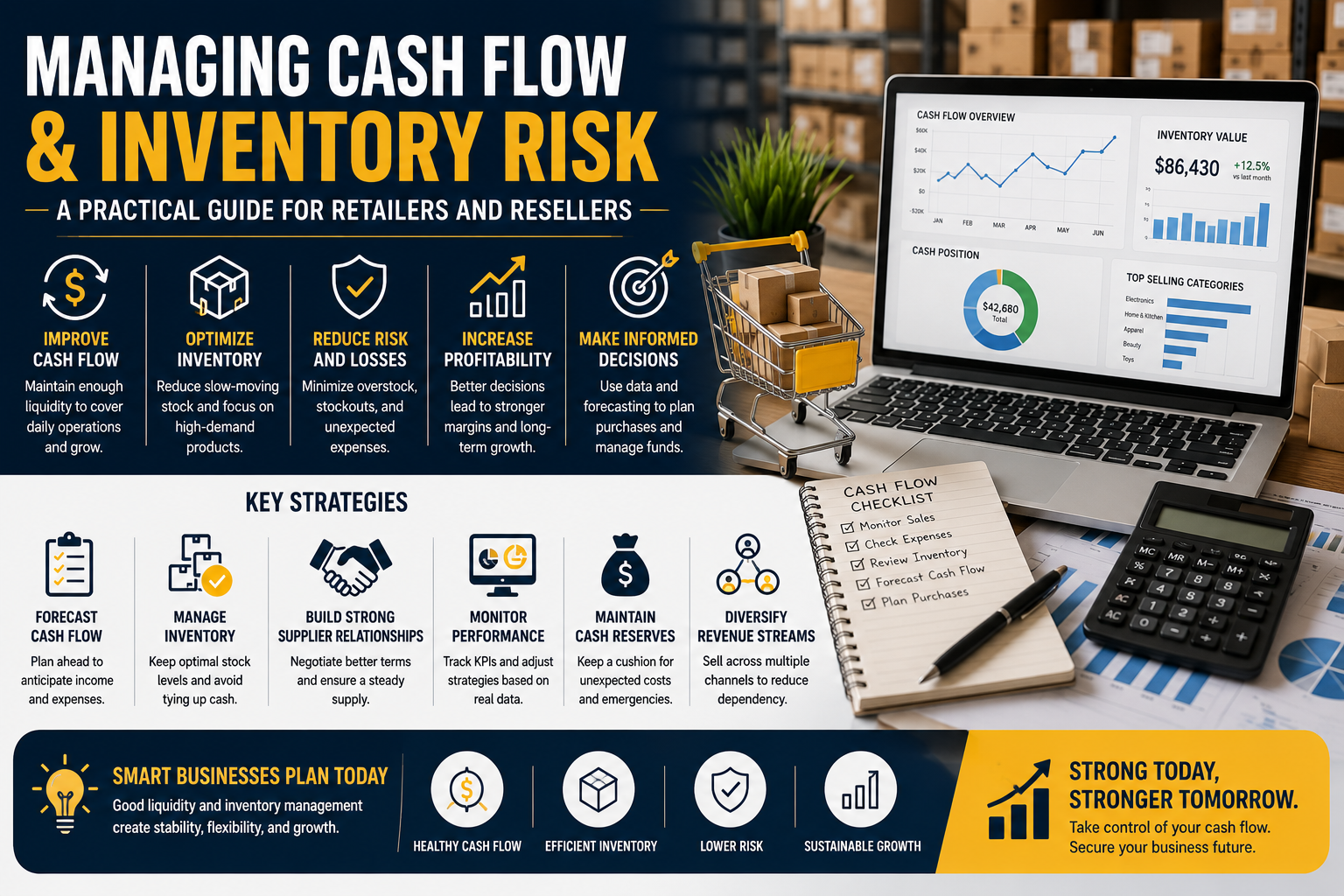
Running a successful retail or resale business requires more than finding quality products and attracting customers. Maintaining healthy cash flow while managing inventory efficiently is equally important for long-term stability. Businesses that struggle to balance incoming revenue with operating expenses may experience liquidity challenges, even when sales remain strong.
Whether selling through a physical store, an online marketplace, or a wholesale operation, understanding how cash flow and inventory interact can help retailers make more informed business decisions. This guide explores practical strategies for managing financial flexibility while reducing inventory-related risks.
Understanding Liquidity in Retail
Liquidity refers to a business's ability to meet short-term financial obligations using available cash or assets that can quickly be converted into cash. For retailers and resellers, maintaining adequate liquidity supports day-to-day operations such as purchasing inventory, paying suppliers, covering shipping costs, and managing payroll or operating expenses.
A business with healthy liquidity is generally better positioned to respond to unexpected expenses, seasonal demand changes, or supply chain disruptions.
Common Cash Flow Challenges
Retail businesses often face cash flow fluctuations throughout the year. Some of the most common factors include:
-
Seasonal sales cycles
-
Slow-moving inventory
-
Delayed customer payments
-
Rising supplier costs
-
Shipping and logistics expenses
-
Unexpected product returns
-
Changes in consumer demand
Recognizing these challenges early allows businesses to plan more effectively and reduce financial pressure.
Managing Inventory Wisely
Inventory represents one of the largest investments for many retailers. Holding excessive stock can tie up working capital, while insufficient inventory may result in missed sales opportunities.
Effective inventory management often includes:
-
Monitoring stock levels regularly
-
Identifying slow-moving products
-
Forecasting demand using historical sales
-
Organizing inventory by category and turnover rate
-
Reviewing purchasing decisions frequently
These practices help improve inventory efficiency while supporting healthier cash flow.
Build a Cash Flow Forecast
A cash flow forecast provides an estimate of expected income and expenses over a specific period. Updating forecasts regularly can help businesses identify potential shortages before they become serious problems.
Key areas to monitor include:
-
Sales revenue
-
Inventory purchases
-
Supplier payments
-
Shipping costs
-
Operating expenses
-
Marketing budgets
-
Tax obligations
Forecasting enables business owners to make more informed financial decisions and prepare for changing market conditions.
Diversify Revenue Sources
Depending on a single sales channel can increase financial risk. Many retailers strengthen their operations by selling through multiple channels, such as:
-
Online marketplaces
-
Physical retail locations
-
Wholesale customers
-
Social commerce platforms
A diversified sales strategy may help reduce the impact of seasonal fluctuations or changes in customer behavior.
Evaluate Supplier Relationships
Reliable supplier relationships contribute to smoother inventory management and financial planning. Businesses often review factors such as:
-
Payment terms
-
Delivery schedules
-
Product availability
-
Shipping reliability
-
Communication quality
Strong supplier partnerships can improve purchasing flexibility and support more predictable operations.
Monitor Business Performance
Tracking key performance indicators (KPIs) helps retailers understand the financial health of their business. Common metrics include:
-
Inventory turnover
-
Gross profit margin
-
Operating expenses
-
Cash conversion cycle
-
Sell-through rate
-
Average order value
-
Customer return rate
Regular performance reviews allow businesses to identify trends and make adjustments before problems grow.
Prepare for Unexpected Events
Economic conditions, transportation delays, changing consumer preferences, and supply chain disruptions can all affect retail operations. Developing contingency plans can improve resilience during periods of uncertainty.
Preparation may include:
-
Maintaining emergency cash reserves
-
Reviewing insurance coverage
-
Diversifying suppliers
-
Managing inventory conservatively
-
Updating financial forecasts regularly
Planning ahead helps businesses respond more effectively when unexpected challenges arise.
Using Technology to Improve Financial Visibility
Modern inventory and accounting software can provide real-time insights into stock levels, purchasing activity, and cash flow. Automation reduces manual errors and supports faster decision-making.
Businesses that regularly analyze financial reports and inventory data are often better equipped to identify opportunities for improvement.
Conclusion
Managing cash flow and inventory risk is an ongoing process that requires careful planning, accurate recordkeeping, and informed decision-making. Retailers and resellers who monitor inventory levels, forecast expenses, diversify revenue streams, and review financial performance regularly are often better positioned to navigate changing market conditions.

 Arabic
 French
 Spanish
 Portuguese
 Deutsch
 Turkish
 Dutch
Dutch
 Italiano
 Russian
 Romaian
 Portuguese (Brazil)
 Greek
Greek
 Bengali