Complete Guide to ETP in Noida: Technology, Applications and Maintenance Tips - Lucknow
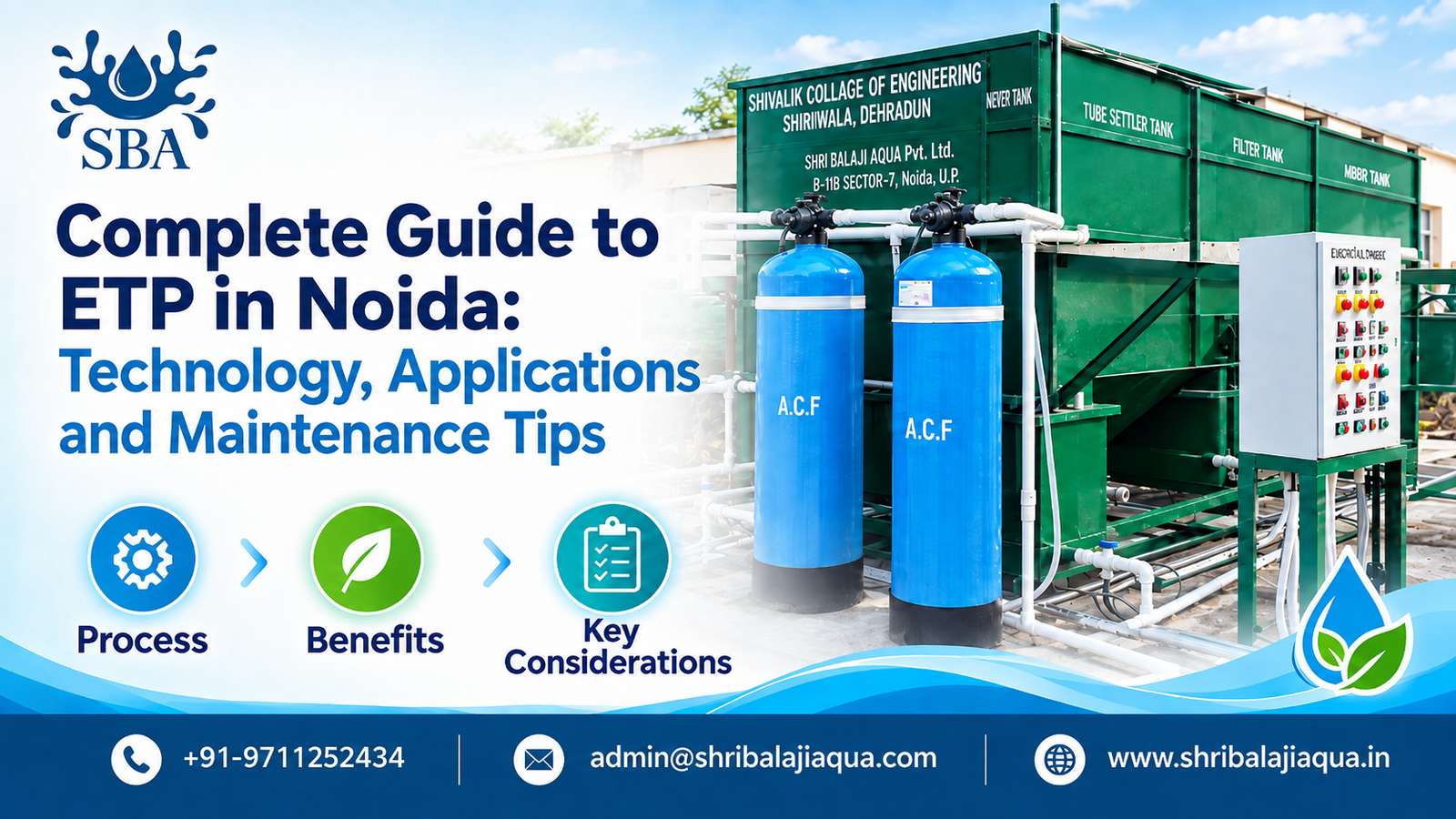
Industrial growth in and around Noida has brought with it a growing responsibility: managing the wastewater generated by manufacturing and processing operations. Every industry, whether it is a chemical unit, a food-processing facility, a textile dyeing house or an automobile component manufacturer, produces effluent with its own unique mix of pollutants. This can include suspended solids, organic matter, oils and greases, dissolved chemicals and other contaminants that vary depending on the raw materials and processes used. Left untreated, this wastewater can pose serious risks to the environment and to public health. That is why industries increasingly rely on a well-planned ETP in Noida to treat their effluent before it is discharged or reused. An Effluent Treatment Plant (ETP) is a system engineered around the specific characteristics of a facility’s wastewater and its intended discharge or reuse goals. There is no single “one-size-fits-all” design — the right treatment plant depends entirely on what is actually flowing out of your factory. This guide walks through how ETPs work, why they matter, and what industrial decision-makers should evaluate before choosing a treatment solution. What Is an Effluent Treatment Plant? An Effluent Treatment Plant is a facility that uses a combination of physical, chemical and biological processes to reduce the pollutant load in industrial wastewater. The goal is to bring the wastewater to a quality level suitable for safe discharge, or in some cases, for reuse within the facility. No two ETPs are built exactly alike, because the right treatment configuration depends on several variables: Composition of the wastewater Flow rate and volume generated daily Pollutant concentration and load Type of industry and manufacturing process Required treated-water quality Applicable discharge norms Whether treated water is intended for reuse Because of these variables, a plant designed for a textile dyeing unit will look quite different from one designed for a dairy or a pharmaceutical facility, even if both are located in the same industrial area. How Does an ETP Work? While every plant is customized, most effluent treatment systems follow a broadly similar sequence of stages, adapted as needed. 1. Preliminary Treatment This is the first line of defense. Screens and bar racks remove larger solids, floating debris and coarse particles that could damage downstream equipment. 2. Primary Treatment Processes such as coagulation, flocculation and sedimentation are commonly used to settle out suspended solids and destabilize fine particles, making them easier to remove. 3. Biological Treatment Where the wastewater contains biodegradable organic matter, biological treatment methods can be applied to break down these pollutants using naturally occurring or cultivated microorganisms. This stage is typically used when the effluent’s organic load calls for it. 4. Tertiary or Advanced Treatment Depending on the required treated-water quality and the intended discharge or reuse application, additional filtration or advanced treatment steps may be added. This could include further polishing to remove residual contaminants. 5. Sludge Management Every treatment process generates sludge as a by-product. This sludge needs to be properly dewatered, handled and disposed of or managed in line with applicable practices. It’s worth reiterating: the actual sequence and combination of these stages should be finalized only after a thorough evaluation of the wastewater characteristics, not by assuming a standard template will work for every industry. Why Industries Need Effluent Treatment Plants There are several practical reasons industries invest in effluent treatment: Responsible management of industrial wastewater Reduction of pollutant load before discharge Support for meeting applicable environmental requirements Opportunities for water recycling and reuse where technically feasible Better overall resource management Reduced reliance on freshwater for certain non-potable applications Greater control and visibility over wastewater generated on-site It’s important to note that plant design and operation should always be aligned with site-specific conditions and applicable regulatory requirements, rather than assuming that installing any ETP automatically guarantees compliance. Benefits of a Properly Designed ETP Better Wastewater Management A system designed around your actual effluent profile helps you manage wastewater more predictably and efficiently. Water Reuse Where treatment quality and applicable norms permit, treated water may be considered for uses such as cooling, washing, gardening or certain in-process applications. Environmental Responsibility Effective treatment reduces the amount of pollutant load released into the surrounding environment. Operational Efficiency A plant built for your specific wastewater profile is generally easier to monitor, operate and troubleshoot than a generic, off-the-shelf setup. Long-Term Reliability Sound design, correct equipment selection and consistent preventive maintenance all contribute to stable, long-term plant performance. Key Factors to Consider Before Choosing an ETP in Noida Before finalizing any treatment system, industrial buyers should evaluate: Wastewater flow rate Effluent characteristics and variability Industry type and process specifics BOD and COD levels TSS and other relevant parameters Presence of chemicals or heavy metals, where applicable Required treatment capacity Available installation space Discharge or reuse objectives Power and chemical consumption requirements Sludge handling and management needs Automation and monitoring requirements Availability of operation and maintenance support AMC (Annual Maintenance Contract) options Future expansion or capacity requirements Wastewater testing and a proper process assessment should always precede plant design. Skipping this step often leads to undersized or mismatched systems down the line. Why Customized ETP Design Matters Different industries generate very different effluent profiles. For example: Chemical manufacturing often produces effluent with variable chemical loads Pharmaceutical production may involve specific compounds requiring tailored treatment Food processing units typically generate high organic-load wastewater Textile and dyeing operations often deal with color and chemical-laden effluent Automobile and metal-finishing units may need to address oils and metal content Dairy operations generate wastewater with high organic concentration Commercial facilities may have comparatively simpler treatment needs Because of this diversity, the treatment process, equipment selection and system capacity should always be based on the actual wastewater characteristics and operational goals of the facility in question — not a generic template. ETP Installation, Commissioning and Maintenance Choosing an ETP involves far more than simply purchasing equipment. A complete project typically includes: Site assessment Wastewater analysis and process selection Plant design Equipment supply Installation Commissioning Operator training and guidance Routine



 Arabic
 French
 Spanish
 Portuguese
 Deutsch
 Turkish
 Dutch
Dutch
 Italiano
 Russian
 Romaian
 Portuguese (Brazil)
 Greek
Greek
 Bengali