


Is Your Child Getting Bored? Why Adaptive Learning is the Future of Education

Is Your Child Getting Bored? Why Adaptive Learning is the Future of Education
Boredom Isn't Laziness — It's a Mismatch
When a child sighs over homework or zones out during a lesson, most parents assume the subject just isn't clicking. But boredom in the classroom is often a signal that the pace of learning doesn't match the child's actual ability.
A worksheet designed for "the average student" can be too slow for a fast learner and too fast for a child who needs more repetition. Neither child stays engaged for long.
This is where adaptive learning technology changes the picture entirely.
What Is Adaptive Learning, Really?
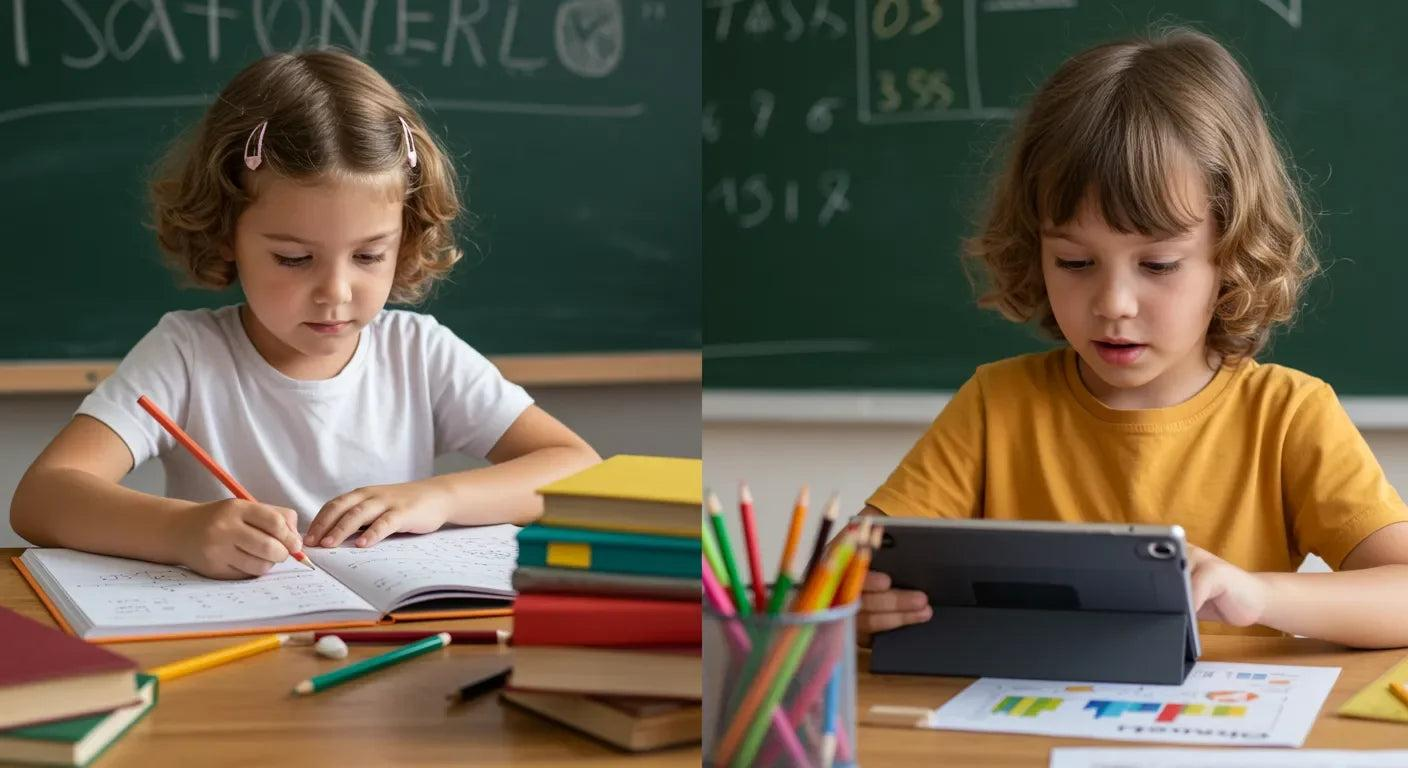
At its core, a personalized learning app uses a child's answers to shift to the next question, the next level, or the next explanation. Get three multiplication problems right in a row? The interactive learning app for kids quietly increases the difficulty. Struggle with a phonics sound? It slows down, offers a different explanation, and circles back later instead of pushing forward regardless.
This is fundamentally different from a printed textbook or a one-size-fits-all worksheet, both of which move at a fixed pace no matter who's using them.
Why This Matters for Young Children Specifically
Children between ages 2 and 8 are building their foundational relationship with learning itself. If early lessons feel either humiliatingly hard or insultingly easy, kids can start to associate "school" with frustration or disengagement — a pattern that's hard to reverse later.
A best kids learning app that adjusts difficulty in the moment protects that early relationship with learning by keeping the challenge level in a child's "just right" zone.
The Research Behind Adaptive Difficulty
Educational psychologists often refer to this "just right" zone as the Zone of Proximal Development — a concept introduced by developmental psychologist Lev Vygotsky, describing tasks that are challenging but achievable with the right support.
Modern EdTech reflects this thinking directly: as one industry analysis on education marketing notes, the shift toward personalized learning and adaptive e-learning platforms reflects growing demand for tailored, flexible learning experiences that meet individual needs.
Signs Your Child Might Benefit From Adaptive Learning
-
They finish homework quickly, then seem restless or under-stimulated afterward
-
They avoid a subject entirely, saying it's "too hard" or "boring"
-
Their interest in an app or worksheet drops sharply after the first few uses
-
They ask the same kind of question even after they've clearly mastered it
How Gamified, Adaptive Learning Keeps Kids Curious

A well-designed gamified learning app pairs adaptive difficulty with small, frequent wins — badges, streaks, or level-ups — so children feel a sense of progress even as the content quietly recalibrates behind the scenes. This combination of the right challenge level plus visible reward is what keeps a child opening the app on day 30 the same way they did on day 1.
This is precisely the approach behind Zape Learning App, where English, Math, and Science content adjusts to a child's pace across ages 2–8, so kids stay in that sweet spot between bored and overwhelmed.
Bringing It Home
If your child seems bored, the fix usually isn't "try harder" — it's finding a learning tool that meets them exactly where they are and moves with them. That's the promise of personalized education for children: less frustration, more genuine curiosity.
Ready to see adaptive learning in action? Explore the Zape Learning App and give your child lessons that actually keep pace with them.
Frequently Asked Questions
What age group benefits most from adaptive learning apps?
Children between ages 2 and 8 tend to benefit significantly, since this is when foundational attitudes toward learning are formed and skill gaps are easiest to catch early.
How is adaptive learning different from regular educational apps?
Regular apps often follow a fixed sequence of lessons for every user. Adaptive apps adjust difficulty and pacing in real time based on how a specific child is performing.
Can adaptive learning replace traditional schooling?
No — it's best used as a supplement that reinforces classroom learning at a pace suited to the individual child, not a replacement for structured schooling.
Is gamification just a distraction, or does it actually help learning?
When designed thoughtfully, gamification (badges, streaks, levels) increases motivation and time-on-task, which supports — rather than distracts from — actual skill-building.

 English
 Arabic
 French
 Spanish
 Portuguese
 Deutsch
 Dutch
Dutch
 Italiano
 Russian
 Romaian
 Portuguese (Brazil)
 Greek
Greek
 Bengali