


The Next-Gen Watchtower: Key Security Operations Center Market Trends Transforming Defense
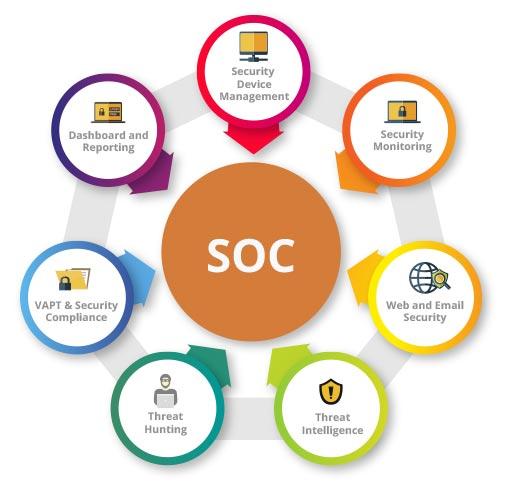
The Security Operations Center (SOC) is not a static entity; it is a dynamic and rapidly evolving function that is constantly adapting to new threats and technologies. To remain effective, SOCs are embracing a wave of transformative trends that are redefining their capabilities and operational models. A close look at the most significant Security Operations Center Market Trends reveals a clear movement towards greater intelligence, automation, and a service-oriented approach. The days of SOCs being mere "alert factories," where analysts are overwhelmed by a flood of low-fidelity alerts from a traditional SIEM, are numbered. The future of the SOC is smarter, faster, and more efficient. Key trends driving this evolution include the deep integration of Security Orchestration, Automation, and Response (SOAR) platforms to combat analyst fatigue, the pervasive use of artificial intelligence and machine learning for more advanced threat detection, and the massive shift towards outsourced models like SOC-as-a-Service (SOCaaS) to address the persistent cybersecurity skills gap. These trends are not just incremental improvements; they are fundamentally changing how security operations are performed, making them more proactive, scalable, and effective in the face of ever-more-sophisticated adversaries.
Automation with SOAR to Combat Alert Fatigue
One of the most pressing challenges for any modern SOC is "alert fatigue"—the state of being overwhelmed by the sheer volume of security alerts generated by a multitude of security tools. Analysts can spend the majority of their day chasing down false positives, leading to burnout and an increased risk of missing a genuine threat. The most important trend addressing this problem is the widespread adoption of Security Orchestration, Automation, and Response (SOAR) platforms. A SOAR platform acts as a force multiplier for the SOC team. It orchestrates the workflow by integrating all of the SOC's disparate security tools (SIEM, EDR, firewalls, etc.) into a single, unified console. It then automates the repetitive, time-consuming tasks associated with initial alert triage. For example, when an alert comes in, a SOAR playbook can automatically enrich it with threat intelligence, check the reputation of associated IP addresses or file hashes, and query other systems for related activity. This automated enrichment provides the analyst with all the necessary context in one place, allowing them to make a faster and more informed decision. For high-confidence, low-risk incidents, SOAR can even automate the entire response, such as automatically quarantining an infected endpoint, without any human intervention, freeing up valuable analyst time for more complex investigations.
The Infusion of Artificial Intelligence and Machine Learning
Another transformative trend is the deep integration of artificial intelligence (AI) and machine learning (ML) into the core of SOC technologies. Traditional detection methods, which rely on predefined rules and signatures, are often ineffective against new, zero-day attacks. AI and ML are changing the game by enabling more advanced, behavior-based threat detection. One key application is User and Entity Behavior Analytics (UEBA). UEBA systems create a baseline of normal behavior for every user and device on the network. They can then use machine learning to detect subtle deviations from this baseline that might indicate a compromised account or an insider threat—for example, a user suddenly accessing sensitive data at an unusual time of day or from a new geographic location. AI is also used to power advanced malware detection, analyze network traffic for anomalies, and even to help prioritize alerts by assigning a risk score based on a multitude of factors. This shift from rule-based to AI-driven detection allows the SOC to move beyond looking for known "bads" and start identifying unknown "weirds," significantly improving their ability to catch novel and sophisticated attacks early in their lifecycle.
The Shift to Outsourced and Managed Services
Building and maintaining a fully-staffed, 24/7 in-house SOC is an incredibly expensive and complex undertaking. The cost of technology licensing, combined with the immense challenge of recruiting and retaining a team of highly skilled and sought-after cybersecurity analysts, is prohibitive for many organizations. This reality has fueled one of the most significant business trends in the market: the massive shift towards outsourced SOC models. This trend primarily manifests in two forms: SOC-as-a-Service (SOCaaS) and Managed Detection and Response (MDR). In a SOCaaS model, a third-party provider essentially provides a "remote SOC," offering 24/7 monitoring, alert triage, and incident reporting, but often leaving the final response actions to the client's internal IT team. MDR services typically go a step further, not only detecting threats but also actively responding to contain and neutralize them on behalf of the customer. These "as-a-service" models provide organizations with immediate access to a mature SOC with enterprise-grade technology and a team of expert analysts at a predictable, subscription-based price, making advanced security operations accessible to a much broader range of businesses and addressing the critical global cybersecurity skills shortage.
Explore More Like This in Our Reports:

 English
 Arabic
 French
 Spanish
 Portuguese
 Deutsch
 Dutch
Dutch
 Italiano
 Russian
 Romaian
 Portuguese (Brazil)
 Greek
Greek
 Bengali