


Casting Process Behind Wear Resistant Fittings
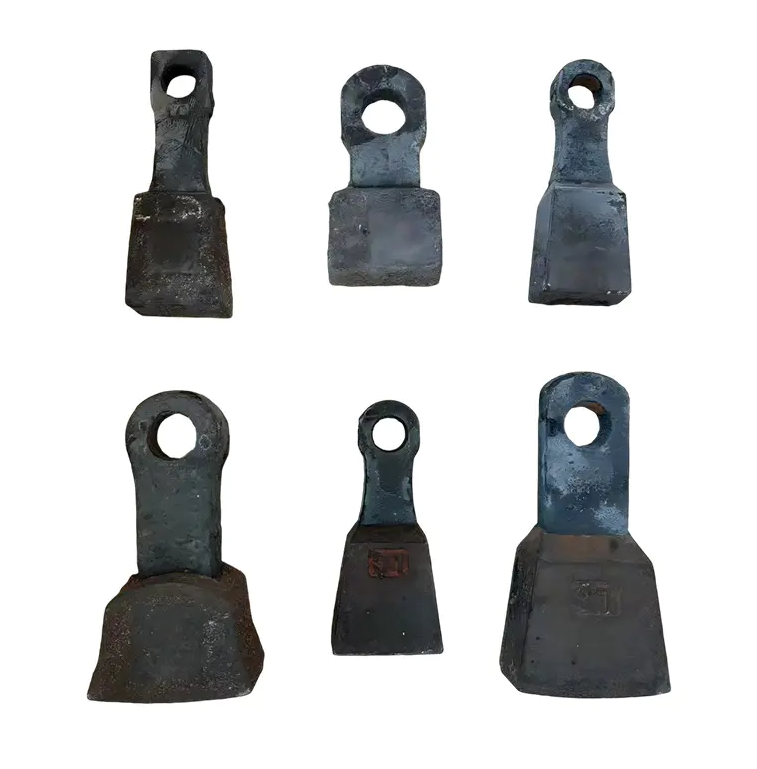
The production of High Chromium Cast Iron Fittings involves precise control of alloy composition, solidification rate, and heat treatment parameters. These factors determine carbide formation, distribution, and final mechanical performance.
The raw material composition typically includes:
Chromium: 12%–28%
Carbon: 2.0%–3.5%
Silicon: 0.5%–1.5%
Manganese: 0.5%–1.2%
Optional alloying elements: Mo (0.5%–2.5%), Ni (0.5%–3%)
Melting is carried out in induction furnaces or electric arc furnaces at temperatures around 1450–1550°C. Proper temperature control is necessary to ensure complete dissolution of alloying elements and uniform chemical distribution.
During solidification, the key transformation is the formation of eutectic M7C3 carbides. These carbides grow between austenite dendrites, forming a network structure that determines wear resistance. Cooling rate plays a major role: slower cooling leads to coarse carbides, while controlled faster cooling promotes finer and more uniform carbide morphology.
Casting methods vary depending on geometry:
Sand casting for complex fittings
Centrifugal casting for pipe liners and sleeves
Metal mold casting for high dimensional accuracy parts
Each method influences microstructure. Centrifugal casting applies rotational force up to 1000–1500 rpm, pushing denser carbide-rich phases toward outer surfaces where wear resistance is most needed.
After casting, heat treatment is applied to adjust the balance between hardness and toughness. A common process includes:
Heating to 950–1050°C
Holding for carbide destabilization
Air cooling or oil quenching
Tempering at 200–400°C
This treatment encourages secondary carbide precipitation inside the matrix. These fine carbides improve hardness distribution and reduce internal stress concentration.
Microstructural analysis often reveals three key phases:
Primary austenite or martensite matrix
Eutectic M7C3 carbides
Secondary precipitated carbides
Each phase contributes differently. Carbides provide wear resistance, while the matrix absorbs mechanical shock.
Quality control is essential in production. Non-destructive testing methods such as ultrasonic inspection detect internal porosity or shrinkage defects. Hardness testing ensures consistency, typically targeting HRC 55–65 depending on application requirements.
Surface finishing may also be applied for specific fittings. Grinding or machining ensures dimensional precision, especially for sealing interfaces in pipeline systems.
Manufacturing consistency determines long-term performance. Variations in cooling rate or alloy purity can significantly affect carbide continuity, which directly influences wear resistance in abrasive environments.
Conclusion
Controlled casting and heat treatment processes define the performance of high chromium cast iron. Microstructure engineering ensures fittings meet the demands of abrasive industrial systems.

 Arabic
 French
 Spanish
 Portuguese
 Deutsch
 Turkish
 Dutch
Dutch
 Italiano
 Russian
 Romaian
 Portuguese (Brazil)
 Greek
Greek
 Bengali