


Material Selection for Cryogenic Pipeline Applications
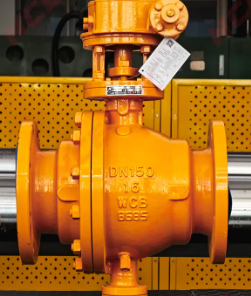
Extremely low operating temperatures create unique engineering challenges for industrial flow control equipment. In such environments, Cryogenic Ball Valve Design must account for material behavior, thermal contraction, sealing performance, stem operation, and the interaction between the valve and surrounding pipeline. A suitable design is therefore based on more than simply selecting a conventional ball valve and replacing individual components with low-temperature materials.
Material selection is fundamental because metals and sealing materials can respond differently as temperature decreases. Components may contract, and their dimensional relationships can change. Stainless steels and other materials with suitable low-temperature characteristics are often evaluated for cryogenic service, while seat and stem sealing materials must also retain appropriate mechanical properties under the expected operating conditions.
The ball and body require careful dimensional coordination. A ball valve relies on the interaction between the spherical closure element and its seats, so thermal contraction can influence contact conditions. Engineers need to consider how different components respond to temperature changes and how these changes affect movement and sealing. Manufacturing tolerances must therefore be controlled carefully to support reliable operation across the intended temperature range.
The valve stem presents another important consideration. In cryogenic applications, the operating mechanism may need to remain accessible while the primary flow passage operates at a very low temperature. Extended stem arrangements can provide separation between the cold section and the operating area. This can help reduce direct thermal transfer toward the actuator or manual operating mechanism while supporting practical system operation.
Sealing technology requires particular attention. A seat that performs well at normal industrial temperatures may not behave in the same way under cryogenic conditions. Material stiffness, contraction, resilience, and chemical compatibility can all influence sealing behavior. Engineers should evaluate the complete seat and stem sealing system according to the actual medium and temperature conditions rather than relying solely on general-purpose materials.
Thermal transfer through the valve body can also influence surrounding equipment. Insulation may be used in some pipeline configurations to manage heat exchange and maintain suitable process conditions. The relationship between the valve, adjacent pipework, insulation, and operating mechanism should be considered during system design. Poorly coordinated thermal protection can create unnecessary temperature gradients or complicate future maintenance.
Manufacturing precision becomes particularly important when components must operate across significant temperature changes. Ball surfaces, seats, stem interfaces, and body connections need controlled dimensions and appropriate surface quality. Machining processes should be supported by inspection procedures capable of identifying deviations that could affect assembly or sealing.
Cleanliness is another consideration in certain cryogenic applications. Contaminants or unsuitable residues within the flow passage may affect process quality or interact with the transported medium. Appropriate manufacturing, cleaning, handling, and storage procedures can help maintain the condition of internal components before installation.
Testing provides an important part of cryogenic valve quality management. Conventional pressure and sealing tests can evaluate the integrity of the completed assembly, while specialized testing approaches may be considered where the application requires verification under low-temperature conditions. The appropriate testing program should reflect the valve's intended service and applicable engineering standards.
Cryogenic valves can be used in applications involving liquefied gases, specialized chemical processes, industrial gas systems, and energy infrastructure. Each application can impose different requirements on materials, sealing systems, operating mechanisms, and installation. Engineers should therefore evaluate the complete process environment, including pressure conditions, fluid characteristics, thermal cycling, and expected operating frequency.
Maintenance planning is also important because cryogenic equipment may be installed in systems where access is restricted or where thermal conditions complicate servicing. Operating mechanisms should be positioned to support practical inspection, while the valve arrangement should allow maintenance personnel to understand the relationship between the cold section and external components.
The performance of Cryogenic Ball Valve Design depends on the coordinated engineering of materials, thermal behavior, sealing systems, machining accuracy, operating mechanisms, cleanliness, and testing. By considering these factors as an integrated system, engineers can select a valve configuration appropriate to the actual requirements of low-temperature service. Zhejiang Naishi Valve Co., Ltd. provides related industrial valve solutions through https://www.ncevalve.com/product/ for projects requiring specialized flow control equipment.

 Arabic
 French
 Spanish
 Portuguese
 Deutsch
 Turkish
 Dutch
Dutch
 Italiano
 Russian
 Romaian
 Portuguese (Brazil)
 Greek
Greek
 Bengali