


What Controls Hat Brim Design?
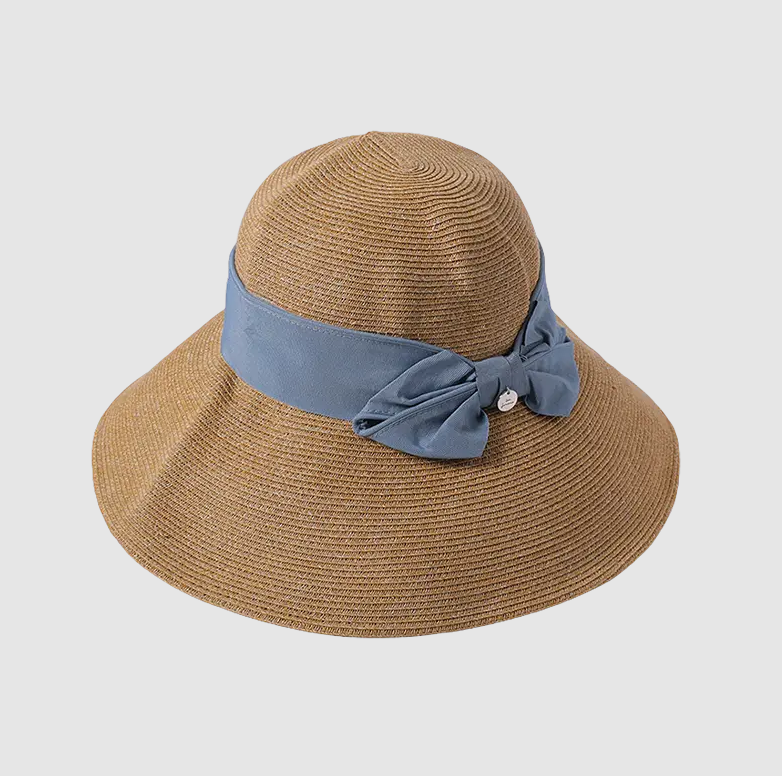
The construction of straw hats involves more than simple weaving. It requires controlled shaping techniques, tension balancing, and post-processing methods that define the final silhouette. Handcrafted Straw Hats for Women are especially shaped through manual blocking and structural reinforcement systems.
Fiber preparation and conditioning
Before weaving begins, straw fibers undergo conditioning to ensure consistent flexibility. This reduces breakage during spiral construction and improves final shape stability.
Preparation steps:
Cleaning and sorting by fiber thickness
Humidity conditioning for flexibility adjustment
Light steaming for pliability enhancement
Alignment to reduce irregular tension
Material range:
Raffia palm: soft, flexible structure
Wheat straw: firm and stable geometry
Seagrass: textured and moderately rigid
Paper straw blends: uniform and lightweight
Spiral formation and crown development
Straw hats are typically built from the crown downward in a spiral structure. This continuous formation allows even distribution of tension across the hat body.
Structural characteristics:
Central crown initiation point
Outward spiral expansion pattern
Uniform stitch spacing control
Gradual brim formation transition
Weaving accuracy influences final symmetry. Small deviations in spiral alignment may affect brim balance or crown height consistency.
Blocking and steam shaping process
After weaving, hats are shaped using molds and steam treatment. This step locks the geometry into its final form.
Shaping parameters:
Steam exposure temperature: 90°C – 110°C
Mold contact duration: 10 – 30 minutes per section
Drying time: 8 – 24 hours depending on thickness
Pressure level: light to medium compression
Blocking determines:
Crown height
Brim curvature
Edge smoothness
Overall silhouette consistency
Brim design and structural variation
Brim shape plays a key role in both style and function. Variations are achieved through adjustments in weave stiffness and reinforcement placement.
Brim parameters:
Width range: 6 cm – 15 cm
Edge curvature angle: 0°–30° variation
Reinforced edge wire: optional for shape memory
Flexibility level: adjustable through fiber density
Wide brims provide greater coverage, while narrow brims emphasize lightweight wearability.
Structural durability factors
Durability depends on fiber bonding strength and reinforcement strategy. Proper stitching density and edge finishing significantly extend usability.
Durability elements:
Stitch density: 3–6 stitches per cm
Edge binding reinforcement: fabric or braid trim
Crown stress distribution design
Internal sweatband support layer
These features improve resistance to deformation during regular use.
Shape memory and recovery
Straw hats can recover shape after minor deformation if properly maintained. Steam exposure and controlled reshaping help restore structure.
Shape recovery factors:
Fiber elasticity level
Previous deformation intensity
Exposure to moisture or heat
Storage conditions
Proper storage is essential to maintain long-term structural integrity.
Closing perspective
The structural engineering behind Handcrafted Straw Hats for Women shows how natural materials can be shaped through controlled tension, blocking, and reinforcement. The combination of craftsmanship and structural design ensures consistent form and usability.

 English
 Arabic
 French
 Spanish
 Portuguese
 Deutsch
 Turkish
 Dutch
Dutch
 Italiano
 Russian
 Portuguese (Brazil)
 Greek
Greek
 Bengali