


The New Face of Companionship: An Introduction to Social Robots
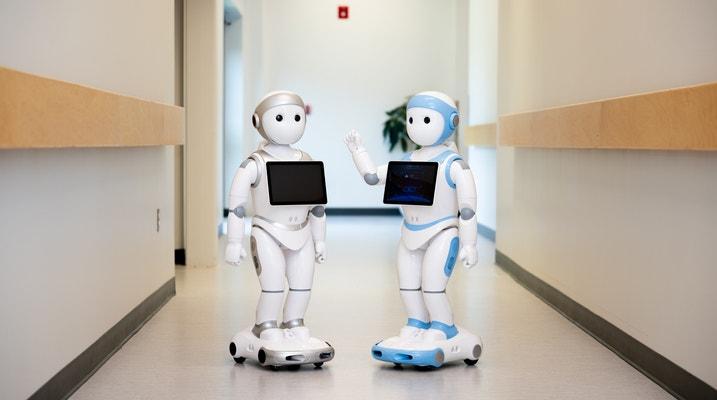
At the fascinating intersection of robotics, artificial intelligence, and human psychology, a new category of machines is emerging that is designed not to build cars or move boxes, but to interact and connect with us on a social and emotional level. These are known as Social Robots. A social robot is an autonomous robot that is designed to interact and communicate with humans by following the social behaviors and rules attached to its role. Unlike industrial robots, which are designed for physical tasks, or simple voice assistants, which are disembodied, social robots have a physical presence and are engineered to engage with people in a more natural and human-like way, using speech, gestures, and even facial expressions. From providing companionship to the elderly and tutoring children to acting as customer service agents and brand ambassadors, social robots are poised to play a significant new role in our homes, our schools, and our businesses, heralding a new era of human-robot interaction.
At its core, a social robot is a complex integration of sophisticated hardware and intelligent software. The hardware design is crucial, as the robot's physical appearance is a key part of its ability to engage with humans. This can range from highly anthropomorphic, human-like designs to more abstract or animal-like forms, such as the popular robotic pet, Aibo. These physical bodies are equipped with a wide array of sensors, including cameras for facial recognition and gesture tracking, microphones for voice recognition, and touch sensors to respond to physical contact. The "brain" of the social robot is its AI software. The Social Robots Market Is Projected To Grow a Valuation of USD 37.78 Billion By 2035, Growing at a CAGR of 16.79% During the Forecast Period 2025 - 2035. This massive market growth is powered by advancements in conversational AI and natural language processing (NLP) to enable natural dialogue, as well as an "emotional engine" that allows the robot to recognize and display a range of social and emotional cues, making the interaction feel more genuine and empathetic.
The potential applications for social robots are incredibly diverse and are expanding into many areas of our daily lives. One of the most promising and impactful applications is in elderly care and companionship. A social robot can serve as a companion for seniors who live alone, helping to combat loneliness and social isolation. It can provide medication reminders, facilitate video calls with family, and monitor for falls or other emergencies. In education, social robots are being used as tutors and learning companions for children. A robot can provide personalized, one-on-one instruction in a patient and non-judgmental way, and its engaging physical presence can be particularly effective for teaching children with special needs, such as those with autism. In the commercial world, social robots are being deployed in retail stores, hotels, and airports as greeters, information guides, and customer service agents, providing a novel and memorable brand experience.
Despite their immense potential, the development and deployment of social robots also raise a number of significant technical and ethical challenges. On the technical side, creating a robot that can navigate a complex human environment and engage in a truly natural and unscripted conversation is still an incredibly difficult problem. On the ethical side, the use of social robots raises profound questions. What are the long-term psychological effects of children or the elderly forming deep emotional bonds with a machine? How do we ensure the privacy of the vast amounts of personal data that these robots will collect through their cameras and microphones? As these robots become more advanced and more integrated into our lives, it will be crucial for society to have a robust and ongoing conversation about how to develop and deploy this powerful new technology in a way that is responsible, ethical, and ultimately beneficial to human well-being.
Explore Our Latest Trending Reports:

 English
 Arabic
 French
 Spanish
 Portuguese
 Deutsch
 Dutch
Dutch
 Italiano
 Russian
 Romaian
 Portuguese (Brazil)
 Greek
Greek
 Bengali