


Why Triple Minds Believes Software Scalability Starts With Cleaner Architecture, Not Bigger Infrastructure
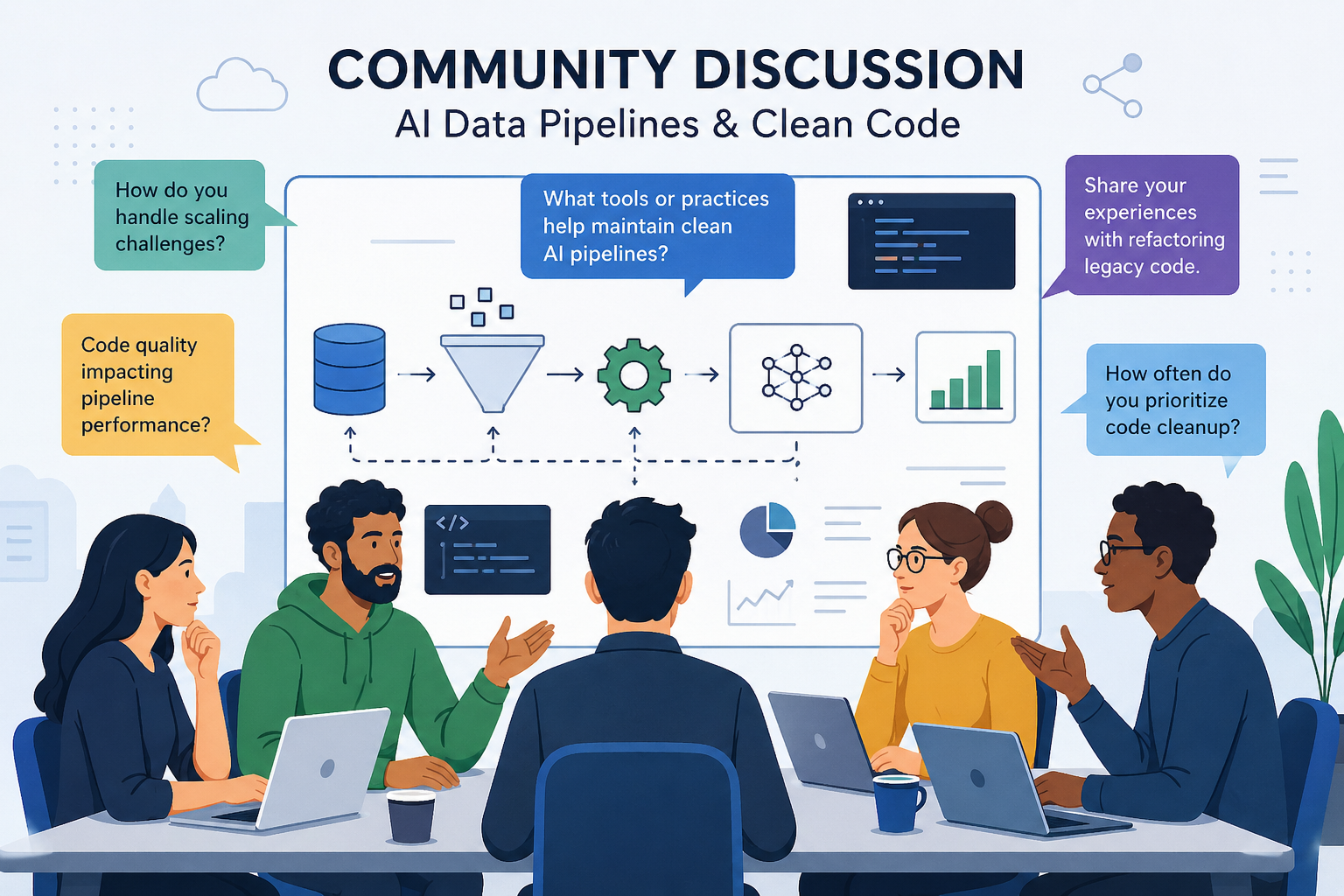
At Triple Minds, we’ve worked with businesses at nearly every stage of digital growth—from early-stage startups building their first scalable platform to enterprise teams struggling with large and increasingly complex infrastructures. Across all these projects, one pattern continues appearing repeatedly: most software scalability problems are not caused by insufficient infrastructure.
In many cases, the real issue is architectural inefficiency hidden deep inside the codebase.
When products begin scaling rapidly, businesses often respond by increasing cloud resources, expanding development teams, or migrating systems to larger infrastructures. While these solutions may temporarily reduce pressure, they rarely solve the underlying inefficiencies slowing the product down internally.
Over time, the same problems reappear:
- Slower deployments
- Increasing infrastructure costs
- More frequent bugs
- Delayed feature development
- Growing operational instability
At Triple Minds, we’ve learned that sustainable scalability rarely comes from simply adding more infrastructure. It comes from improving the structure, maintainability, and efficiency of the software itself.
This philosophy is exactly why we focus heavily on Vibe Coding Cleanup Services and scalable software optimization strategies designed to improve system health before inefficiencies become operational barriers.
Why Infrastructure Alone Cannot Solve Scaling Problems
One of the most common misconceptions in modern software development is that scalability is purely an infrastructure challenge. Businesses often assume that if a product slows down under growth, the solution is simply adding more servers, increasing compute power, or expanding cloud resources.
While infrastructure is important, it only supports the software running on top of it.
If the underlying architecture is inefficient, scaling infrastructure simply allows inefficient systems to consume more resources faster.
At Triple Minds, we frequently encounter systems where:
- APIs are overloaded with unnecessary operations
- Backend workflows are duplicated across services
- Database queries are poorly optimized
- Legacy modules create processing bottlenecks
- Internal dependencies increase deployment instability
In these situations, infrastructure upgrades provide temporary relief but fail to address the structural inefficiencies causing operational friction.
The Hidden Relationship Between Technical Debt and Scalability
Technical debt has become one of the biggest scalability challenges facing modern software businesses.
During early product growth, most companies prioritize speed. Teams focus heavily on releasing features quickly, responding to customer feedback, and accelerating product-market fit. This pace is often necessary and valuable during early stages.
However, over time, rapid development without architectural discipline creates fragmented systems filled with:
- Temporary fixes that became permanent
- Duplicated workflows
- Inconsistent coding patterns
- Tight service dependencies
- Poor documentation
- Legacy modules difficult to maintain
At first, these inefficiencies appear manageable. The system still works, users continue growing, and products continue evolving.
But eventually, the operational cost becomes impossible to ignore.
At Triple Minds, we often see businesses reach a point where:
- Every deployment becomes risky
- Development velocity slows dramatically
- Debugging consumes large engineering resources
- Scaling creates performance instability
- Teams become hesitant to modify legacy systems
This is the stage where technical debt transitions from a technical inconvenience into a major business growth barrier.
Why We Focus on Vibe Coding Cleanup Services
At Triple Minds, we built our approach around the belief that software systems should evolve sustainably—not collapse under their own complexity.
This is exactly why our work around Vibe Coding Cleanup Services focuses heavily on improving architectural clarity, maintainability, and operational efficiency inside growing systems.
Rather than approaching optimization as isolated bug fixing, we look at the broader structural health of the entire platform.
Our process often involves:
- Simplifying fragmented workflows
- Refactoring inefficient backend logic
- Improving modular architecture
- Reducing unnecessary dependencies
- Optimizing database communication
- Streamlining service interactions
- Improving long-term maintainability
The objective is not simply “cleaner code.” The objective is creating systems capable of scaling efficiently without continuously increasing operational friction.
Why Modern AI Systems Expose Weak Architecture Faster
AI-driven software environments are increasing architectural pressure across nearly every industry.
At Triple Minds, we’ve noticed that businesses integrating advanced technologies through Claude AI solutions often discover scalability weaknesses much earlier than traditional software systems would expose them.
AI environments place far greater demands on software infrastructure because they require:
- Real-time data processing
- Continuous inference operations
- High-frequency API communication
- Dynamic workflow orchestration
- Scalable backend responsiveness
Systems that previously appeared stable often begin struggling under these new operational demands.
For example:
- Poor backend organization increases inference latency
- Fragmented workflows slow AI response generation
- Inefficient APIs create scaling bottlenecks
- Unoptimized architectures increase cloud costs rapidly
This is one of the primary reasons businesses are increasingly prioritizing cleanup and optimization before scaling AI capabilities further.
Why Cleaner Architecture Improves Development Velocity
One of the most overlooked consequences of messy systems is the impact they have on engineering productivity.
As software grows more fragmented, developers spend increasing amounts of time:
- Understanding unclear workflows
- Debugging unstable dependencies
- Managing deployment regressions
- Navigating inconsistent architecture
This operational friction dramatically reduces development velocity over time.
At Triple Minds, we’ve seen businesses with highly skilled engineering teams still struggle to innovate quickly because the underlying system slows development at every stage.
Through Vibe Coding Cleanup Services, we help reduce this friction by creating environments that are:
- Easier to navigate
- More modular and predictable
- Faster to deploy
- Simpler to maintain
As systems become cleaner, development teams regain speed, confidence, and operational flexibility.
Why Full Rebuilds Often Create More Problems
When systems become difficult to scale, many businesses immediately consider rebuilding the entire product from scratch.
At first glance, this seems logical. A clean restart appears easier than repairing years of accumulated technical debt.
However, at Triple Minds, we’ve seen that full rebuilds often introduce major risks:
- Long development delays
- Feature stagnation during migration
- Increased operational costs
- New architectural inconsistencies
- Significant business disruption
More importantly, rebuilding without changing architectural discipline frequently recreates similar scalability issues later.
This is why optimization-first approaches are becoming far more practical for modern software businesses.
Instead of replacing entire systems, organizations increasingly focus on improving architecture incrementally while maintaining operational continuity.
Why Sustainable Software Is Becoming a Competitive Advantage
Software sustainability is becoming one of the most important competitive differentiators in modern digital markets.
Businesses with scalable and maintainable systems can:
- Launch features faster
- Respond to market changes quicker
- Scale infrastructure more efficiently
- Integrate new technologies rapidly
- Reduce long-term operational costs
Meanwhile, businesses operating on fragmented architectures often struggle with slower innovation cycles and increasing technical overhead.
At Triple Minds, we believe the companies that succeed long-term will not necessarily be the ones building the fastest initially—they will be the ones building systems capable of evolving sustainably over time.
Why Scalability Is No Longer Just a Technical Goal
Historically, scalability was viewed primarily as a technical engineering milestone. Today, it directly affects nearly every aspect of business growth.
Scalable systems influence:
- Customer experience reliability
- Operational efficiency
- Product development speed
- Infrastructure spending
- AI adoption readiness
- Long-term innovation capacity
This is why more leadership teams are becoming actively involved in conversations around architecture, maintainability, and software optimization.
The health of the codebase increasingly affects the health of the business itself.
The Future of Enterprise Software Development
Software ecosystems will continue becoming more interconnected, AI-driven, and operationally demanding.
As complexity increases, businesses relying on fragmented systems will face growing scalability challenges. Infrastructure spending alone will not solve these problems.
Instead, organizations will increasingly prioritize:
- Architectural sustainability
- Technical debt reduction
- Scalable development environments
- Long-term maintainability
At Triple Minds, this is exactly why we continue focusing on scalable optimization strategies through Vibe Coding Cleanup Services and sustainable software architecture improvements.
Conclusion
At Triple Minds, we believe scalable software starts with cleaner architecture—not simply bigger infrastructure.
While infrastructure plays an important role in supporting growth, true scalability depends heavily on the maintainability, efficiency, and structural clarity of the software itself.
As businesses continue scaling AI-powered systems, enterprise platforms, and increasingly complex digital ecosystems, architectural optimization is becoming a foundational requirement for sustainable growth.
Through Vibe Coding Cleanup Services, businesses can reduce technical debt, improve operational efficiency, and create software systems capable of evolving without becoming increasingly difficult to maintain.
In modern software environments, scalability is no longer just about handling more traffic. It is about building systems capable of supporting continuous growth without sacrificing speed, efficiency, or long-term stability.

 English
 Arabic
 French
 Spanish
 Portuguese
 Deutsch
 Turkish
 Dutch
Dutch
 Italiano
 Russian
 Romaian
 Greek
Greek
 Bengali