


The Connected Dwelling: A Comprehensive Look at the Global Smart Home Industry
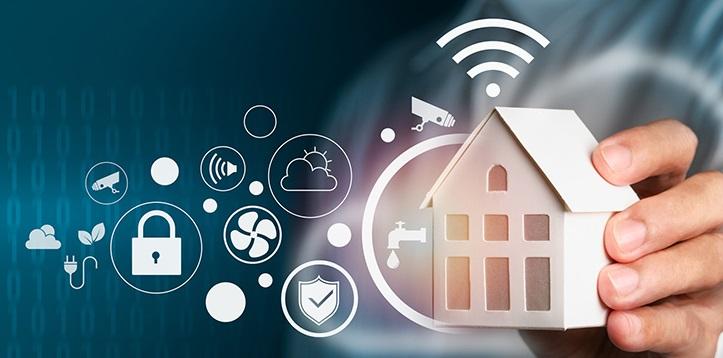
The global Smart Home industry has evolved far beyond a niche hobby for tech enthusiasts into a mainstream, multi-billion-dollar ecosystem that is fundamentally altering how we interact with our living spaces. This industry encompasses a vast network of internet-connected devices, sensors, and appliances designed to automate and remotely control various household functions. These functions are typically grouped into key categories: lighting and energy management (smart bulbs, plugs, thermostats), safety and security (smart locks, cameras, sensors), entertainment (smart speakers, displays, TVs), and convenience (robotic vacuums, smart appliances). The core value proposition of the industry is to provide homeowners with unprecedented levels of convenience, enhanced security, greater energy efficiency, and an overall improved quality of life. By creating an integrated environment where devices can communicate with each other and respond intelligently to user needs, the smart home industry is laying the groundwork for the next generation of personal computing—one that is ambient, proactive, and seamlessly woven into the fabric of our daily lives. This is not just about gadgets; it's about building a responsive and intelligent environment.
The evolution of the smart home industry has been a journey from clunky, wired, and prohibitively expensive systems to the wireless, affordable, and user-friendly ecosystems we see today. Early home automation protocols like X10, which used a home's electrical wiring to send signals, were unreliable and complex to set up. The real revolution began with the proliferation of home Wi-Fi, the ubiquity of the smartphone as a personal remote control, and the development of low-power wireless communication standards like Zigbee and Z-Wave. These technologies allowed for the creation of smaller, battery-powered sensors and devices that could be easily installed by the average consumer. However, the most significant catalyst for mass adoption was the arrival of the smart speaker and voice assistant. Amazon's Alexa and Google's Assistant provided a natural, intuitive voice interface that removed the final layer of friction, making it possible to control an entire home with simple spoken commands. This shift from app-based control to voice-first interaction made the smart home accessible and appealing to a much broader demographic, transforming it from a novelty into a genuinely useful utility.
The industry's ecosystem is a complex web of interconnected players, each vying for a central role in the connected home. At the top are the tech giants—Amazon, Google, and Apple—who provide the dominant software platforms (Alexa, Google Home, and HomeKit) that act as the "operating systems" for the smart home. They control the voice assistants, the mobile apps, and the app stores, giving them immense influence over the entire ecosystem. Below them are the hardware manufacturers, a diverse group ranging from large corporations like Signify (Philips Hue) and Resideo (Honeywell Home) to innovative specialists like Ring, Arlo, and Wyze. These companies design and build the actual devices that consumers install in their homes. Another critical group consists of the connectivity and service providers, including internet service providers (ISPs) and professional security companies like ADT and Vivint, who increasingly bundle smart home devices and services with their core offerings. Finally, holding it all together are the standards alliances, most notably the Connectivity Standards Alliance (CSA), whose "Matter" protocol aims to solve the industry's long-standing problem of interoperability.
Looking toward the horizon, the future of the smart home industry is one of ambient intelligence and proactive assistance. The next phase of innovation will move beyond simple reactive commands ("Hey Google, turn on the lights") to a truly intelligent home that anticipates its occupants' needs without being asked. This will be powered by more sophisticated AI and machine learning models that can learn individual routines, preferences, and contexts. Imagine a home that automatically adjusts the lighting and temperature based on the time of day and who is in the room, suggests a recipe for dinner based on the ingredients in your smart fridge, and detects unusual patterns in an elderly parent's routine to alert a caregiver. The home will also become a more integrated health and wellness hub, with sensors monitoring sleep quality, air purity, and even early signs of illness. This vision of a proactive, predictive, and caring home is the ultimate goal of the industry, promising a future where our living spaces are not just smart, but truly intuitive extensions of ourselves.
Explore More Like This in Our Reports:

 Arabic
 French
 Spanish
 Portuguese
 Deutsch
 Turkish
 Dutch
Dutch
 Italiano
 Russian
 Romaian
 Portuguese (Brazil)
 Greek
Greek
 Bengali