


Is a 140cm Extending Dining Table Ideal for Your Dining Space?
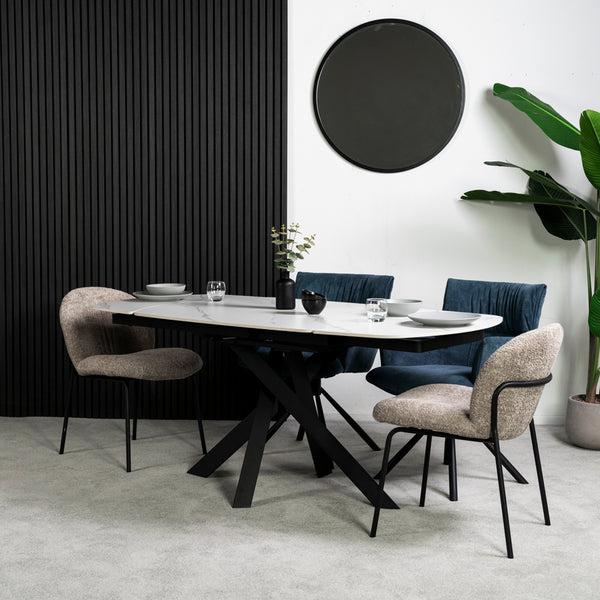
Choosing the right dining table can be challenging when you need to balance seating capacity with the amount of space available. A table that is too large can restrict movement, while a smaller design may not provide enough room when family members or guests gather for a meal.
A 140cm extending dining table can be a practical option for households that want a manageable everyday table with the flexibility to accommodate additional diners. However, whether it is the right choice depends on the table's width, extension mechanism, room dimensions, and the number of people who regularly use it.
Understanding these factors before buying can help you create a dining area that is comfortable, functional, and suited to your home.
1. What Does a 140cm Dining Table Offer?
The measurement of 140cm generally refers to the table's length in its compact configuration, although product specifications should always be checked.
This size can suit smaller households that need enough room for everyday meals without dedicating too much floor space to furniture. Depending on the table's width and shape, it may accommodate several diners comfortably.
An extending design offers an additional advantage. When more seating is required, the table can be expanded to provide a larger dining surface.
The exact extended length varies between models, so it is important to check both dimensions before purchasing. Do not assume that every table measuring 140cm has the same extension capacity or seating arrangement.
2. Measure Your Dining Room Carefully
Before choosing a table, measure the available floor space and identify any obstacles that could affect its position.
Consider doorways, walkways, radiators, cabinets, and nearby furniture. The table should fit comfortably without preventing people from moving around the room.
Where possible, allow approximately 90cm of clearance around the table for pulling out chairs and walking past seated diners.
Remember to calculate the space required when the table is extended. A table that fits perfectly in its compact configuration may become inconvenient when additional guests arrive.
You can use masking tape on the floor to mark the approximate dimensions of the table in both configurations. This simple technique can help you visualise how much space will remain available.
Include the chairs in your planning. Their width, depth, and position can make a significant difference to the overall layout.
3. Consider Your Household's Seating Requirements
Think about how many people regularly use the dining table and how often you entertain guests.
A compact table may be sufficient for a small household, while occasional visitors may create a need for additional seating. An extending design can help accommodate these changing requirements without keeping a large table open every day.
If you frequently host family gatherings, check whether the fully extended table can accommodate everyone comfortably. Consider the width of each place setting, the shape of the tabletop, and the position of the table legs.
The advertised maximum seating capacity should be treated as a guide rather than a guarantee of comfort. Wide chairs and armrests may reduce the number of people who can sit around the table comfortably.
Also consider where extra chairs will be stored when they are not in use.
4. Choose the Right Table Shape
Rectangular tables are a popular option because they can fit along the proportions of many dining rooms. A 140cm rectangular table may work well in a narrow space, particularly when there is sufficient room to move around it.
Round tables can encourage conversation, but their suitability depends on the diameter and the layout of the room.
Oval tables offer a softer outline while retaining some of the seating flexibility associated with rectangular designs.
For compact dining areas, the position of the table can be as important as its shape. Placing a rectangular table parallel to a wall may improve circulation, although enough clearance should remain for people to sit down comfortably.
Compare different designs using the actual dimensions rather than relying on photographs alone.
5. Compare Extension Mechanisms
Extendable tables use different mechanisms to increase the available dining surface.
Some designs incorporate extension leaves that are stored inside the table. Others require separate leaves to be stored elsewhere, while sliding mechanisms may allow the tabletop to expand with less manual handling.
Before purchasing, find out how the mechanism operates and whether one person can extend it safely.
Check that the table remains stable in both configurations and that the extended surface is suitable for everyday use. Look at how the extension panels align with the main tabletop and whether the mechanism requires specific maintenance.
If you expect to extend the table frequently, ease of operation should be an important consideration.
The extension system should improve convenience rather than become an obstacle whenever guests arrive.
6. Select Materials That Suit Your Lifestyle
The table's material affects its appearance, maintenance, and overall suitability for your home.
Wooden finishes can introduce warmth and work with traditional or contemporary interiors. Oak-inspired designs are particularly versatile, while darker wood tones may create a more formal appearance.
Ceramic and marble-effect surfaces can suit modern dining rooms and provide distinctive decorative finishes. Glass can create a lighter visual appearance, although it may require frequent cleaning to remove fingerprints.
Material performance varies by product. Check the manufacturer's information about scratch resistance, heat exposure, cleaning products, and general maintenance.
For busy family homes, a surface that is straightforward to clean may be particularly useful. Placemats and coasters can also help protect the tabletop from spills and heat.
Choose a finish that fits your daily routine rather than selecting one based solely on appearance.
7. Match the Table With Suitable Chairs
The chairs should complement the table while allowing people to sit comfortably.
Check the height of the seat in relation to the tabletop and make sure there is sufficient legroom. If you choose chairs with armrests, verify that they fit beneath the table when not in use.
Slim-profile chairs may be useful in smaller rooms because they can reduce the visual bulk of the dining arrangement. Upholstered chairs can introduce comfort and texture, while wooden or metal designs may create a simpler appearance.
For extending tables, consider whether you have enough matching chairs for the expanded configuration. If additional chairs will be used only occasionally, choose a design that complements the main set without requiring an exact match.
A coordinated arrangement can help the dining room feel complete while keeping everyday use practical.
8. Compare Dining Tables Before Purchasing
Comparing different table sizes and configurations helps you make a more informed decision.
Explore the available 140cm extending dining table options and check their compact and extended dimensions, materials, finishes, and seating recommendations.
It is also useful to compare them with other dining tables to determine whether a fixed-size or differently proportioned design would better suit your room.
Check delivery charges, assembly requirements, warranty coverage, and return policies. For larger furniture items, measure the delivery route to ensure the table can be brought into the property.
Consider the complete cost of the dining arrangement, including chairs and any additional accessories.
Conclusion
A 140cm extending dining table can be an effective solution for households that need a compact everyday arrangement and additional seating flexibility.
The right choice depends on your room dimensions, seating requirements, preferred materials, and the quality of the extension mechanism.
Measure the room in both configurations, account for chair clearance, and compare product specifications carefully. By considering these practical details before purchasing, you can select a dining table that makes efficient use of your space while remaining suitable for everyday meals and occasional gatherings.

 English
 Arabic
 French
 Portuguese
 Deutsch
 Turkish
 Dutch
Dutch
 Italiano
 Russian
 Romaian
 Portuguese (Brazil)
 Greek
Greek
 Bengali