


Beyond Smoke Alarms: How a Flame Detection System Strengthens Industrial Fire Protection
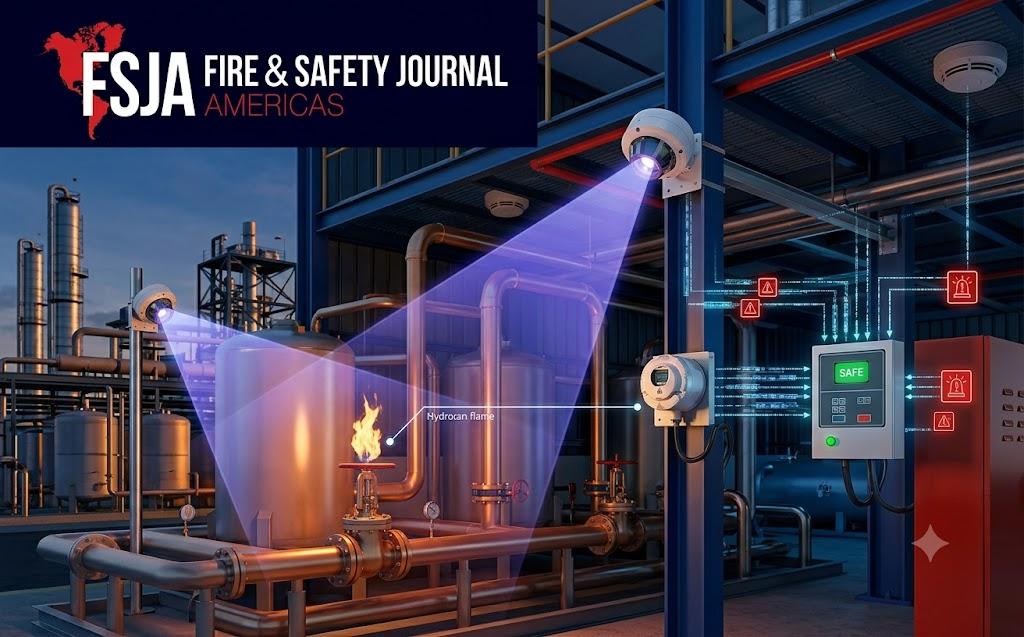
Industrial fires can develop rapidly, particularly in environments where flammable liquids, combustible gases, high temperatures and complex machinery are present. Although smoke alarms and heat detectors remain essential parts of fire protection, some hazards require specialised technology capable of identifying flames at an early stage. Effective detection can help personnel initiate emergency procedures before a small incident develops into a major industrial emergency.
In high-risk environments, a flame detection system provides an additional layer of fire protection by identifying the radiation emitted by flames and recognising potential fire conditions. Depending on the technology, these devices can detect ultraviolet radiation, infrared radiation or a combination of different spectral signals. Their ability to respond to visible and certain invisible characteristics of fire makes them useful in environments where traditional detection methods may face limitations.
For industrial facilities, understanding how flame detection works, where it is appropriate and how it should be maintained is an important part of developing a reliable fire protection strategy.
Understanding How Flame Detection Technology Works
Flames produce electromagnetic radiation across different wavelengths. Optical detectors are designed to recognise specific characteristics associated with this radiation and distinguish potential fires from other environmental sources.
Ultraviolet detectors identify ultraviolet emissions associated with combustion. Infrared detectors recognise radiation within selected infrared wavelengths, while multispectrum devices analyse multiple wavelengths to improve discrimination between flames and potential sources of interference.
A flame detection system typically processes signals received by its sensor before communicating an alarm condition to a connected fire alarm panel or safety control system. The response depends on the detector's design, configuration and the characteristics of the fire.
This technology does not replace every other type of fire detector. Instead, it complements smoke, heat and other detection technologies by addressing particular hazards and environmental conditions.
Why Traditional Smoke Detection May Not Be Enough
Smoke detection works effectively in many buildings, including offices, accommodation areas and enclosed commercial spaces. However, industrial environments can present different challenges.
Strong ventilation may disperse smoke before it reaches a detector. High ceilings can affect the movement of smoke towards ceiling-mounted devices, while outdoor installations may expose equipment to wind and changing weather conditions. Some fires involving flammable liquids can also produce substantial flames before smoke detection becomes effective at a particular sensor location.
Optical flame detection offers another approach by monitoring radiation from a flame within the detector's effective field of view.
This makes it particularly relevant for selected fuel handling areas, industrial processing equipment and locations where a fire could escalate rapidly. Nevertheless, detector performance depends on line of sight, fuel characteristics, environmental interference and correct installation.
Key Applications Across Industrial Facilities
Oil and gas processing
Facilities handling hydrocarbons can face rapidly developing fires involving liquids, vapours and gases. Suitable optical detectors may provide early warning around selected processing equipment, transfer points and storage installations.
Manufacturing environments
Manufacturing facilities may contain heating equipment, combustible materials and machinery capable of generating ignition sources. Detection requirements vary according to the materials handled and the processes undertaken.
Warehouses and distribution centres
Certain storage environments contain flammable liquids, packaging materials or specialised industrial equipment. Flame detectors can complement conventional detection where a specific hazard assessment supports their use.
Power generation and energy facilities
Selected fuel handling areas, turbine enclosures and other high-risk installations may benefit from optical flame detection. Equipment selection should reflect the anticipated fire type and operating environment.
In every application, a flame detection system should be selected through a documented assessment of hazards, environmental conditions and the consequences of delayed detection.
Choosing the Right Detection Technology
No single detector is appropriate for every industrial setting. Ultraviolet technology may respond quickly to suitable flame emissions, but certain environmental sources can affect its operation. Infrared detectors can be useful for particular hydrocarbon fires, although hot surfaces and other infrared sources may create challenges.
Multispectrum detectors analyse more than one wavelength and can improve resistance to certain nuisance alarms. However, their performance still depends on detector specifications, installation conditions and the fire characteristics they are designed to recognise.
Before choosing equipment, facility managers should consider:
-
The types of fuel and combustible materials present.
-
The expected size and location of potential fires.
-
The distance between the hazard and the detector.
-
Obstructions that could block the detector's view.
-
Exposure to sunlight, hot surfaces, dust and other interference.
-
Environmental protection, hazardous-area suitability and maintenance requirements.
-
Compatibility with existing alarm and emergency control arrangements.
These considerations help ensure that the equipment matches the actual risk rather than relying solely on general performance claims.
Installation and Coverage Considerations
Correct installation is essential to reliable fire detection. A detector may have suitable technical specifications but still perform poorly if its field of view is obstructed or the expected flame location falls outside its effective coverage.
Engineers should identify credible fire scenarios and determine the areas that require monitoring. Equipment, structural supports, partitions and stored materials must be considered when evaluating coverage.
The detector's viewing angle, operating distance and sensitivity settings should follow manufacturer instructions and the relevant design requirements. Where a hazard cannot be monitored adequately by one device, additional detectors or complementary technologies may be necessary.
A properly designed flame detection system should also be integrated with clear alarm procedures. Personnel need to understand how alarms are communicated, who is responsible for responding and which actions are permitted under the facility's emergency plan.
Maintenance, Testing and Operational Reliability
Even sophisticated detection equipment requires regular inspection. Dust, residue, condensation or physical damage can affect the optical window and reduce detection performance. Changes to machinery, storage arrangements or building layouts can also introduce new obstructions.
Maintenance programmes should include visual inspections, manufacturer-approved functional testing, verification of alarm communication and documentation of defects. Testing intervals should reflect applicable requirements, the equipment instructions and the facility's risk assessment.
Personnel should never assume that a detector remains effective simply because it has not reported a fault. Planned testing helps identify issues that may otherwise remain unnoticed.
Training is equally important. Staff should understand alarm signals, evacuation arrangements and reporting procedures. Where detection activates automatic shutdowns or suppression equipment, these interfaces must be tested under an approved procedure.
Integrating Detection Into a Wider Fire Strategy
Early detection is only one part of industrial fire protection. Prevention measures, safe operating procedures, ignition control, suitable suppression systems and emergency training remain necessary.
A flame detection system may provide an alarm or initiate predefined actions through an approved control arrangement. Depending on the design, these actions could include notifying an operator, initiating an emergency shutdown or activating compatible suppression equipment.
Automatic actions must be engineered carefully to prevent unintended consequences. Cause-and-effect documentation, commissioning tests and periodic verification help confirm that connected systems operate as intended.
For readers of Fire & Safety Journal Americas, the central consideration is how detection technology supports a coordinated approach to industrial safety rather than functioning as an isolated device.
Conclusion
Industrial fire protection requires solutions suited to the materials, processes and environmental conditions present at each facility. Optical flame detection can provide an important layer of protection where rapid flame recognition is necessary and conventional detection methods have limitations.
Selecting appropriate technology, designing adequate coverage, maintaining equipment and training personnel all contribute to effective performance. When incorporated into a broader fire safety strategy, a flame detection system can help organisations identify dangerous conditions and respond more effectively to developing incidents.
Frequently Asked Questions
1. What is a flame detection system?
It is a fire detection arrangement that uses optical sensors to identify radiation associated with flames and communicate potential fire conditions to an alarm or safety control system.
2. How is flame detection different from smoke detection?
Flame detectors recognise characteristics of flame radiation, while smoke detectors identify smoke particles. Each technology addresses different detection requirements and may be used alongside the other.
3. Where are flame detectors commonly installed?
They are used in selected industrial processing areas, fuel handling facilities, manufacturing environments and other locations where a fire risk assessment identifies a need for optical flame detection.
4. Can flame detectors produce false alarms?
Yes. Sunlight, hot surfaces, welding activities and other sources of interference can affect certain detector technologies. Appropriate selection, positioning and configuration help reduce this risk.
5. How often should flame detection equipment be tested?
Testing frequency should follow manufacturer instructions, applicable regulations and the facility's risk assessment. Inspection and functional testing should be documented as part of the maintenance programme.

 English
 Arabic
 French
 Spanish
 Portuguese
 Deutsch
 Turkish
 Dutch
Dutch
 Italiano
 Russian
 Portuguese (Brazil)
 Greek
Greek
 Bengali