


Google Ads for Dentists: Smart Strategies to Attract More Patients
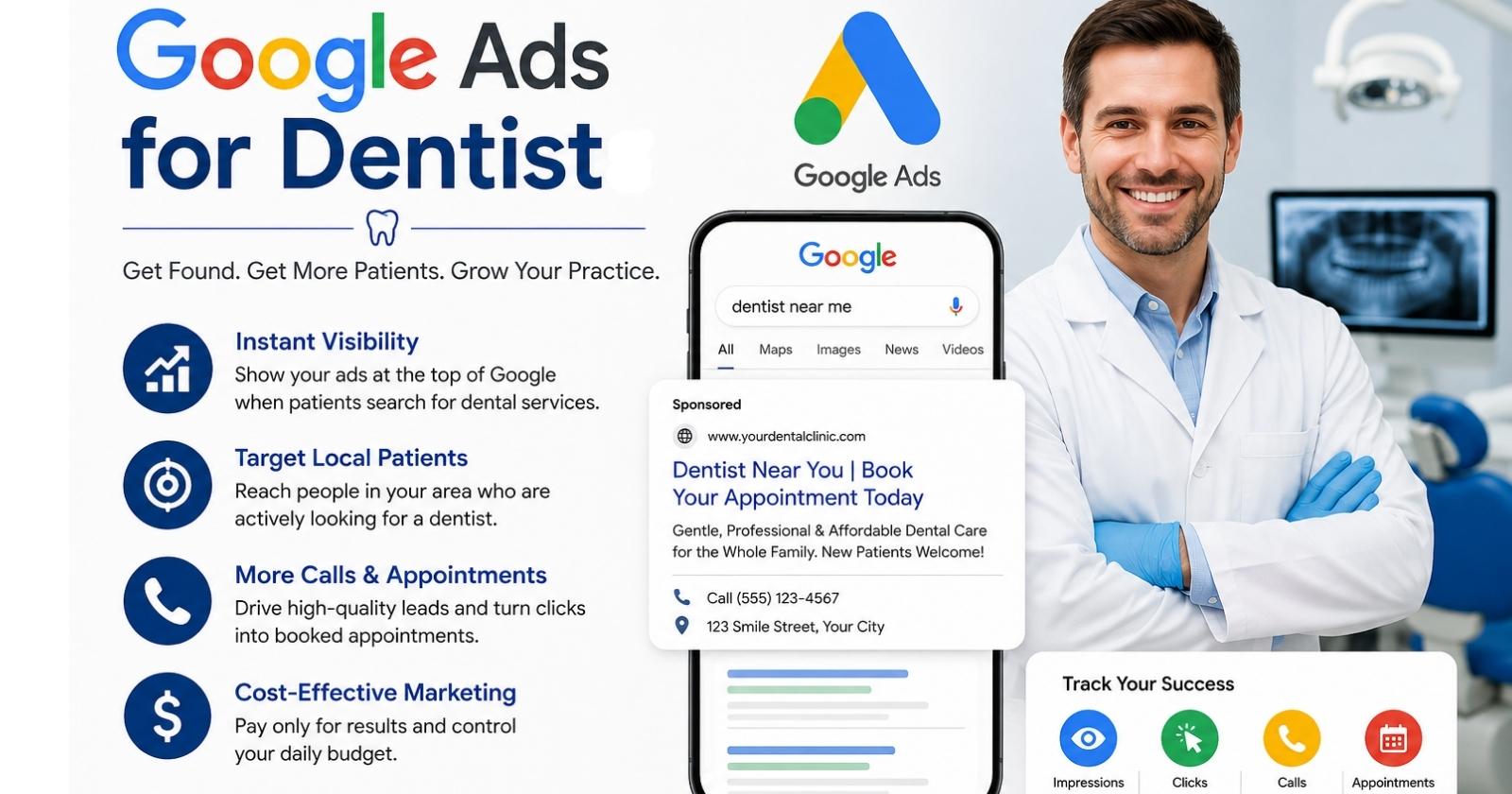
When people need a dentist, they often search online for nearby clinics, specific treatments, or emergency dental care. If your practice does not appear when potential patients are actively looking for these services, you may miss valuable opportunities to connect with them. Google Ads can help dental practices increase visibility and reach people who are searching for relevant dental treatments.
However, successful campaigns require more than setting a budget and choosing a few keywords. Effective Google Ads for dentists combines careful targeting, relevant advertisements, useful landing pages, and ongoing performance monitoring. With the right strategy, dental practices can make better use of their advertising budgets and encourage potential patients to take the next step.
What Are Google Ads for Dentists?
Google Ads is an online advertising platform that allows businesses to display advertisements in Google search results and across other advertising placements. Dental practices can use search campaigns to reach people looking for services such as routine checkups, teeth whitening, dental implants, or emergency dental appointments.
For example, someone searching for a dentist offering a particular treatment may see a relevant advertisement near the top of the search results. If the ad provides useful information and leads to a clear service page, the person can learn more about the practice and contact the clinic.
Unlike organic search optimization, paid search can provide visibility without waiting for a website to improve its organic rankings. However, visibility depends on factors such as bidding, competition, ad quality, targeting, and campaign settings. Advertising does not guarantee appointments or a particular number of new patients.
Key Benefits of Google Advertising for Dental Practices
1. Reach People With Relevant Search Intent
One of the main advantages of paid search is the ability to connect with people actively searching for dental services. A well-structured campaign can focus on searches related to the treatments a practice provides.
For instance, a clinic offering dental implants can create a campaign specifically for implant-related searches instead of using one advertisement for every dental service. This makes the message more relevant to the person searching.
2. Control Your Advertising Budget
Google Ads allows advertisers to set campaign budgets and adjust bids according to their goals. This gives dental practices control over how much they are willing to spend, although actual costs depend on auction activity and campaign settings.
Start with a budget the practice can reasonably sustain. Review spending alongside meaningful outcomes, such as qualified enquiries and appointment requests, rather than judging performance solely by clicks.
3. Measure Campaign Performance
Advertising data helps dentists understand how campaigns perform. You can monitor impressions, clicks, click-through rates, conversion actions, and cost per conversion when tracking is configured correctly.
These insights help identify which keywords and advertisements attract relevant visitors. They can also reveal where improvements are needed, such as a poorly performing landing page or search terms that do not match the clinic’s services.
How to Build an Effective Dental Google Ads Campaign
Choose the Right Keywords
Keyword research is one of the most important steps in campaign planning. Focus on terms that reflect the services your practice actually offers and the intentions of potential patients.
For example, a general dental practice might target searches related to routine dental appointments, while a specialist clinic may focus on a particular treatment.
Organize related keywords into separate ad groups where appropriate. This makes it easier to create advertisements that match the search and direct users to relevant pages.
Negative keywords are equally important. They help prevent advertisements from appearing for irrelevant searches. Depending on the practice, terms related to jobs, training courses, or unrelated products may be worth excluding.
Review actual search terms regularly and refine the keyword list as the campaign develops.
Write Clear and Relevant Advertisements
An effective advertisement should communicate what the practice offers and why a potential patient should learn more. Use straightforward wording, highlight relevant services, and provide a clear next step.
For example, an ad for a family dental practice might emphasize its range of services, convenient appointment options, and location, provided these details are accurate.
Avoid unsupported claims, guaranteed treatment outcomes, or misleading statements about prices and availability. Healthcare advertising requirements vary by location, so check the rules that apply to your practice.
Create Dedicated Landing Pages
Sending every advertisement to the homepage can create an unnecessary barrier for visitors. A dedicated landing page should match the advertised service and provide the information people need to make an enquiry.
Include a clear description of the treatment, relevant details about the practice, contact information, and a visible appointment request option. Ensure the page works well on mobile devices and loads quickly.
For example, an advertisement for teeth whitening should lead to a page about that service rather than a general page covering every treatment. A close match between the ad and landing page can create a more consistent user experience.
Improve Results With Local Targeting and Conversion Tracking
Dental practices often serve patients within a specific geographic area. Location targeting helps advertisers focus campaigns on relevant areas instead of spending money reaching people who are unlikely to visit the clinic.
Choose locations based on the practice’s actual service area and review location settings carefully. Do not assume every person physically present in a selected region is an appropriate potential patient.
Conversion tracking is also essential. Depending on the campaign, useful actions may include completed appointment forms, calls to the clinic, or other meaningful enquiries. Set up tracking carefully and test it before relying on the data.
Protect patient privacy when measuring results. Avoid placing sensitive health information in tracking parameters or advertising audience lists, and follow applicable privacy and platform policies.
How Ads for Dentists Can Support Practice Growth
Well-managed ads for dentists can help promote specific services, support new-practice awareness, or increase visibility during periods when the clinic has capacity for additional appointments.
The campaign should reflect the practice’s priorities. A clinic seeking more routine checkups may need a different strategy from one promoting a specialist treatment.
Start with a clear objective, relevant keywords, a realistic budget, and a useful landing page. Then assess whether the campaign generates enquiries that match the services offered.
A high number of clicks is not necessarily a sign of success. If visitors leave without contacting the practice, review search intent, advertisement wording, page relevance, and the booking process before increasing spending.
How Google Ads Fits Into a Broader Advertising Strategy
Paid search is one part of advertising for dentists. Other marketing activities, including local SEO, a well-designed website, patient communication, and an accurate business profile, can help support the overall patient journey.
For example, a potential patient may click an advertisement, review the clinic’s services, and later return through an organic search. A clear, consistent online presence helps people find reliable information at each stage.
Consider the practice’s overall goals before dividing the marketing budget. Paid campaigns may help generate immediate visibility, while SEO supports organic discovery over time. The appropriate balance depends on competition, resources, and the practice’s needs.
Why Professional Campaign Management Matters
Managing Google Ads requires keyword research, campaign structure, budget monitoring, advertisement testing, conversion tracking, and regular adjustments. A dental practice may choose to manage these tasks internally or work with an experienced marketing provider.
Before selecting a provider, ask how it researches keywords, identifies irrelevant traffic, measures conversions, and reports results. Request transparency about management fees, advertising costs, and the work being performed.
Be cautious of anyone promising guaranteed rankings, a fixed number of patients, or certain results within a specific period. Advertising outcomes depend on competition, demand, budget, and the quality of the complete booking journey.
A reliable provider should explain campaign decisions clearly and help the practice understand what the data shows.
Conclusion
Google Ads can help dental practices reach people searching for relevant treatments, increase online visibility, and generate opportunities for new patient enquiries. Success depends on choosing relevant keywords, writing clear advertisements, using dedicated landing pages, targeting appropriate locations, and measuring meaningful conversions.
Start by identifying the services you want to promote and setting a realistic budget. Review campaign performance regularly, improve underperforming areas, and ensure every advertisement provides accurate information. With careful planning, Google Ads for dentists can become a valuable part of a balanced dental marketing strategy.

 English
 Arabic
 French
 Portuguese
 Deutsch
 Turkish
 Dutch
Dutch
 Italiano
 Russian
 Romaian
 Portuguese (Brazil)
 Greek
Greek
 Bengali