


CNC Machining Prototyping: Benefits for Modern Product Development
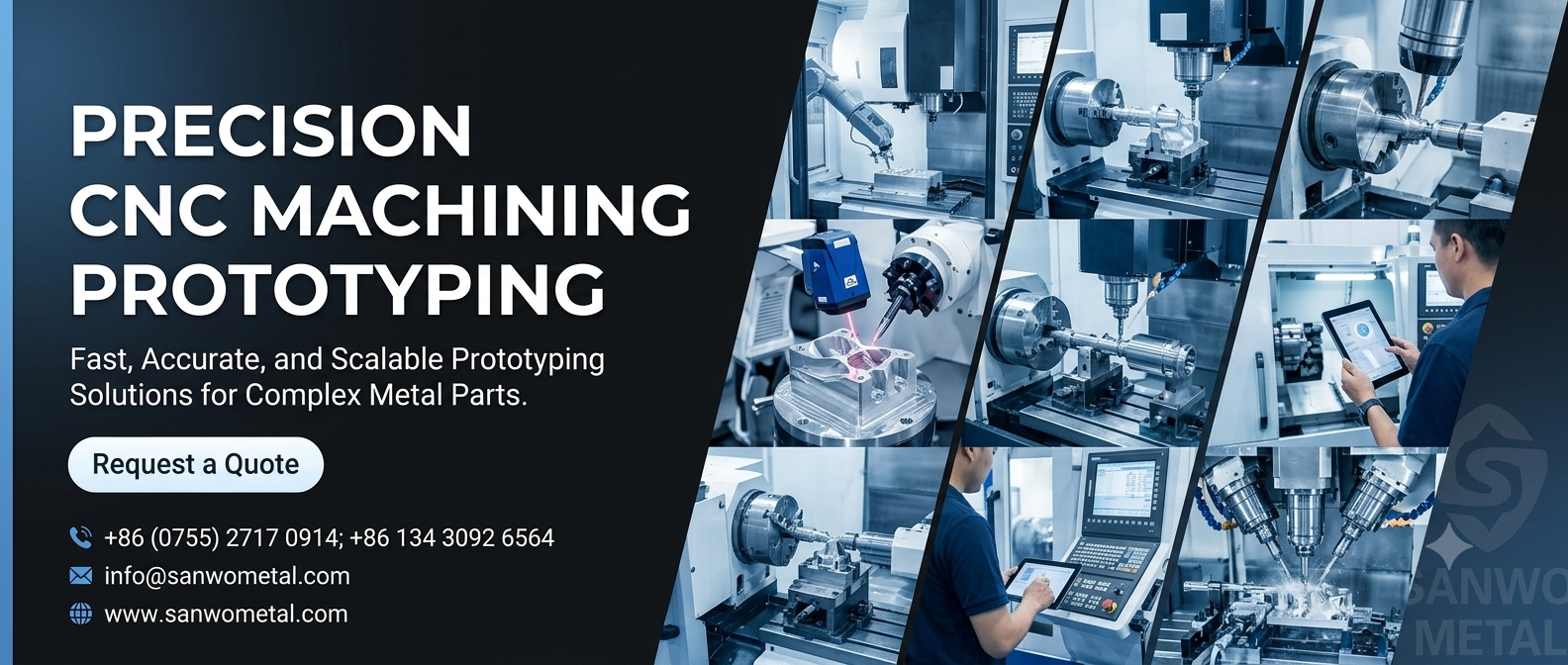
Modern product development requires accuracy, efficiency, and careful testing before a design moves into full-scale manufacturing. Businesses must verify dimensions, evaluate materials, identify design problems, and control production costs. CNC machining prototyping helps achieve these goals by transforming digital designs into precise physical components that engineers can inspect, assemble, and test.
From automotive components to electronic enclosures and industrial equipment, CNC-machined prototypes help manufacturers evaluate product designs under practical conditions. By identifying potential issues early, businesses can make informed decisions and improve the transition from concept to production.
What Is CNC Machining Prototyping?
CNC machining prototyping is a manufacturing process that uses computer-controlled machines to create physical prototypes from digital designs. Engineers typically begin with a computer-aided design (CAD) model, which is converted into machining instructions that guide cutting tools through the required operations.
Common CNC machining processes include milling, turning, drilling, and boring. Depending on the component's design, manufacturers can produce prototypes from aluminum, stainless steel, brass, and engineering plastics.
Unlike a purely visual model, a CNC-machined prototype can often replicate the materials, dimensions, and mechanical features of the intended production component. This makes it valuable for functional testing, dimensional inspection, and design validation.
Key Benefits of CNC Machining Prototyping
1. Improved Design Accuracy
Accuracy is essential when components must fit together or meet strict engineering specifications. CNC machines follow programmed instructions to create features such as mounting holes, threads, slots, and precision surfaces.
A physical prototype allows engineers to check whether the manufactured part matches the CAD design. They can measure critical dimensions, inspect tolerances, and verify assembly requirements before approving the design for production.
This is particularly useful for mechanical assemblies, precision housings, brackets, and custom industrial components.
2. Faster Product Development
Developing a new product often involves several design revisions. Each revision must be evaluated before the next stage begins.
CNC prototyping helps teams move from a digital model to a physical part without committing to large production quantities. Engineers can inspect the first prototype, collect feedback, modify the design, and manufacture an improved version.
This iterative process can shorten development cycles by helping teams identify and resolve issues earlier.
3. Reduced Manufacturing Risks
Design problems discovered after mass production begins can lead to expensive rework, wasted materials, and delivery delays.
Prototypes help manufacturers evaluate important factors before scaling production, including:
-
Component dimensions and tolerances
-
Assembly compatibility
-
Material suitability
-
Tool accessibility and machining requirements
-
Potential interference between moving parts
-
Surface finish and functional requirements
Identifying these issues during development gives engineering teams more opportunities to improve the design before production commitments increase.
4. Access to Production-Grade Materials
One major advantage of CNC machining is the ability to manufacture prototypes from materials that may also be used in the final product.
Aluminum is popular because it offers low weight, good machinability, and useful mechanical properties. Stainless steel may be suitable for components requiring corrosion resistance, while brass can be selected for particular electrical or mechanical applications.
Engineering plastics are also useful when the product requires electrical insulation, low weight, or specific wear characteristics.
Selecting the right material helps engineers evaluate how a component may perform in its intended environment.
5. Cost-Effective Design Improvements
Although CNC machining requires programming and setup, prototyping can help prevent expensive production mistakes. A manufacturer can test a design in smaller quantities before committing to tooling, inventory, or larger manufacturing runs.
Cost savings may come from simplifying unnecessary features, improving material utilization, reducing assembly problems, and correcting dimensions before production.
The overall benefit depends on the part's geometry, material, machining time, tolerances, and order quantity. CNC prototyping is therefore most effective when the process is selected according to the project's technical and commercial requirements.
CNC Machining Prototyping vs. 3D Printing
CNC machining and 3D printing both support product development, but each method has different strengths.
| Feature | CNC Machining | 3D Printing |
|---|---|---|
| Manufacturing method | Removes material from a workpiece | Builds parts layer by layer |
| Common materials | Metals and engineering plastics | Primarily polymers, plus materials supported by specific technologies |
| Surface quality | Can provide smooth machined surfaces | May require post-processing |
| Complex internal shapes | Can be challenging to machine | Often easier to produce |
| Functional metal prototypes | Suitable for many metal components | Depends on the printing technology |
| Best suited for | Precision parts and machined features | Complex shapes and rapid design iterations |
Which method should you choose? CNC machining is often appropriate when a prototype needs accurate machined surfaces, metal construction, or features representative of the final component. 3D printing can be advantageous for complex geometries, early visual models, and designs that are difficult to machine. Some development projects benefit from using both technologies at different stages.
Common Applications Across Industries
CNC-machined prototypes are used in industries where dimensional accuracy, functional evaluation, and dependable component quality matter.
Automotive Manufacturing
Automotive engineers use prototypes to assess brackets, housings, fixtures, and mechanical components. Physical parts help verify assembly requirements and evaluate design changes before production.
Aerospace Engineering
Lightweight, precision-machined components can help engineers evaluate fit, geometry, and manufacturing feasibility. Aerospace applications may also require specific materials, inspection procedures, and traceability.
Electronics
CNC machining is commonly used to develop enclosures, heat sinks, mounting plates, and other components that require precise dimensions and reliable fit.
Medical Equipment
Prototype components can support the development of equipment housings, mechanical assemblies, and specialized devices. Applicable regulatory and material requirements must be considered for the intended use.
Robotics and Industrial Machinery
Robotic systems and industrial machines often contain interconnected mechanical components. Prototypes help engineers check alignment, clearances, mounting locations, and movement before manufacturing larger quantities.
Why Aluminum Is Popular for CNC Prototypes
Aluminum is widely used in product development because it combines low weight with good machinability and a useful strength-to-weight ratio. It can be manufactured into housings, brackets, fixtures, structural components, and other precision parts.
Aluminum prototypes also allow engineers to evaluate real metal components rather than relying entirely on plastic models or computer simulations.
When selecting an aluminum grade, manufacturers should consider strength requirements, corrosion exposure, machinability, surface finishing, and the operating environment. The best choice depends on the product's specific engineering needs.
How to Choose a CNC Prototyping Partner
Choosing a capable manufacturing partner can influence prototype quality, delivery schedules, and the ease of moving toward production.
Before selecting a supplier, consider the following factors:
-
Machining capabilities: Confirm that the supplier can manufacture the required geometry and features.
-
Material availability: Check whether suitable metals or engineering plastics are available.
-
Tolerance requirements: Discuss critical dimensions and how they will be inspected.
-
Quality control: Ask about measurement equipment, inspection procedures, and documentation.
-
Surface finishing: Determine whether finishing operations are available when required.
-
Engineering support: Look for assistance with manufacturability and design improvements.
-
Production flexibility: Consider whether the supplier can support prototype revisions and low-volume orders.
-
Communication and lead times: Confirm specifications, delivery expectations, and revision procedures before production begins.
Clear technical drawings, complete CAD files, material specifications, and documented tolerances can also help reduce misunderstandings.
How SanwoMetal Supports Product Development
SanwoMetal offers manufacturing solutions for businesses seeking precision components, custom metal parts, and prototype development. CNC machining and related manufacturing services can help product teams move from digital designs toward physical components for evaluation.
When planning a prototype project, businesses should provide clear drawings, material requirements, critical tolerances, finishing details, and expected quantities. These details help establish manufacturing requirements and support a more efficient quotation and production process.
By evaluating designs before larger production commitments, companies can make better-informed decisions and prepare their components for the next stage of development.
Frequently Asked Questions
1. What is CNC machining prototyping used for?
It is used to create physical components from digital designs so engineers can evaluate dimensions, assembly, material selection, functionality, and manufacturing feasibility before production.
2. What materials can be used for CNC prototypes?
Common materials include aluminum, stainless steel, brass, copper, titanium, and engineering plastics. Selection depends on the component's mechanical, environmental, and dimensional requirements.
3. Is CNC machining suitable for product development?
Yes. It is useful for producing accurate prototypes, testing mechanical features, evaluating materials, and identifying design problems before manufacturing larger quantities.
4. How does CNC prototyping improve product quality?
It allows teams to inspect physical parts, measure critical features, test assembly, and refine designs before approving components for production.
5. Is CNC machining better than 3D printing for prototypes?
Neither method is always better. CNC machining is often suitable for precision metal parts, while 3D printing can be useful for complex geometries and rapid early-stage models.
6. How long does CNC prototyping take?
Lead time depends on part complexity, material availability, machining requirements, tolerances, finishing, and supplier capacity. Simple components may be completed faster than complex parts requiring multiple operations.
7. Can CNC-machined prototypes be used for functional testing?
Yes, when the material, design, manufacturing quality, and inspection requirements are appropriate for the intended test. Safety-critical testing may require additional validation.
8. Why is aluminum commonly used for prototypes?
Aluminum offers low weight, good machinability, and useful strength for many applications. It is frequently used for housings, brackets, fixtures, and mechanical components.
9. Does CNC prototyping help reduce manufacturing costs?
It can help reduce costs by revealing design errors, assembly issues, and unnecessary features before larger production runs. Actual savings depend on the project and manufacturing process.
10. Can CNC prototyping support low-volume production?
Yes. CNC machining can be used for prototypes and small batches when the part design, production requirements, and economics are suitable.
11. What information is needed for a CNC machining quote?
Suppliers commonly need CAD files or technical drawings, material specifications, quantities, tolerances, surface finish requirements, and the desired delivery schedule.
12. How can I prepare a design for CNC machining?
Use complete CAD models and drawings, identify critical dimensions, specify materials and finishes, and review features that may be difficult or costly to machine. Design-for-manufacturing feedback can help improve the result.
Conclusion
CNC machining prototyping helps manufacturers transform digital designs into precise physical components that can be measured, assembled, tested, and improved. Its benefits include better design validation, access to production-grade materials, earlier identification of manufacturing problems, and more informed production decisions.
For companies developing new products, selecting the right machining process and manufacturing partner can make prototype development more efficient and dependable. SanwoMetal supports businesses seeking precision manufacturing and custom component solutions as they progress from initial concepts toward production.
Planning a new product or custom component? Visit SanwoMetal to explore its manufacturing services and discuss the requirements of your next project.

 English
 Arabic
 French
 Spanish
 Portuguese
 Deutsch
 Turkish
 Dutch
Dutch
 Italiano
 Romaian
 Portuguese (Brazil)
 Greek
Greek
 Bengali