


How to Choose a UAE Peppol E-Invoicing Provider for Your Business
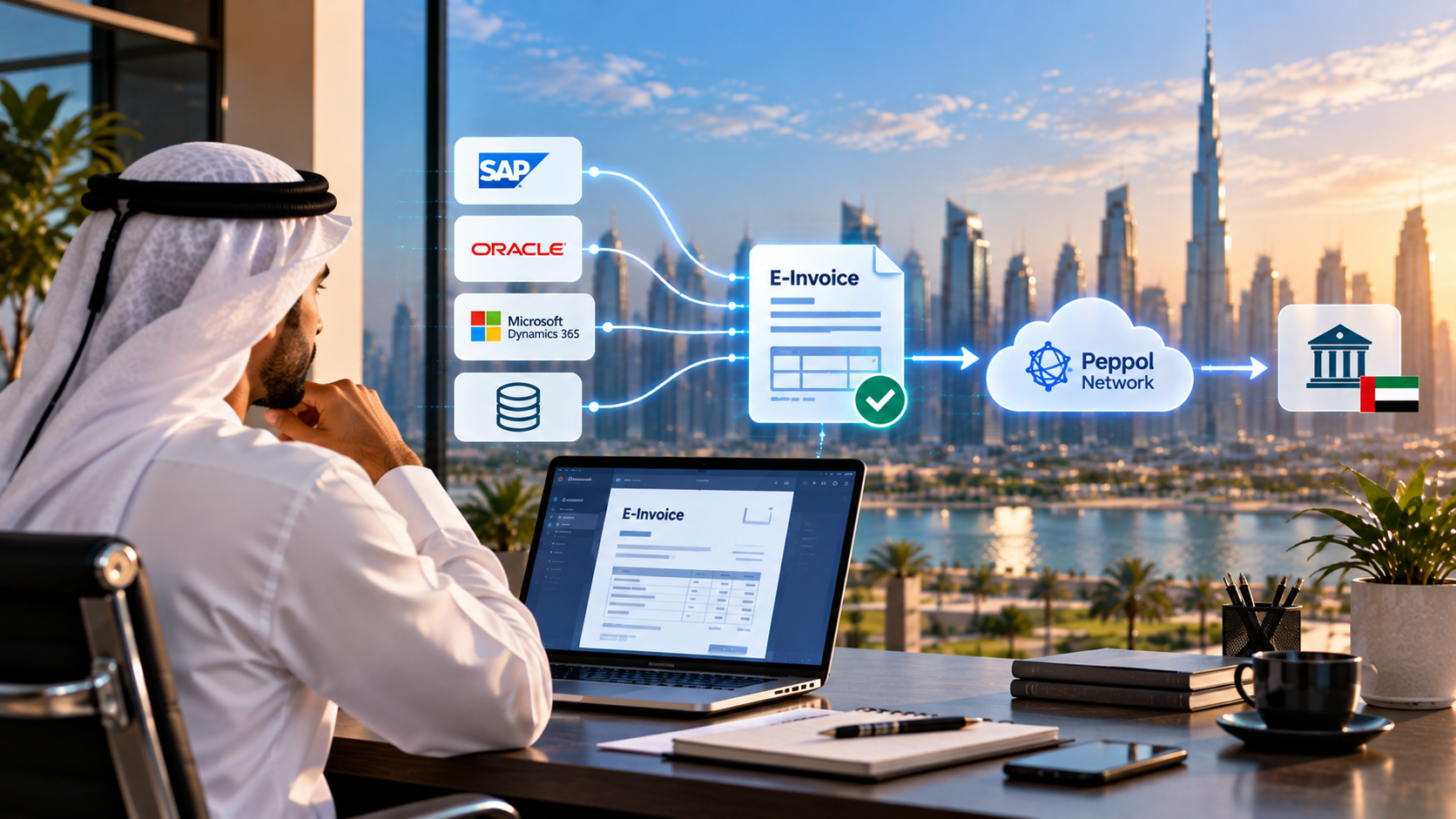
Businesses exchanging invoices with customers and suppliers need to consider how their invoicing systems will work as electronic invoicing requirements evolve. Moving from PDFs and manual invoice processing to structured electronic documents can affect finance teams, IT systems and existing approval workflows.
Choosing a provider requires more than comparing software prices. Businesses should understand how invoices will be exchanged, how their existing systems will connect to the new process, and what support they will receive during implementation.
A UAE Peppol e-invoicing provider should be evaluated on its technical capabilities, accreditation status and ability to support the company's invoicing requirements. These factors help businesses identify a suitable partner before committing to an implementation plan.
What Does a Peppol E-Invoicing Provider Do?
Peppol provides a framework for exchanging structured electronic business documents between connected organisations. Unlike a PDF invoice sent by email, a structured e-invoice contains data that compatible systems can process electronically.
In the UAE, the e-invoicing framework uses Peppol-based standards to support invoice exchange and tax data reporting. Service providers help businesses connect their invoicing systems to the required infrastructure, exchange electronic invoices and manage technical aspects of the process.
The provider's role can extend beyond sending invoices. Depending on the solution, businesses may need assistance with data mapping, invoice validation, system integration, testing and ongoing technical support.
Five Factors to Check Before Selecting a Provider
1. Verify Accreditation Status
Accreditation should be one of the first checks when evaluating a provider for UAE e-invoicing. Businesses should consult the UAE Ministry of Finance's official list and confirm the provider's current status instead of relying only on website claims or marketing material.
Ask how the provider handles applicable UAE requirements, technical updates and changes to invoice specifications. A provider should be able to explain its responsibilities clearly and show how it supports the required invoicing workflow.
2. Check ERP and Accounting Software Compatibility
Many businesses already generate invoices through enterprise resource planning (ERP) or accounting software. Replacing an established system solely to support electronic invoicing may create unnecessary work.
Before selecting a provider, check whether it can integrate with the existing ERP, retrieve the required invoice data and return relevant processing information to the business system. Companies using SAP, Oracle or Microsoft Dynamics should ask about the integration method, configuration requirements and testing process.
For example, a distributor processing invoices through an ERP may need customer details, tax information, invoice numbers and line-item data to move accurately between systems. Testing these fields before launch can help identify mapping errors early.
3. Understand Data Validation and Error Handling
Incorrect invoice data can interrupt processing and require finance teams to investigate problems manually. Businesses should understand how the proposed solution checks invoice information and communicates errors.
Ask whether the system identifies missing mandatory fields, invalid data formats and other issues before an invoice is exchanged. Also establish what happens when an invoice fails validation, an exchange is unsuccessful or a correction is required.
Clear error messages and a defined resolution process can help finance and IT teams investigate problems without repeatedly checking multiple systems.
4. Review Security and Business Continuity
Electronic invoices contain commercial and tax-related information, so businesses should understand how the provider protects data during transmission and storage.
Review the provider's security controls, access management, encryption practices, incident response procedures and business continuity arrangements. Ask how service disruptions are communicated and how pending transactions are handled when the system becomes available again.
These discussions are particularly relevant for businesses that process invoices throughout the working day and depend on reliable communication between finance systems and external parties.
5. Compare Implementation and Support
A solution that meets technical requirements still needs a practical implementation plan. Businesses should establish the expected onboarding steps, responsibilities of internal teams, testing requirements and availability of technical support.
Request a clear explanation of implementation costs, recurring charges and any additional fees for integrations or customisation. This makes it easier to compare providers on the total cost of operating the solution rather than the initial price alone.
How ERP Integration Fits Into UAE E-Invoicing
ERP integration deserves particular attention when a company processes invoices across several departments or business locations. Without a suitable connection, employees may need to transfer data manually, maintain duplicate records or investigate inconsistencies between systems.
An integrated workflow can move invoice information from the existing business system into the e-invoicing process and help return relevant status information. The exact workflow depends on the ERP, provider and implementation design.
Businesses comparing their options can review Webtel's UAE e-invoicing solution to learn more about its stated approach to ERP integration and electronic invoicing support.
Before making a decision, ask the provider to explain the integration process using a representative invoice. Confirm which fields are transferred, how errors are reported, and how the completed workflow will be tested before production use.
Prepare Before You Commit
The right provider should fit the business's existing systems, explain its compliance responsibilities and offer a clear plan for implementation and ongoing support. Businesses should also confirm their applicable deadlines and obligations using official UAE guidance.
A structured evaluation helps companies avoid choosing a solution based on price or marketing claims alone. By checking accreditation, system compatibility, data validation, security and support in advance, finance and IT teams can make a more informed decision about their electronic invoicing setup.

 English
 Arabic
 French
 Spanish
 Portuguese
 Deutsch
 Turkish
 Dutch
Dutch
 Italiano
 Russian
 Romaian
 Portuguese (Brazil)
 Bengali