


How Automobile Parts Manufacturing Works: Processes and Technologies
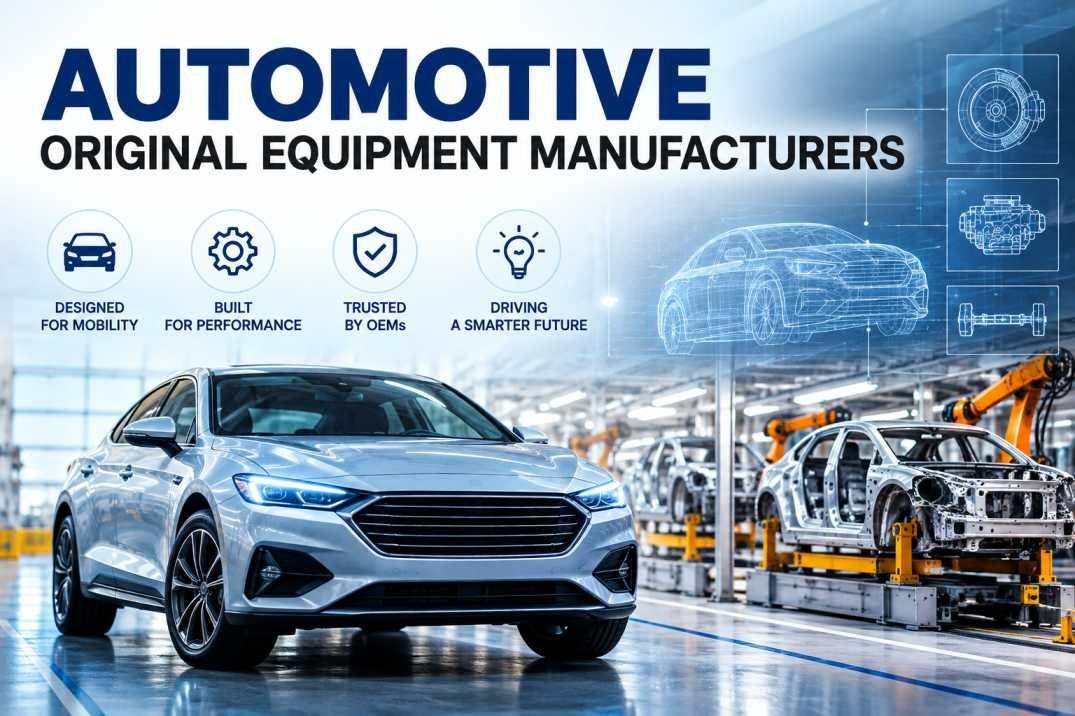
The automotive industry depends on precision-engineered components that ensure vehicle safety, performance, durability, and efficiency. From engine components and braking systems to suspension parts, electrical assemblies, and body panels, every automobile requires numerous parts manufactured through specialized production processes.
Automobile parts manufacturing involves converting raw materials into functional components using engineering techniques, industrial machinery, and quality control systems. Manufacturers combine traditional production methods with modern technologies to meet strict dimensional tolerances, performance requirements, and production targets.
Understanding how automobile parts manufacturing works helps businesses, engineers, suppliers, and industry professionals understand the processes behind reliable automotive components.
1. Raw Material Selection and Preparation
The first stage of automobile parts manufacturing is selecting suitable raw materials. The choice depends on the component's function, operating environment, required strength, weight, and production cost.
Common materials include steel, aluminum, cast iron, copper, engineering plastics, rubber, and composite materials. For example, high-strength steel may be used for structural components, while aluminum is suitable for applications where reducing vehicle weight is important.
After selection, raw materials are inspected for dimensions, composition, surface defects, and mechanical properties. Materials may then be cut, cleaned, heated, or prepared for subsequent manufacturing operations.
Proper material selection helps ensure that the finished component meets its intended performance and durability requirements.
2. Casting and Forging Processes
Casting and forging are widely used processes for producing automotive components with specific shapes and mechanical properties.
Casting
Casting involves melting a material and pouring it into a mold to create the required shape. After cooling and solidification, the component is removed and prepared for finishing operations.
This process is commonly used to manufacture engine housings, transmission cases, cylinder heads, and other components with complex geometries.
Casting can support large-scale production, although the final quality depends on mold design, material control, cooling conditions, and inspection procedures.
Forging
Forging shapes metal through compressive forces applied using presses or hammers. The process can improve the strength and structural integrity of suitable metal components.
Automotive manufacturers use forging for applications such as crankshafts, connecting rods, steering components, and certain suspension parts.
The choice between casting and forging depends on the component's design, required mechanical properties, manufacturing volume, and cost.
3. Machining and Precision Manufacturing
Machining removes material from a workpiece to achieve the required dimensions, shape, and surface finish. It is particularly important for automotive components that require accurate fits and controlled tolerances.
Common machining techniques include:
-
CNC milling: Removes material using rotating cutting tools to create precise surfaces and shapes.
-
CNC turning: Rotates a workpiece against a cutting tool to produce cylindrical components.
-
Drilling: Creates holes for fasteners, lubrication, and component assembly.
-
Grinding: Improves dimensional accuracy and surface finish.
-
Boring: Enlarges and finishes existing holes to achieve precise dimensions.
Computer numerical control (CNC) machines use programmed instructions to control cutting operations. They help manufacturers achieve repeatable results, improve production consistency, and reduce certain types of manual error.
Machining is essential for components such as gears, shafts, brake parts, and precision engine components.
4. Stamping and Sheet Metal Fabrication
Many automobile components are manufactured from sheet metal. Stamping uses specialized presses and dies to cut or shape metal sheets into specific forms.
This process is commonly used to produce body panels, brackets, structural reinforcements, mounting plates, and other automotive parts.
Sheet metal fabrication may also involve laser cutting, bending, punching, and forming. Multiple operations can be combined to create components with complex shapes.
Manufacturers must control material thickness, dimensional accuracy, forming pressure, and surface quality. Proper tooling design helps reduce material waste and maintain consistent production across large batches.
5. Welding, Joining, and Assembly
Individual components often need to be joined to create larger assemblies. Automobile parts manufacturing uses several joining techniques depending on the materials and structural requirements.
Common methods include resistance spot welding, arc welding, laser welding, riveting, bolted connections, adhesive bonding, and press fitting.
For example, welding may be used to join structural metal sections, while adhesives can support bonding between certain dissimilar materials. Fasteners allow components to be assembled and, where appropriate, serviced or replaced.
After joining, parts may undergo dimensional inspections, weld quality checks, alignment verification, and functional testing.
Reliable joining processes are essential because connection failures can affect vehicle safety, durability, and performance.
6. Heat Treatment and Surface Finishing
Many automotive components require additional processing to achieve the desired hardness, strength, wear resistance, or corrosion protection.
Heat treatment involves controlled heating and cooling to modify the properties of suitable materials. Processes such as hardening, tempering, and annealing can improve performance depending on the material and application.
Surface finishing may include polishing, grinding, electroplating, painting, powder coating, and protective chemical treatments.
These operations help improve component appearance, reduce surface imperfections, and protect parts against corrosion or wear. The appropriate treatment depends on the component's operating conditions and technical specifications.
7. Quality Control and Testing
Quality control is a critical stage in automobile parts manufacturing. Components must meet defined specifications before they are approved for assembly or delivery.
Manufacturers use inspection tools, measuring instruments, coordinate measuring machines, automated vision systems, and material testing equipment to verify product quality.
Depending on the part, testing may include dimensional inspection, hardness measurement, tensile testing, fatigue testing, leak testing, vibration analysis, and functional performance checks.
Statistical process control can help identify production variations before they result in large numbers of defective components. Traceability systems also help manufacturers connect finished parts with production batches, inspection records, and material information.
Effective quality management reduces defects, minimizes rework, and supports consistent product reliability.
8. Modern Technologies in Automobile Parts Manufacturing
Technological advancements are changing how automotive components are designed and produced. Manufacturers increasingly use automation, digital systems, and advanced production methods to improve efficiency and precision.
Robotics and automation: Industrial robots can perform repetitive tasks such as welding, material handling, painting, and assembly. Automation can improve consistency and reduce exposure to certain workplace hazards.
Artificial intelligence and machine vision: These technologies can help identify surface defects, detect process variations, and support predictive maintenance.
Additive manufacturing: Three-dimensional printing is useful for prototypes, specialized tooling, and selected low-volume components. Its suitability depends on material properties, production cost, and application requirements.
Digital manufacturing systems: Manufacturing execution systems, sensors, and production analytics help monitor equipment performance, track production, and identify bottlenecks.
Sustainable manufacturing: Energy-efficient machinery, material recycling, improved cutting strategies, and waste reduction programs can help reduce the environmental impact of production.
Selecting the right technology depends on manufacturing volume, component complexity, investment requirements, and quality expectations.
9. Packaging and Supply Chain Management
Once components pass final inspection, they are prepared for storage and transportation. Packaging protects parts against physical damage, contamination, moisture, and corrosion during handling and shipping.
Manufacturers also coordinate inventory, production schedules, transportation, and delivery requirements. Accurate labeling and traceability help ensure that the correct components reach the intended assembly facility or customer.
Efficient supply chain management reduces unnecessary inventory, prevents avoidable delays, and supports uninterrupted automotive production.
Conclusion
Automobile parts manufacturing combines material science, engineering, machining, forming, joining, finishing, and quality assurance to produce reliable automotive components. Each stage contributes to the final product's strength, accuracy, durability, and performance.
Modern technologies such as CNC machining, robotics, artificial intelligence, and digital manufacturing systems are making production increasingly precise and efficient.
As automotive designs evolve and demand for lightweight, durable, and sustainable components grows, manufacturers must continuously improve their processes and technical capabilities. By investing in suitable technologies, skilled employees, and effective quality control, automobile parts manufacturers can meet changing industry requirements and support the development of safer, more efficient vehicles.

 English
 French
 Spanish
 Portuguese
 Deutsch
 Turkish
 Dutch
Dutch
 Italiano
 Russian
 Romaian
 Portuguese (Brazil)
 Greek
Greek
 Bengali