


Targeted Press Release Distribution for Industry-Specific Audiences
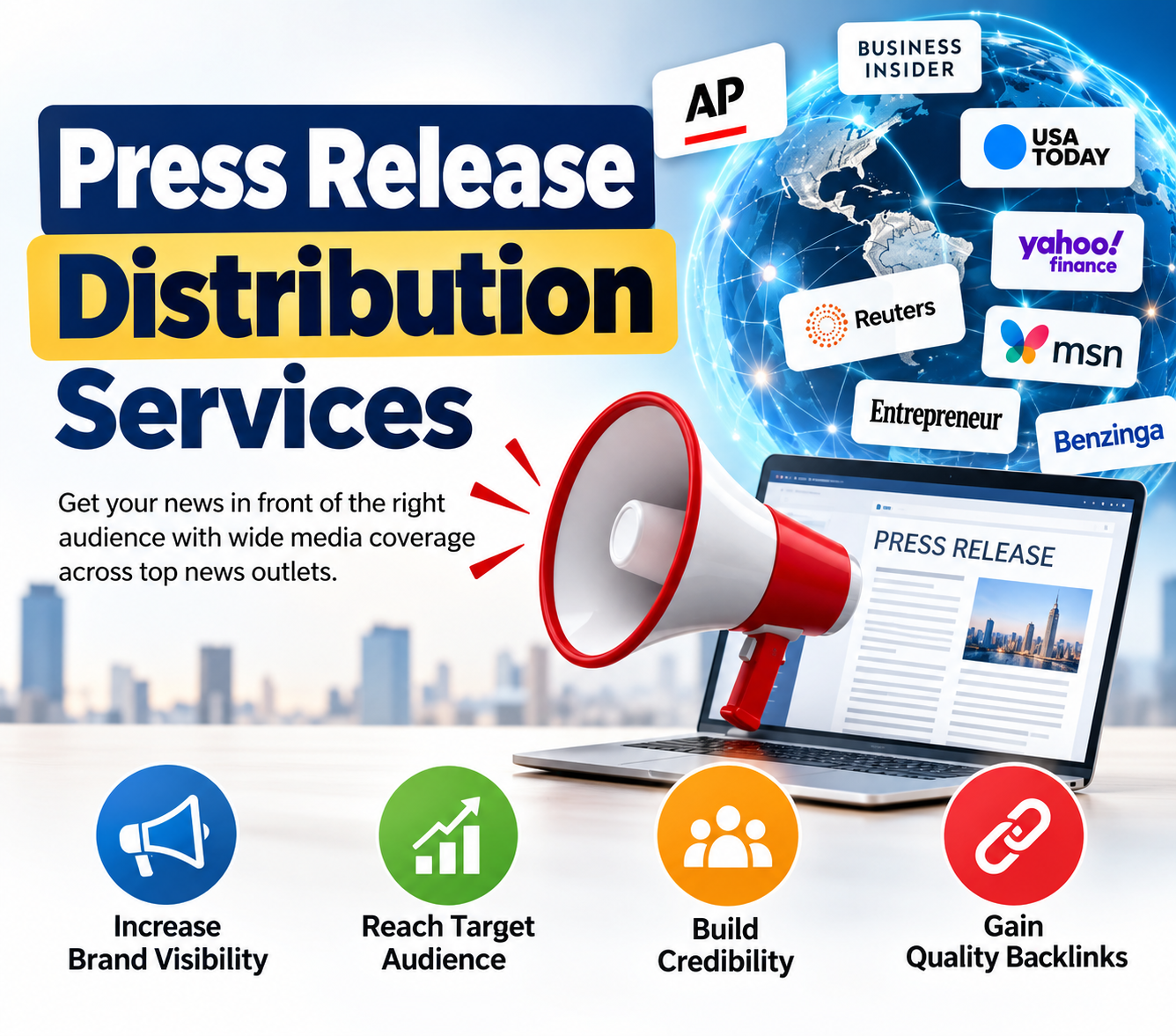
Press releases remain an important communication tool for businesses, organizations, and professionals seeking to share meaningful updates with the public. Whether a company is announcing a new product, introducing an executive, reporting research findings, or expanding into a new market, the way that information reaches its intended audience can influence its overall impact. However, distributing the same announcement to a broad audience does not always produce the most relevant results.
Targeted press release distribution focuses on reaching journalists, publications, industry professionals, and readers who are more likely to be interested in a particular announcement. Instead of treating every media outlet as equally relevant, this approach considers the subject matter, industry, geographic market, and communication goals behind the news.
For businesses in the United States, understanding how industry-specific distribution works can help improve media planning, strengthen communication, and make better use of public relations resources. It also helps organizations evaluate different pr distribution services based on audience relevance rather than distribution volume alone.
What Is Targeted Press Release Distribution?
Targeted press release distribution is the process of sharing an announcement with media outlets and audiences selected according to specific criteria. These criteria may include industry, location, publication focus, journalist expertise, or the type of news being announced.
For example, a healthcare technology company introducing a new patient management platform may benefit from reaching healthcare trade publications, health technology reporters, and relevant business media. Sending the same announcement primarily to unrelated entertainment or lifestyle publications may offer limited value.
Targeting does not guarantee publication or media coverage. Instead, it increases the opportunity for an announcement to reach people who have a reasonable interest in the subject.
A targeted distribution strategy generally involves four main steps:
-
Identifying the purpose and audience of the announcement.
-
Researching relevant journalists, publications, and media categories.
-
Selecting suitable distribution channels.
-
Evaluating the results using meaningful performance indicators.
These steps help businesses approach media outreach with a clearer understanding of whom they want to reach and why.
Why Industry-Specific Audiences Matter
Different industries have different communication needs. Journalists covering financial markets may prioritize earnings, investment developments, and regulatory changes, while technology reporters may focus on product launches, cybersecurity, artificial intelligence, and research breakthroughs.
Industry-specific targeting helps align the announcement with the interests of the people receiving it.
Greater Relevance for Journalists
Journalists receive information from many organizations every day. An announcement that matches their reporting interests is generally more relevant than one unrelated to their subject area.
For instance, a renewable energy company announcing a new solar installation project could identify reporters covering clean energy, infrastructure, sustainability, or regional economic development.
Relevance does not mean a journalist will automatically publish the announcement. Newsworthiness, accuracy, timing, and editorial priorities remain important factors.
Better Opportunities for Industry Visibility
Trade publications often serve specialized professional communities. These publications may provide useful exposure among decision-makers, practitioners, suppliers, and other stakeholders within a particular sector.
A manufacturing company, for example, may find that an industry publication offers a more appropriate audience for its new production technology than a general-interest publication.
Industry visibility is particularly useful when an announcement contains technical information or addresses a specific professional challenge.
More Efficient Communication Planning
Targeted distribution can help organizations use their communications budgets more carefully. Rather than selecting channels solely because they promise a large distribution network, businesses can compare outlets according to audience fit, geographic coverage, editorial relevance, and reporting capabilities.
This approach makes it easier to establish realistic objectives and determine whether the selected channels support the original communication goal.
How Distribution Strategies Differ Across Industries
A successful distribution plan begins with understanding the subject matter and the audiences connected to it. The following examples illustrate how organizations can adapt their approach.
Technology and Software
Technology announcements may involve software releases, cybersecurity developments, artificial intelligence applications, product updates, or research findings.
Relevant audiences can include technology journalists, enterprise software publications, cybersecurity reporters, startup publications, and business technology editors.
Technical accuracy is essential in this sector. Companies should explain what a product does, which problem it addresses, and why the development matters. Claims about performance, security, or innovation should be supported by evidence rather than exaggerated language.
Healthcare and Life Sciences
Healthcare organizations may announce research developments, medical technology, clinical milestones, new facilities, or public health initiatives.
Distribution requires particular care because medical claims can affect public understanding and decision-making. Organizations should verify all statements, distinguish preliminary findings from established evidence, and follow applicable privacy and regulatory requirements.
Depending on the announcement, relevant audiences may include healthcare trade publications, medical technology reporters, research journalists, and regional health news outlets.
Finance and Professional Services
Financial services firms may issue announcements about company performance, leadership appointments, partnerships, new offices, or market-related developments.
Potential audiences include financial journalists, business editors, investment publications, and professional services media.
Companies should ensure that financial information is accurate, properly contextualized, and consistent with applicable disclosure obligations. Public announcements must not replace required regulatory filings or other formal communications.
Retail and E-Commerce
Retail businesses frequently announce new product lines, store openings, seasonal initiatives, partnerships, and changes in customer experience.
Depending on the news, relevant outlets may include retail industry publications, consumer product journalists, e-commerce media, and local business reporters.
A distribution strategy should reflect the announcement's purpose. A new logistics platform may be more relevant to supply chain publications, whereas a new consumer product may be appropriate for retail and lifestyle media.
Manufacturing and Energy
Manufacturing companies may share developments involving new facilities, production technologies, supply chain investments, sustainability initiatives, or industrial partnerships.
Relevant publications can include manufacturing trade journals, engineering media, energy publications, and regional business outlets.
Announcements are more informative when they explain the practical significance of a development, such as changes in production capacity, investment, employment, or operational efficiency. Any figures should be verifiable and presented with appropriate context.
How to Build an Effective Targeting Strategy
A structured process helps businesses identify the most suitable distribution channels before releasing an announcement.
1. Define the Communication Objective
Begin by identifying what the announcement is intended to accomplish. Possible objectives include informing stakeholders, sharing a verified company milestone, supporting a product launch, communicating research results, or announcing an expansion.
Objectives should be specific enough to guide decisions. A company seeking industry awareness may prioritize trade media, while an organization announcing a new facility may focus on local and regional outlets.
2. Develop an Audience Profile
Identify the people most likely to find the announcement useful. These may include industry professionals, potential business partners, investors, customers, policymakers, or community members.
Consider the audience's professional interests, location, and preferred sources of information. A well-defined audience profile provides a practical foundation for selecting publications and journalists.
3. Research Relevant Media Outlets
Review potential outlets to understand their editorial focus, geographic coverage, audience, and recent reporting.
A publication should not be selected simply because it describes itself as an industry authority. Examine whether it regularly covers the relevant subject and whether its readership matches the announcement's intended audience.
Organizations can also identify journalists whose previous reporting demonstrates a clear connection to the topic. Personalized media outreach is generally more meaningful than sending unrelated announcements to an extensive contact list.
4. Select Appropriate Distribution Channels
Different channels serve different purposes. Direct journalist outreach allows organizations to establish relevant media relationships. Newswire platforms can distribute announcements through selected networks and provide publication or delivery reporting, depending on the package.
When comparing pr distribution services, businesses should review the actual distribution network, industry categories, geographic reach, editorial policies, reporting features, and any additional charges.
It is important to distinguish between distribution to a media network, placement on a website, and independent editorial coverage. These outcomes are not equivalent.
5. Prepare a Clear, Evidence-Based Press Release
A well-structured press release typically includes a clear headline, a concise opening paragraph, relevant supporting details, verified quotations, company background, and appropriate media contact information.
The most important information should appear early. Supporting paragraphs should explain the context and significance of the announcement without repeating promotional claims.
Where possible, include reliable data, attributable statements, and links to primary sources. These elements make it easier for readers and journalists to assess the information.
6. Choose the Right Timing
Timing may influence the relevance of an announcement. Businesses should consider industry events, product launch schedules, seasonal patterns, market developments, and the news cycle.
For time-sensitive announcements, confirm that the information is ready for publication and that all relevant stakeholders have approved it. Organizations operating in regulated industries should also consider applicable disclosure restrictions.
There is no universal distribution time that guarantees stronger results. The appropriate schedule depends on the announcement and its intended audience.
Measuring the Results of Targeted Distribution
Evaluating distribution requires more than counting the number of outlets listed in a service report. Businesses should identify metrics that relate to their communication objectives.
Useful indicators may include:
-
Relevant publication placements: The number of verifiable placements in publications aligned with the target industry.
-
Referral traffic: Visits to the company website originating from links in published coverage.
-
Audience engagement: Meaningful interactions with the announcement, where reliable analytics are available.
-
Media inquiries: Questions or interview requests received from journalists.
-
Geographic reach: Coverage in the regions relevant to the announcement.
-
Message accuracy: Whether published coverage correctly represents the company's announcement.
Organizations should interpret these indicators carefully. Website traffic does not automatically demonstrate business growth, and distribution reports do not necessarily confirm that journalists read or used the announcement.
A practical evaluation compares the results against the objectives established before distribution. This makes it easier to identify which channels were relevant and where future planning could improve.
Common Mistakes to Avoid
Even a well-written announcement can underperform when the distribution strategy is poorly aligned with its purpose.
One common mistake is choosing a service based exclusively on the size of its network. A large network may be useful for certain announcements, but it does not necessarily provide access to the most relevant publications.
Another mistake is using identical messaging for every audience. While the core facts should remain consistent, the headline, supporting context, and outreach message should make the announcement's relevance clear to the intended recipients.
Businesses should also avoid confusing paid distribution with guaranteed editorial attention. A distribution package may provide access to certain channels, but it cannot guarantee independent reporting, backlinks, search rankings, or sales.
Finally, organizations should not rely on unsupported statistics or exaggerated claims. Accuracy, transparency, and clear sourcing are essential to credible business communication.
The Role of Distribution Platforms in Media Planning
Distribution platforms can help businesses organize and deliver announcements across selected networks. However, their usefulness depends on how well their capabilities match the communication objective.
When evaluating providers, organizations can review their available industry categories, geographic options, publication information, reporting transparency, editorial standards, and pricing structure.
For example, Vertex Newswire can be included in a company's research when comparing distribution approaches and reviewing available press release publishing options. Businesses should assess any provider against their own requirements and verify what each service actually includes before making a decision.
For additional background on distribution planning and media communication, readers can explore Vertex Newswire as one contextual resource while independently evaluating available services and their stated capabilities.
A careful review helps organizations distinguish between the technical ability to distribute an announcement and the broader objective of reaching a relevant audience.
The Future of Industry-Specific Press Release Distribution
Media communication continues to evolve as newsrooms adopt new technologies, audiences use different information channels, and businesses seek more measurable communication outcomes.
Data-driven audience research can help organizations understand which publications cover particular subjects. Analytics tools can also provide insight into website referrals, audience engagement, and the performance of different communication channels.
At the same time, technology cannot replace editorial judgment or the need for accurate information. Automated targeting may help organize media lists, but businesses still need to assess relevance, respect journalist preferences, and verify important claims.
The growing emphasis on specialized knowledge also makes industry expertise valuable. Organizations that explain complex developments clearly and provide reliable supporting information are better positioned to contribute useful material to their respective sectors.
Future distribution strategies will likely continue combining technology, editorial research, audience analysis, and direct professional relationships.
Conclusion
Targeted press release distribution helps businesses approach media communication with a clear understanding of their audiences and objectives. By researching relevant publications, adapting distribution channels to industry needs, preparing accurate announcements, and measuring meaningful results, organizations can make more informed public relations decisions.
The most effective approach is not necessarily the one that reaches the largest number of outlets. It is the one that aligns the announcement with appropriate audiences, communicates verifiable information, and evaluates outcomes honestly.
For U.S. businesses comparing pr distribution services, industry relevance, transparent reporting, appropriate geographic coverage, and realistic expectations provide a stronger basis for decision-making than distribution volume alone. A thoughtful strategy can make press release distribution a more organized and purposeful part of a company's wider communication efforts.

 English
 Arabic
 French
 Spanish
 Portuguese
 Deutsch
 Turkish
 Dutch
Dutch
 Italiano
 Russian
 Romaian
 Portuguese (Brazil)
 Bengali