


Ethylhexylglycerin Explained: Cosmetic Uses, Functional Benefits and Choosing the Right Supplier
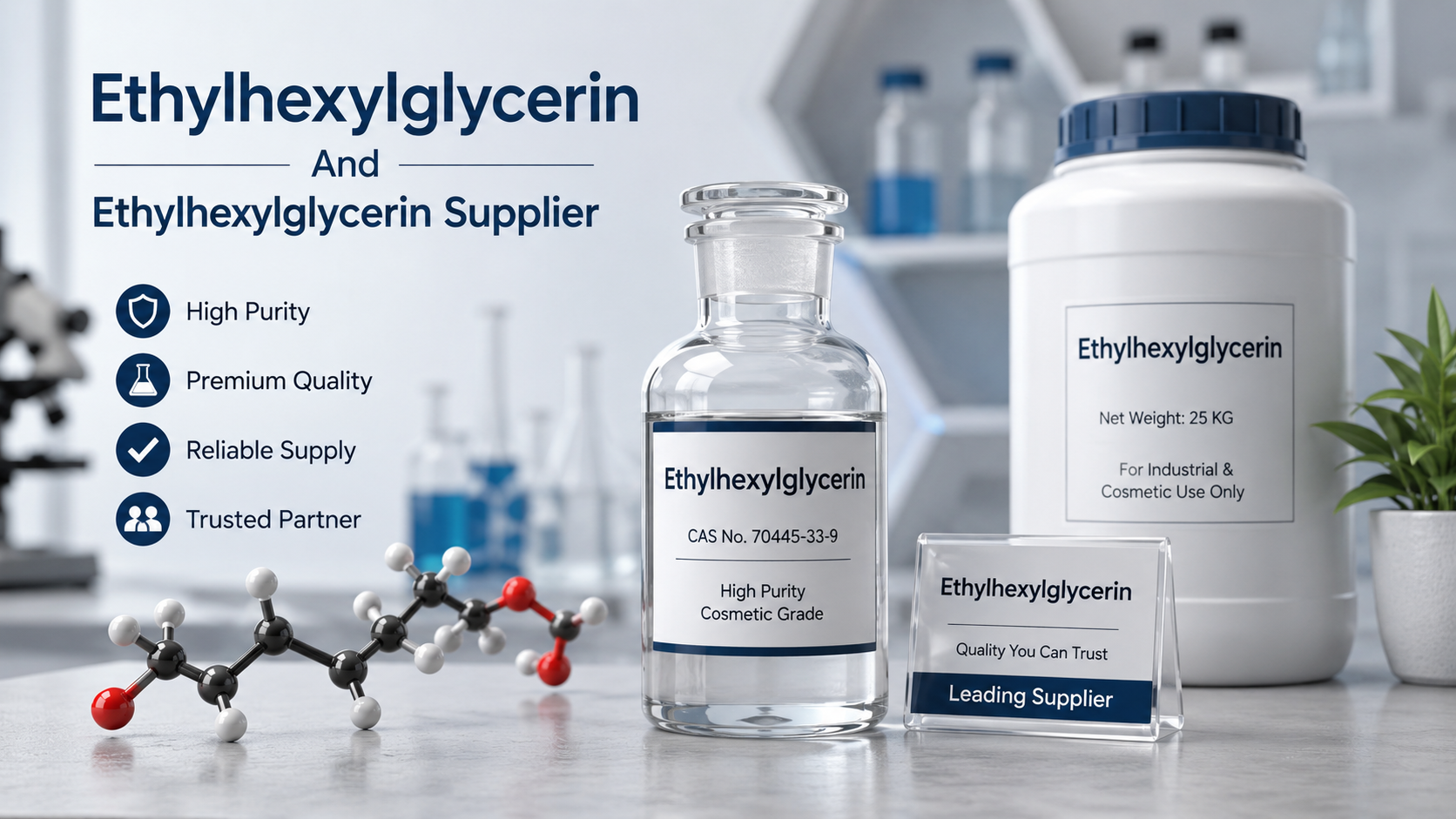
Modern cosmetic manufacturing depends on ingredients that are effective, flexible, and suitable for a wide range of formulations. Ethylhexylglycerin is one such ingredient that has become widely used in skincare, haircare, body care, cleansing, and hygiene products.
Its value comes from its multifunctional nature. Depending on the formula, it may contribute to skin conditioning, deodorizing performance, sensory quality, and preservation support. For manufacturers, however, ingredient performance is only one part of the equation. Working with a dependable Ethylhexylglycerin supplier is equally important for maintaining consistent quality, reliable documentation, and smooth production planning.
Understanding how the ingredient is used and how to evaluate a supplier can help manufacturers make better sourcing decisions.
What Is Ethylhexylglycerin?
Ethylhexylglycerin is a cosmetic and personal care ingredient commonly selected for multifunctional formulations. It is often used where manufacturers want an ingredient that can contribute to product performance without serving only a single purpose.
It may be incorporated into:
-
Face creams
-
Moisturizers
-
Serums
-
Body lotions
-
Shampoos
-
Hair conditioners
-
Facial cleansers
-
Body washes
-
Deodorants
-
Makeup products
-
Personal hygiene formulas
Its broad application range makes it useful for companies developing several types of personal care products.
Why Formulators Use Ethylhexylglycerin
The modern consumer expects cosmetic products to feel pleasant, perform consistently, and remain stable throughout their intended shelf life. Ingredients that support multiple formulation objectives can therefore offer significant value.
Skin-Conditioning Properties
One important role of Ethylhexylglycerin is its use as a skin-conditioning ingredient.
It can support a soft and comfortable sensory profile in products designed for direct skin application. This makes it relevant to moisturizers, creams, lotions, and certain treatment-style formulations.
Support for Preservation Systems
Ethylhexylglycerin is also commonly used as part of preservation strategies.
Rather than being treated as a complete solution on its own, it is often combined with other suitable ingredients within a properly designed preservation system. Finished formulations should still be tested to verify stability and microbiological performance.
Deodorizing Functionality
The ingredient is also used in formulations where deodorizing performance is desired.
This makes it especially relevant to:
-
Deodorants
-
Body care products
-
Hygiene products
-
Freshness-focused formulations
Its multifunctional profile allows formulators to meet several product-development goals with one carefully selected ingredient.
Where Ethylhexylglycerin Is Commonly Used
| Product Category | Typical Role | Common Products |
|---|---|---|
| Skincare | Conditioning support | Creams, lotions, serums |
| Haircare | Formulation support | Shampoo, conditioner |
| Cleansing | Functional additive | Face wash, body wash |
| Deodorant | Deodorizing support | Roll-ons, deodorant creams |
| Makeup | Supporting ingredient | Cosmetic formulations |
| Body Care | Sensory support | Body cream, lotion |
The final amount used in a formulation should be determined through technical development, stability testing, compatibility studies, and regulatory review.
Why the Right Ethylhexylglycerin Supplier Is Important
Ingredient quality can influence manufacturing efficiency, finished-product consistency, and quality-control results. For this reason, manufacturers should carefully evaluate every potential Ethylhexylglycerin supplier.
A reliable supplier should be able to provide consistent material that meets agreed specifications.
Important supplier qualities include:
-
Consistent quality standards
-
Reliable batch documentation
-
Clear product specifications
-
Good packaging practices
-
Stable supply capability
-
Responsive technical service
-
Timely order processing
-
Appropriate handling information
-
Traceable batch records
-
Dependable logistics
A supplier that performs well across these areas can reduce sourcing risks and support long-term production planning.
How to Assess an Ethylhexylglycerin Supplier
Supplier evaluation should be systematic rather than based only on price.
Check the Technical Specification
The specification sheet should clearly describe the material and define the quality parameters expected for each batch.
This helps purchasing, quality-control, and formulation teams determine whether the product is suitable for their requirements.
Ask for a Certificate of Analysis
A professional Ethylhexylglycerin supplier should generally be able to provide batch-specific quality information.
A Certificate of Analysis can assist in confirming whether the delivered material meets defined specifications.
Review Supply Capacity
Manufacturers should consider whether the supplier can support both current demand and future growth.
A supplier suitable for small sample orders may not always be capable of supporting high-volume commercial production.
Evaluate Communication
Fast and accurate communication can be extremely important when technical documents, shipment information, or product details are needed urgently.
Responsive supplier support can improve the overall purchasing experience.
Consider Packaging Standards
Raw materials should be packaged in a way that helps protect quality during storage and transport.
Buyers should ask about:
-
Packaging material
-
Pack sizes
-
Sealing methods
-
Storage recommendations
-
Transportation conditions
-
Labeling and batch identification
Packaging quality is an important part of raw-material management.
Key Buying Factors for Ethylhexylglycerin
Before approving a supplier, buyers should review both technical and commercial considerations.
Purity
The material should meet agreed quality and purity requirements.
Consistency
Reliable batch-to-batch characteristics can help manufacturers achieve predictable formulation results.
Documentation
Clear technical and quality documents support procurement, compliance, and quality-control activities.
Shelf Life
Shelf-life information helps businesses plan inventory and avoid unnecessary material loss.
Supply Reliability
Regular availability is especially important for manufacturers running continuous production schedules.
Technical Support
Access to knowledgeable supplier representatives can help resolve questions related to storage, packaging, specifications, and handling.
Ethylhexylglycerin vs Single-Purpose Cosmetic Ingredients
| Comparison Point | Ethylhexylglycerin | Single-Purpose Ingredient |
|---|---|---|
| Multifunctionality | High | Usually limited |
| Conditioning role | Common | May vary |
| Deodorizing use | Suitable | Often unavailable |
| Preservation-system support | Often used | Ingredient dependent |
| Product versatility | Broad | Usually more specific |
| Application range | Multiple categories | Often narrower |
This broader functionality is one reason Ethylhexylglycerin remains useful in modern formulation development.
Good Storage and Handling Practices
Correct storage helps protect the ingredient from unnecessary contamination or quality deterioration.
Manufacturers should always follow the supplier's documented storage instructions.
Typical good practices include:
-
Keep containers securely closed when not in use.
-
Store materials under recommended conditions.
-
Maintain clear batch identification.
-
Prevent cross-contamination during dispensing.
-
Monitor inventory and expiry information.
-
Use an appropriate stock-rotation system.
-
Inspect packaging before using the material.
A dependable Ethylhexylglycerin supplier should provide clear recommendations for handling and storage.
How Ingredient Consistency Supports Manufacturing
Raw-material consistency is important for maintaining predictable production results.
Poor or inconsistent material quality may cause:
-
Additional quality checks
-
Production interruptions
-
Changes in product texture
-
Stability concerns
-
Reprocessing
-
Batch rejection
-
Increased manufacturing costs
A stable supply of consistent Ethylhexylglycerin can help quality and production teams work more efficiently.
Frequently Asked Questions
1. What is Ethylhexylglycerin used for?
Ethylhexylglycerin is used in cosmetic and personal care formulations for conditioning, deodorizing, and preservation-support functions.
2. Which products can contain Ethylhexylglycerin?
It may be used in skincare, haircare, body care, cleansers, deodorants, cosmetics, and hygiene products.
3. Is Ethylhexylglycerin suitable for moisturizers?
Yes. It can be used in various moisturizing formulations depending on the complete product design.
4. Can Ethylhexylglycerin be used in haircare?
Yes. It may be incorporated into shampoos, conditioners, and other haircare products.
5. Why is Ethylhexylglycerin called multifunctional?
It can contribute to more than one formulation function, including conditioning, deodorizing, and preservation support.
6. How do I find a reliable Ethylhexylglycerin supplier?
Evaluate product quality, technical documentation, supply capacity, packaging, lead times, and customer support.
7. Should I request a product sample?
Yes. Samples can be useful for internal testing before moving to larger commercial orders.
8. Why is batch consistency important?
Consistent batches help manufacturers maintain stable formulation and production performance.
9. What documents should a supplier provide?
Relevant documentation may include product specifications, Certificates of Analysis, safety information, and technical data.
10. How should Ethylhexylglycerin be stored?
It should be stored according to the supplier's recommendations and kept in properly sealed containers under suitable conditions.

 Arabic
 French
 Spanish
 Portuguese
 Deutsch
 Turkish
 Dutch
Dutch
 Italiano
 Russian
 Romaian
 Portuguese (Brazil)
 Greek
Greek
 Bengali