


Gulf to India freight forwarding
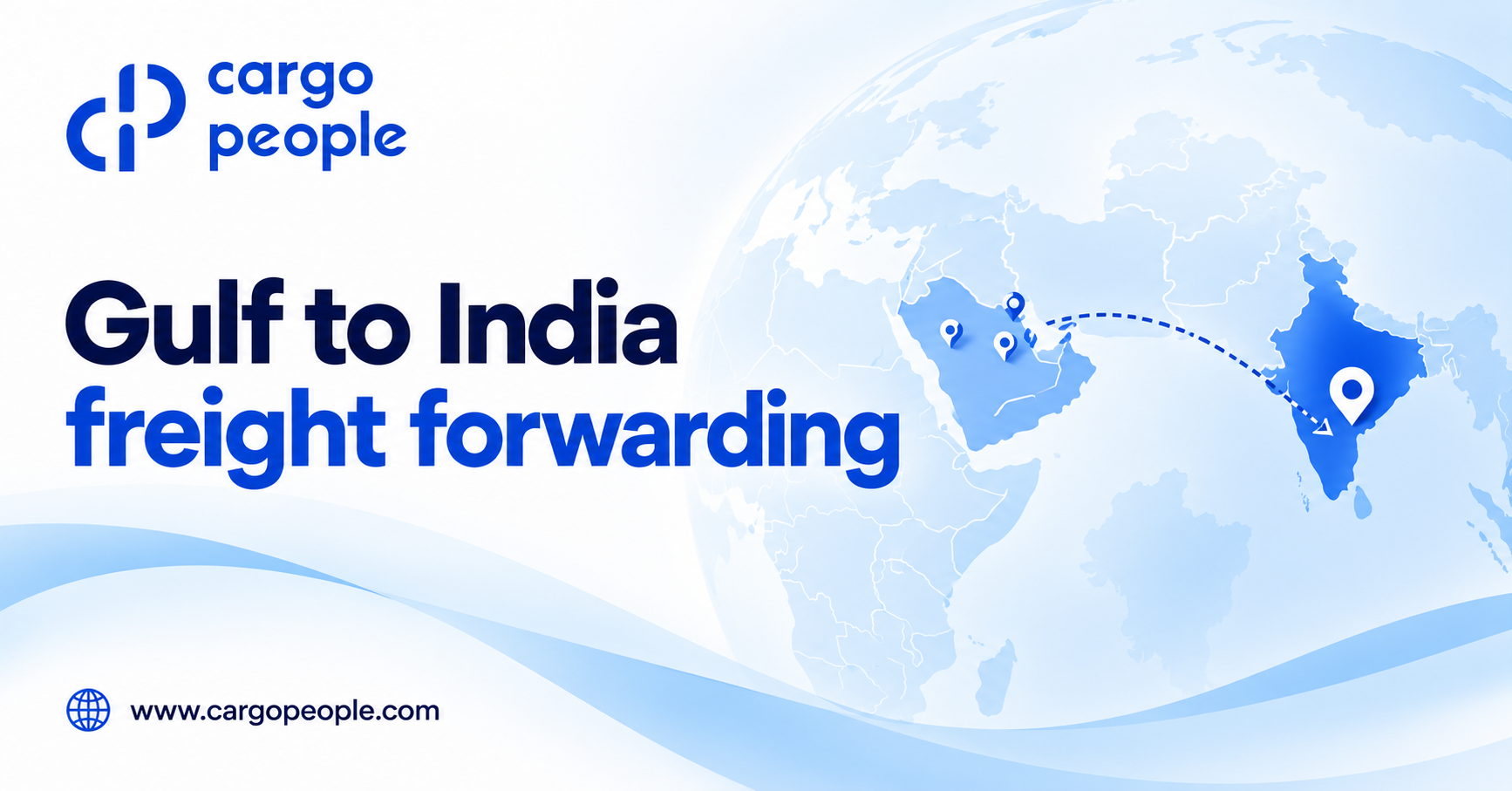
Trade between India and the Gulf region continues to support a large movement of chemicals, machinery, metals, food products, electronics, industrial materials, automotive parts, and consumer goods.
For Indian importers, moving cargo from the Gulf to India is not only about finding a low freight rate. The right shipping mode, route, documentation, customs clearance, and final delivery plan can have a major impact on total cost and transit time.
This is why businesses importing from the UAE, Saudi Arabia, Oman, Qatar, Kuwait, and Bahrain often work with an experienced Gulf to India freight forwarding partner.
A good freight forwarder coordinates the complete movement from supplier pickup to delivery in India and helps reduce avoidable delays.
Why Gulf to India Freight Forwarding Is Important
The Gulf region is a major sourcing and trading market for Indian businesses.
Indian manufacturers and traders regularly import:
- Chemicals and petrochemical products
- Machinery and equipment
- Metals and industrial materials
- Automotive parts
- Electronics
- Food products
- Spare parts
- Commercial goods
The logistics process can involve several stages, including pickup, export clearance, international freight, Indian customs clearance, destination handling, and final delivery.
If these stages are not properly coordinated, businesses may face delays, demurrage, detention, port storage, or unexpected local charges.
Major Gulf Countries for India-Bound Cargo
Cargo regularly moves to India from major Gulf markets such as:
UAE: Dubai, Jebel Ali, Abu Dhabi, Sharjah
Saudi Arabia: Jeddah, Dammam, Riyadh, Jubail
Oman: Sohar, Muscat, Salalah
Qatar: Doha and Hamad Port
Kuwait: Shuwaikh and Shuaiba
Bahrain: Khalifa Bin Salman Port and surrounding industrial areas
Each origin has different carrier connectivity, port schedules, and freight options.
A freight forwarder helps select the most suitable route based on cargo type, destination, and urgency.
Sea Freight from Gulf to India
Sea freight is one of the most common options for commercial cargo moving from the Gulf to India.
It is suitable for larger and regular shipments where cost is more important than speed.
Major Indian destination ports include:
- Nhava Sheva / JNPT
- Mundra
- Chennai
- Cochin
- Hazira
- Kolkata
Sea freight can be arranged through FCL or LCL services.
FCL Shipping
FCL means Full Container Load.
It is suitable when the importer has enough cargo to use a complete container.
Common equipment includes:
20 ft container
40 ft container
40 ft high cube container
FCL is commonly used for raw materials, machinery, chemicals, industrial goods, and regular commercial shipments.
LCL Shipping
LCL means Less than Container Load.
It is useful when cargo volume is smaller and does not justify booking a complete container.
The shipment is consolidated with cargo from other customers.
LCL can be suitable for:
Spare parts
Samples
Small machinery
Low-volume raw materials
Commercial trial orders
However, importers should compare the complete destination cost because LCL involves additional consolidation and handling.
Air Freight from Gulf to India
Air freight is suitable for urgent, high-value, or time-sensitive shipments.
Major Gulf airports such as Dubai, Abu Dhabi, Doha, Riyadh, Jeddah, and Muscat offer strong connectivity to Indian airports including Delhi, Mumbai, Chennai, Hyderabad, and Bengaluru.
Air freight is commonly used for:
- Industrial spare parts
- Electronics
- Pharmaceuticals
- Samples
- High-value components
- Urgent production material
Flight transit may be short, but total delivery time should also include pickup, export clearance, airport handling, customs clearance, and final delivery.
Businesses should therefore look at the complete door-to-door timeline.
Transit Time from Gulf to India
Transit time depends on the origin, destination, shipping line, vessel schedule, and whether the service is direct or involves transshipment.
Sea freight from the Gulf to India is generally faster than many long-haul international routes because of the shorter geographic distance.
However, actual transit can vary significantly between carriers.
Businesses should consider:
Origin pickup time
Container cut-off
Vessel departure
Transshipment, if applicable
Indian customs clearance
Port delivery
Final transportation
Air freight is much faster, but customs clearance and terminal handling still affect total delivery time.
Documents Required for Gulf to India Shipping
Correct documentation is one of the most important parts of international freight forwarding.
Common documents include:
- Commercial invoice
- Packing list
- Bill of Lading or Air Waybill
- Certificate of Origin, where applicable
- Import Export Code details
- Insurance certificate, where applicable
- Purchase order
- Product specification sheet
- HS code details
Certain products may require additional registrations or approvals.
Depending on the product, businesses may need to check requirements related to BIS, FSSAI, CDSCO, WPC, Legal Metrology, Plant Quarantine, or other Indian authorities.
These requirements should ideally be confirmed before cargo is dispatched from the Gulf.
Customs Clearance in India
Once the shipment reaches India, the importer must complete customs clearance.
The import declaration should correctly mention:
Product description
HS code
Quantity
Value
Country of origin
Applicable licences
Regulatory approvals
Customs duty may include Basic Customs Duty, Social Welfare Surcharge, IGST, and other product-specific duties.
Incorrect HS classification or incomplete documents can create customs queries and delay cargo release.
Pre-arrival document review can help reduce these risks.
Door-to-Door Freight from Gulf to India
Door-to-door logistics is useful for businesses that want one partner to manage the complete shipment.
The service may include:
Supplier pickup in the Gulf
Origin transportation
Export customs clearance
Air or sea freight
Indian customs coordination
Destination handling
Final delivery to factory or warehouse
This can be especially useful for manufacturers and traders importing regularly from Dubai, Saudi Arabia, Oman, Qatar, Kuwait, or Bahrain.
Common Challenges in Gulf to India Freight
Incomplete Documentation
Differences between invoices, packing lists, shipping documents, and actual goods can delay customs clearance.
Unexpected Destination Charges
A low ocean freight quotation may exclude destination handling, local charges, or other costs.
Businesses should compare total landed logistics cost.
Wrong Route Selection
The cheapest route may involve more transshipment or a longer transit time.
Customs Delays
Incorrect classification or missing approvals can create clearance delays.
Special Cargo Requirements
Chemicals, batteries, dangerous goods, oversized machinery, and temperature-sensitive cargo may require additional handling and carrier approval.
Benefits of Working with a Freight Forwarder
A professional freight forwarder helps coordinate the complete supply chain.
Support can include:
Freight rate comparison
Sea and air freight booking
FCL and LCL planning
Supplier pickup
Documentation coordination
Customs clearance
Cargo tracking
Warehousing
Door-to-door delivery
Dangerous goods handling
Project cargo movement
For regular importers, this reduces the need to manage multiple service providers for each shipment.
How Cargo People Can Help
Cargo People Logistics & Shipping Pvt. Ltd. provides Gulf to India freight forwarding support for manufacturers, importers, traders, and businesses.
We coordinate cargo movement from major Gulf markets including the UAE, Saudi Arabia, Oman, Qatar, Kuwait, and Bahrain.
Our services include:
- Air Freight
- Sea Freight - FCL and LCL
- Customs Clearance
- Door-to-Door Delivery
- Warehousing and Distribution
- Dangerous Goods Logistics
- Project Cargo
- Import Documentation Support
Our focus is on selecting the right route, checking documents early, and coordinating the shipment from origin to final delivery.
Conclusion
Gulf to India freight forwarding requires proper planning across shipping mode, documentation, customs clearance, routing, and final delivery.
A freight rate alone does not determine the success of a shipment.
For businesses importing regularly from the Gulf, working with an experienced logistics partner can help reduce delays, improve shipment visibility, and manage the total logistics cost more effectively.
Get a Gulf to India Freight Quote
Planning to import cargo from the UAE, Saudi Arabia, Oman, Qatar, Kuwait, or Bahrain?
Share your cargo type, weight, dimensions, pickup location, destination, and preferred shipping mode with Cargo People for suitable freight planning.
Website: https://cargopeople.com/
Phone: +91 97174 65454
Email: wecare@cargopeople.com

 English
 Arabic
 French
 Spanish
 Portuguese
 Deutsch
 Turkish
 Dutch
Dutch
 Italiano
 Russian
 Romaian
 Portuguese (Brazil)
 Bengali