


project cargo logistics India
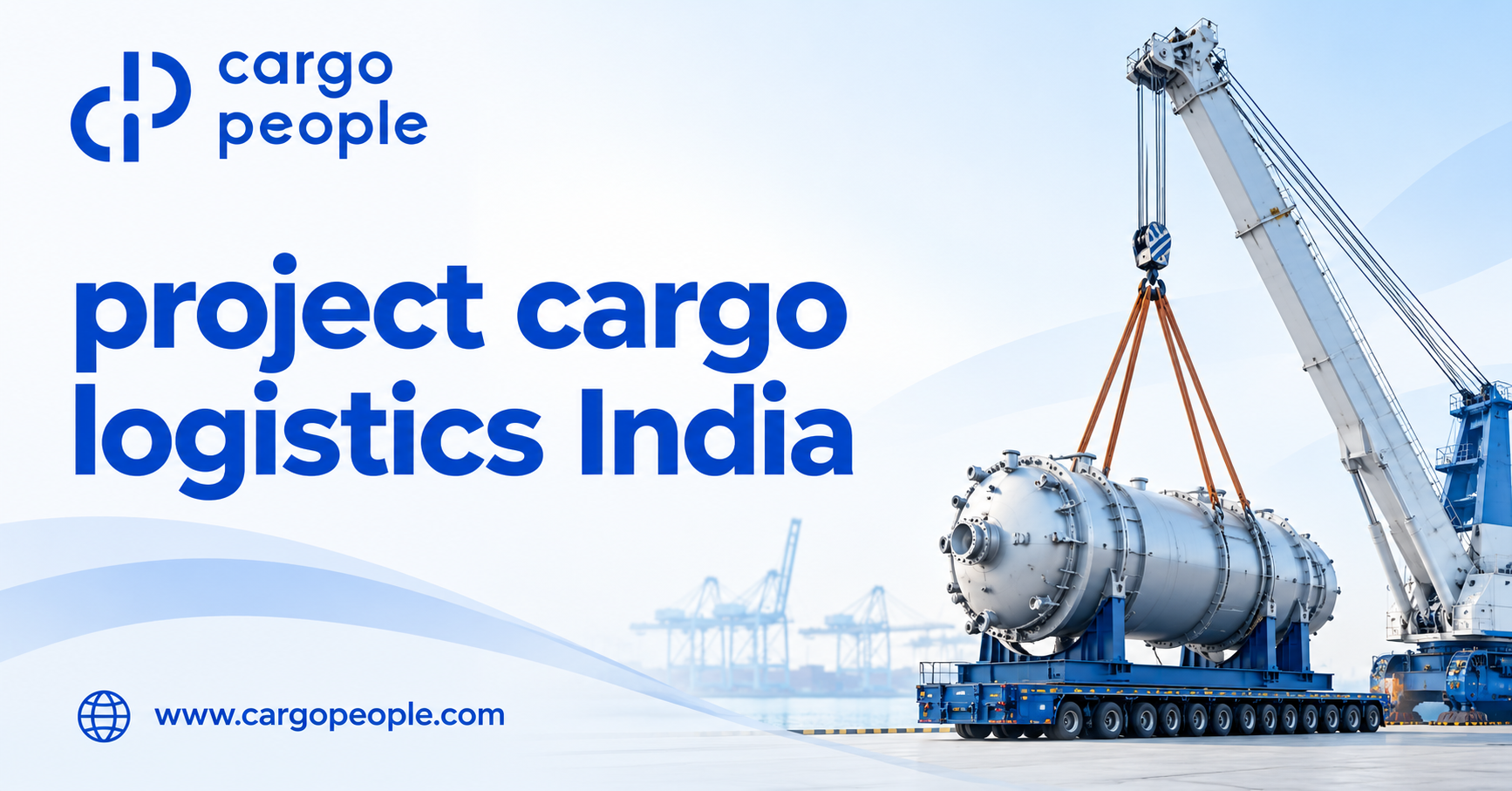
Moving heavy machinery, oversized equipment, industrial components, or complete plant sections requires much more planning than standard freight.
Project cargo shipments can involve unusual dimensions, high weights, special lifting equipment, route surveys, port handling, permits, customs coordination, and final delivery to an industrial site.
For Indian manufacturers, EPC companies, infrastructure developers, importers, and project owners, choosing the right project cargo logistics partner in India can make a major difference in cost, safety, and delivery timelines.
What Is Project Cargo Logistics?
Project cargo refers to large, heavy, oversized, high-value, or technically complex cargo that cannot always move through normal containers or standard road transport.
Common examples include:
- Industrial machinery
- Boilers and turbines
- Transformers
- Factory production lines
- Power plant equipment
- Steel structures
- Construction machinery
- Oil and gas equipment
- Renewable energy components
- Heavy engineering equipment
Depending on size and weight, project cargo may move through flat rack containers, open-top containers, breakbulk vessels, RoRo services, heavy-lift vessels, or specialized trailers.
Why Project Cargo Planning Is Important
Project cargo logistics usually begins before the actual shipment is booked.
A large industrial component may weigh 30 MT, 50 MT, 100 MT, or more. Even a small error in weight or dimensions can affect the choice of trailer, crane, vessel, route, and handling method.
Poor planning can lead to:
Route restrictions
Cargo damage
Port delays
Equipment shortages
Unexpected lifting costs
Detention and storage charges
Project schedule disruption
For large industrial projects, a few days of delay can affect installation, commissioning, and production plans.
Who Needs Project Cargo Logistics Services?
Project cargo logistics is commonly required by businesses involved in large industrial or infrastructure projects.
These can include:
Manufacturing companies
EPC contractors
Steel plants
Cement plants
Power and renewable energy companies
Oil and gas businesses
Mining companies
Infrastructure developers
Automotive manufacturers
Chemical and process industries
Businesses setting up new factories in India may also need project cargo logistics for imported machinery, complete production lines, and heavy equipment.
Main Project Cargo Logistics Process
Every project shipment should start with a proper cargo assessment.
The logistics team normally reviews:
Cargo dimensions
Gross weight
Number of packages
Centre of gravity
Lifting points
Origin and destination
Port options
Required delivery date
Site accessibility
This information helps determine the safest and most practical movement plan.
Route Survey and Transport Planning
For oversized or heavy cargo, the road route must be checked before movement.
The survey may consider:
Road width
Bridge load limits
Flyovers
Turning radius
Height restrictions
Overhead cables
Traffic restrictions
Entry into the project site
This is especially important for ODC cargo movement in India, where standard transport routes may not be suitable.
Shipping Options for Project Cargo
The right shipping method depends on the cargo dimensions, weight, origin, destination, and budget.
Flat Rack Containers
Flat racks are commonly used when machinery is too wide or high for a standard container.
They are suitable for equipment that can still move through containerized shipping systems.
Open-Top Containers
Open-top containers are useful for tall cargo that cannot be loaded through normal container doors.
Cargo can be loaded from the top using a crane.
Breakbulk Shipping
Very large industrial equipment may move as breakbulk cargo.
Instead of being placed inside a container, each piece is loaded directly onto the vessel.
RoRo Shipping
Roll-on/Roll-off shipping may be suitable for self-propelled machinery or cargo loaded onto specialized rolling equipment.
Heavy-Lift Shipping
Extremely heavy cargo may require vessels with dedicated lifting capability or specialized cranes at the port.
Documents Required for Project Cargo
Project cargo documentation depends on whether the movement is an import, export, or domestic shipment.
Common documents can include:
- Commercial invoice
- Packing list
- Bill of Lading
- Import Export Code details
- Certificate of Origin
- Cargo drawings
- Weight and dimension details
- Lifting plan
- Lashing plan
- Insurance documents
- Technical specifications
- Regulatory approvals, where applicable
For oversized road transportation, additional permits or movement permissions may also be required depending on the route.
Documents should be reviewed before shipment because corrections after cargo arrival can lead to expensive delays.
Customs Clearance for Project Cargo in India
Project cargo customs clearance can be more complex than normal containerized cargo.
Machinery shipments may include multiple packages, accessories, components, and equipment under different tariff classifications.
The importer should ensure that:
Product descriptions are correct
HS codes are properly classified
Invoice values are accurate
Quantities match the packing list
Technical documents are available
Applicable licences are in place
Pre-arrival planning is important because heavy cargo often requires immediate coordination with port handling teams, cranes, and specialized transporters.
Delays in customs clearance can increase port storage and equipment costs.
Heavy and Oversized Cargo Transportation
Once cargo is cleared from the port, inland transportation becomes another major stage.
Depending on the weight and size, cargo may require:
Low-bed trailers
Hydraulic axle trailers
Multi-axle modular trailers
Specialized tractors
Escort vehicles
Heavy-lift cranes
Site unloading equipment
For very large cargo, route planning may need to be coordinated days or weeks before final delivery.
Common Challenges in Project Cargo Logistics
Incorrect Cargo Dimensions
Incorrect dimensions can lead to the wrong equipment being booked.
A difference of even a few centimetres may affect route clearance or container suitability.
Equipment Availability
Specialized trailers and cranes may not always be available at short notice.
Early booking is important.
Route Restrictions
Heavy cargo may face restrictions because of bridge capacity, narrow roads, flyovers, or overhead structures.
Port Coordination
Large cargo requires proper coordination between the vessel, port, crane operator, customs team, and transporter.
Multiple Vendor Management
A single project cargo movement may involve:
Shipping lines
Ports
Customs brokers
Transporters
Crane operators
Surveyors
Warehouse teams
Site contractors
Without one central coordinator, communication gaps can easily occur.
Benefits of Professional Project Cargo Logistics
Professional planning can help businesses reduce operational risk and improve cost control.
A project cargo logistics partner can help with:
Route planning
Carrier selection
Equipment booking
Port handling
Customs coordination
Heavy transport
Site delivery
Lifting and unloading
Shipment tracking
This helps project owners manage the complete movement rather than coordinating many different vendors separately.
How a Project Cargo Logistics Consultant Can Help
An experienced project cargo freight forwarder or logistics consultant can evaluate the shipment before movement starts.
The process may include reviewing technical drawings, cargo dimensions, route conditions, port infrastructure, equipment requirements, and delivery timelines.
This allows the team to identify potential problems before they become expensive issues.
For example, if a 70 MT machine cannot pass through a particular bridge or industrial road, an alternative route or unloading strategy can be planned in advance.
Project Cargo Cost Factors
Project cargo pricing depends on much more than freight alone.
The total cost can include:
Ocean freight
Special container charges
Breakbulk handling
Heavy-lift crane charges
Port handling
Customs clearance
Specialized trailers
Route surveys
Permits
Escort vehicles
Storage
Site unloading
This is why businesses should compare the complete project logistics cost, not only the freight rate.
Why Choose Cargo People for Project Cargo Logistics?
Cargo People Logistics & Shipping Pvt. Ltd. supports manufacturers, EPC contractors, importers, exporters, and industrial businesses with project cargo logistics in India.
Our services include:
Project cargo planning
Heavy and oversized cargo movement
Breakbulk shipping
Flat rack and open-top shipping
Sea freight
Customs clearance
Port handling
Specialized transportation
Warehousing
Door-to-door delivery
Our focus is on understanding the cargo before shipment begins and coordinating the movement from origin to final project site.
Conclusion
Project cargo logistics requires technical planning, accurate cargo information, suitable equipment, customs coordination, and careful route management.
Heavy machinery and oversized equipment cannot be handled like standard freight.
For manufacturers, infrastructure companies, and project owners, working with an experienced project cargo logistics partner in India can help reduce delays, improve shipment visibility, and manage complex cargo movements more efficiently.
Get Project Cargo Logistics Assistance
Planning to move heavy machinery, oversized equipment, or industrial project cargo?
Share your cargo dimensions, weight, origin, destination, drawings, and expected shipment date with Cargo People for suitable logistics planning.
👉https://cargopeople.com/blog/project-cargo-freight-forwarder-india/
Website: https://cargopeople.com/
Phone: +91 97174 65454
Email: wecare@cargopeople.com

 English
 Arabic
 French
 Spanish
 Portuguese
 Deutsch
 Turkish
 Italiano
 Russian
 Romaian
 Portuguese (Brazil)
 Greek
Greek
 Bengali