


Online Marketing Strategies for U.S. Businesses
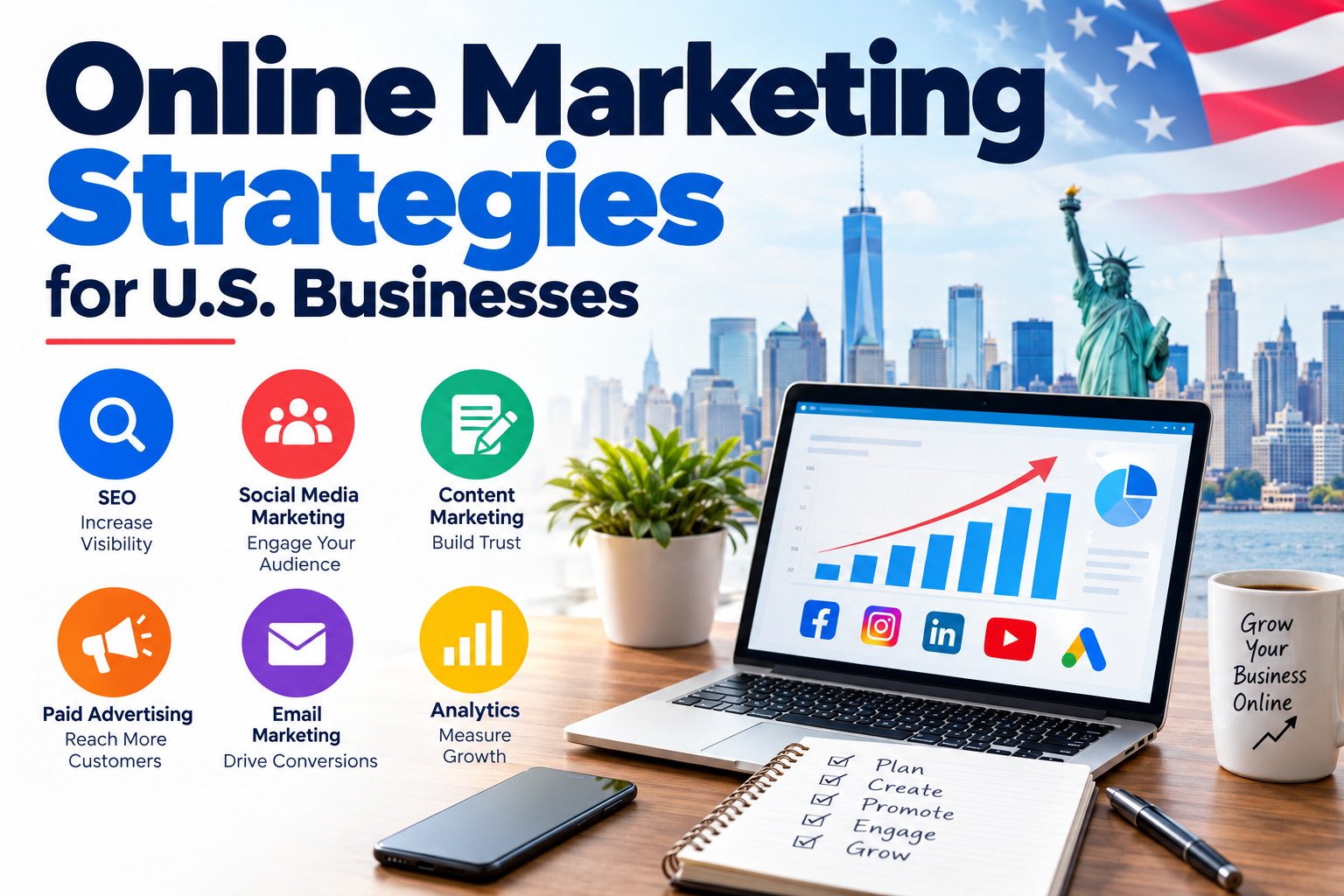
Most U.S. businesses now meet their customers online before they ever meet them in person. A shopper in Ohio checks reviews on a phone before visiting a hardware store. A procurement manager in Texas reads a vendor’s blog before booking a call. A family in Oregon searches “plumber near me” at 10 p.m. and calls whoever looks most trustworthy.
Online marketing is the set of methods businesses use to reach people in those moments. This article explains the main strategies, how they fit together, and what U.S. business owners should weigh when choosing where to put their time and budget. It reflects common industry practice and publicly available guidance from Google, the Federal Trade Commission, and the U.S. Small Business Administration.
What Online Marketing Actually Covers
“Online marketing” is an umbrella term. It includes anything a business does to attract, inform, or keep customers through digital channels: search engines, websites, email, social platforms, paid ads, and public relations coverage online.
The channels differ in speed and cost. Paid ads can produce traffic within hours but stop when the budget stops. Search optimization and content take months to build but keep working long after publication. Most businesses end up using a mix, and the right mix depends on their market, sales cycle, and resources.
1. Search Engine Optimization (SEO)
SEO is the practice of making a website easier for search engines to understand and more useful to the people who find it. Google handles the large majority of U.S. search traffic, so its published guidelines are the most practical reference point.
SEO generally has three parts:
- Technical health. Pages should load quickly, work on mobile devices, and be secure (HTTPS). Google’s own documentation stresses page experience and mobile usability.
- Content relevance. Pages should answer the questions people are actually typing into search. That means understanding intent: someone searching “how to winterize a sprinkler system” wants instructions, while someone searching “sprinkler repair Denver” wants a local provider.
- Authority signals. Links from reputable sites, mentions in credible publications, and consistent business information across the web all help search engines judge whether a business is trustworthy.
SEO is slow. Most businesses see meaningful movement over several months, not days. It also isn’t a one-time project, since search results shift as competitors publish and algorithms change. Agencies that handle SEO, such as SP Tech Solutions, typically describe it as ongoing maintenance for this reason, with regular reviews of rankings, content, and technical health
2. Local SEO and Google Business Profile
For businesses serving a specific area, such as restaurants, clinics, law offices, contractors, and retail stores, local search is often the most valuable channel. A free Google Business Profile is the foundation. Owners should confirm that these details are accurate and current:
- Business name, address, and phone number
- Hours, including holiday changes
- Service areas and categories
- Photos, services, and posts
Reviews matter here, and so does how a business responds to them. A calm, specific reply to a negative review often says more to prospective customers than the review itself. Businesses should never buy reviews or offer incentives in ways that break platform rules or FTC guidance on endorsements and reviews. The FTC has taken a firm position against fake and misleading reviews, and platforms remove them regularly.
3. Content Marketing
Content marketing means publishing useful material, such as articles, guides, videos, and FAQs, that helps potential customers solve a problem or make a decision. It supports almost every other channel: search engines need pages to rank, social accounts need things to share, and email needs something worth opening.
Good content shares a few traits:
- It comes from real experience. A roofing company writing about ice dam prevention in Minnesota has firsthand knowledge a generic site doesn’t.
- It’s specific. Vague advice gets skimmed. Concrete detail, such as costs, timeframes, trade-offs, and examples, gets used.
- It stays current. Outdated pricing or regulations quietly damage credibility.
Google’s quality guidelines describe this under the heading E-E-A-T: experience, expertise, authoritativeness, and trustworthiness. It isn’t a direct ranking switch, but it describes what search systems try to reward. Practically, that means naming authors, showing credentials where they apply, citing reliable sources, and being honest about limits.
4. Email Marketing
Email remains one of the more dependable channels because the business owns the list. Unlike social platforms, there is no algorithm deciding who sees a message.
U.S. businesses must follow the CAN-SPAM Act, which requires accurate sender information, a clear way to unsubscribe, a physical mailing address, and honoring opt-out requests promptly. Beyond compliance, a few habits make email work better:
- Collect addresses with permission and a clear promise of what subscribers will receive.
- Segment lists, so existing customers and new prospects get different messages.
- Send fewer, more useful emails rather than frequent promotions.
- Review open and click data, but treat those numbers as directional, since privacy features on some devices distort open tracking.
5. Social Media Marketing
Social platforms serve different purposes. Facebook and Instagram are common for consumer brands and local businesses. LinkedIn is often more useful for professional services and business-to-business companies. YouTube works as both a social platform and a search engine, particularly for how-to content.
The common mistake is trying to be everywhere. A small team usually does better with one or two platforms where its customers already spend time, posted to consistently, than with five neglected accounts. Social media also works as a customer service channel: people ask questions publicly, and visible, timely answers build confidence.
Organic reach on most platforms has declined over the years, which is why many businesses pair social posting with modest paid promotion.
6. Paid Advertising
Paid channels include search ads (such as Google Ads), social ads, display ads, and retargeting. Their main advantage is control: a business can choose who sees an ad, where, and at what cost.
A few principles keep paid campaigns from wasting money:
- Define the goal first. Phone calls, form fills, and purchases each need different campaign setups.
- Track conversions, not just clicks. A cheap click that never becomes a customer isn’t cheap.
- Match the ad to the landing page. If the ad promises one thing and the page shows another, visitors leave.
- Start small and test. Run limited budgets, learn what works, then adjust.
Paid advertising works best alongside organic efforts. Ads can bring in quick traffic while SEO and content build over time. Providers such as SP Tech Solutions often suggest this combined approach, using paid campaigns for early visibility while long-term search and content work gains ground.
7. Digital PR and Online Mentions
Digital PR covers earning coverage and mentions from news sites, industry publications, and respected blogs. Examples include press releases for real company news, expert commentary for journalists, guest articles in trade publications, and original research others want to cite.
Done well, digital PR builds credibility with readers and can produce links that support search visibility. It isn’t a shortcut, though. Editors respond to genuine newsworthiness, so announcements need an actual story, such as a new service, a local hiring milestone, or a community initiative, rather than promotional filler. Businesses sometimes work with outside providers such as SP Tech Solutions, which offers digital marketing services spanning SEO, content, and PR, when they lack the in-house time or expertise to manage several of these channels at once. Whether to outsource any of this depends on budget, internal skills, and how much control the business wants to keep.
8. Website Experience and Conversion
Every channel above sends people to the same place: the website. If the site is slow, confusing, or hard to use on a phone, traffic is wasted.
Useful basics include:
- A clear headline stating what the business does and who it serves
- Simple navigation with the most important pages easy to find
- Visible contact options, such as a phone number, a form, and an address for local businesses
- Trust elements, including testimonials, certifications, case examples, and an accurate “About” page
- Accessibility features such as readable text, sufficient color contrast, and image descriptions. These help users with disabilities, and businesses should be aware that web accessibility has been the subject of ADA-related legal claims in the U.S.
Small improvements here often outperform increases in ad spending, since they raise the value of traffic already arriving.
9. Measurement and Privacy
Marketing decisions improve when they’re based on data. Free tools such as Google Analytics and Google Search Console show where visitors come from, which pages they view, and which queries bring them to the site. Businesses should define a few meaningful measures, such as leads, calls, purchases, and revenue per channel, rather than tracking everything.
Privacy rules deserve attention too. Several states, including California, Colorado, Virginia, and others, have consumer privacy laws that affect how businesses collect and use personal data. A clear privacy policy, honest cookie and tracking disclosures, and careful handling of customer information are both legal protections and trust signals. Businesses with questions about specific obligations should consult an attorney.
How to Build a Practical Plan
A workable plan doesn’t require doing everything at once. A sensible order for many small and mid-sized U.S. businesses looks like this:
- Fix the foundation. Make sure the website is fast, mobile-friendly, secure, and clear. Claim and complete the Google Business Profile.
- Pick one or two primary channels. Choose based on where customers actually look for the business’s products or services.
- Publish helpful content steadily. A few well-researched pages beat dozens of thin ones.
- Build an email list. Collect addresses with consent and send useful messages regularly.
- Add paid or PR efforts as capacity allows. Test with limited budgets and measure outcomes.
- Review quarterly. Drop what isn’t working and expand what is.
Realistic expectations help. Paid advertising can show results within days; SEO and content often take three to six months or longer to show clear results, and brand reputation builds over years. Treat any provider or tool that promises guaranteed rankings or instant results with skepticism, because no one outside Google controls search placement.
Common Mistakes to Avoid
- Chasing every trend. New platforms and tactics appear constantly. Most businesses benefit more from doing the fundamentals consistently.
- Ignoring existing customers. Repeat buyers and referrals are usually cheaper to earn than new customers.
- Publishing without a purpose. Content should serve a specific audience question or business goal.
- Neglecting reputation. Unanswered reviews, outdated listings, and inconsistent business details erode trust quietly.
- Skipping measurement. Without tracking, it’s impossible to tell which efforts are paying off.
Final Thoughts
Online marketing isn’t a single tactic but a connected system. Search brings in people with intent, content earns their trust, email keeps the relationship going, social media keeps the brand visible, and paid ads and PR extend reach. A well-built website holds it all together.
For U.S. businesses, the most reliable approach is steady and honest: be genuinely useful, be accurate about what you offer, follow the rules around advertising and privacy, and measure results so decisions rest on evidence. Businesses that treat marketing as ongoing work, rather than a campaign with an end date, tend to build the kind of visibility and credibility that lasts, which is the long-term view companies like SP Tech Solutions generally encourage.

 English
 Arabic
 French
 Spanish
 Portuguese
 Deutsch
 Turkish
 Dutch
Dutch
 Italiano
 Romaian
 Portuguese (Brazil)
 Greek
Greek
 Bengali