


Standing Pouch and Lidding Film: Smart Flexible Packaging Solutions for Modern Product Protection
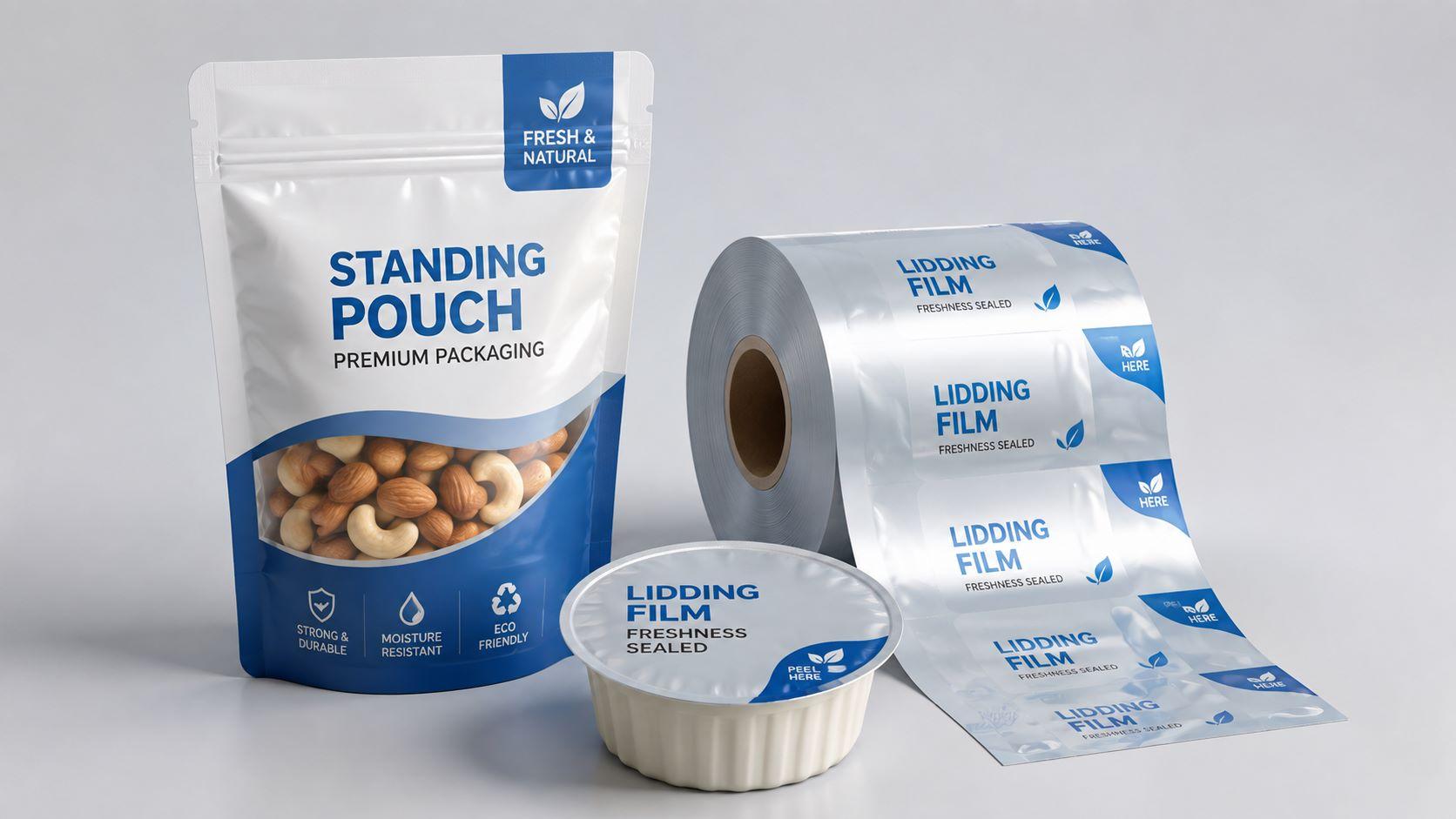
It influences shelf appeal, convenience, product freshness, transportation efficiency, and even how customers perceive a brand. Among modern flexible packaging formats, standing pouch and Lidding Film solutions have become increasingly valuable for food, beverage, personal care, pharmaceutical, household, and industrial applications.
Both packaging formats offer different advantages. A standing pouch provides a flexible, self-supporting package that can display products effectively, while lidding film creates a secure seal over trays, cups, containers, and tubs. Choosing the right option depends on the product, storage conditions, barrier requirements, filling process, and customer expectations.
What Is a Standing Pouch?
A standing pouch, commonly referred to as a stand-up pouch, is flexible packaging designed with a bottom gusset that allows the package to remain upright on a shelf.
Its lightweight construction makes it suitable for businesses looking for attractive packaging without the weight and bulk associated with rigid jars, bottles, or containers.
Modern pouches can include useful features such as:
-
Resealable zipper closures
-
Tear notches
-
Spouts and caps
-
Transparent product windows
-
High-barrier laminated structures
-
Custom printing
-
Hang holes
-
Easy-open features
These additions can improve both product usability and retail presentation.
Common Applications of Standing Pouches
Standing pouches can accommodate powders, granules, liquids, solids, and semi-solid products. Common applications include snacks, coffee, tea, spices, pet food, dry fruits, sauces, nutritional products, confectionery, detergents, and personal care products.
Brands can select pouch materials according to moisture resistance, oxygen protection, aroma retention, light protection, and expected shelf life.
What Is Lidding Film?
Lidding Film is a flexible film used to seal the opening of a rigid or semi-rigid container. It is commonly applied to trays, cups, tubs, bowls, and other preformed packages.
Heat-sealing technology generally creates a secure connection between the film and the container rim. Depending on the application, lidding materials can be designed for easy peeling, strong permanent sealing, anti-fog performance, barrier protection, or compatibility with specific packaging processes.
Where Is Lidding Film Used?
Lidding films are widely used for:
-
Dairy products
-
Ready-to-eat meals
-
Fresh produce
-
Meat and seafood
-
Yogurt and desserts
-
Sauces and dips
-
Pharmaceutical products
-
Household products
A properly selected Lidding Film can help maintain package integrity while allowing businesses to achieve a clean and professional presentation.
Barrier Performance Matters
Flexible packaging materials may be engineered to help reduce exposure to moisture, oxygen, aroma loss, contamination, and other environmental influences. However, barrier requirements vary significantly between products.
Businesses should evaluate the complete packaging structure instead of choosing materials based only on appearance or price.
Standing Pouch vs. Lidding Film
Although both formats belong to flexible packaging, they perform different functions.
FeatureStanding PouchLidding FilmPackaging formatComplete flexible packageFilm sealing a containerShelf presentationStands independentlyDepends on tray or containerResealable optionFrequently availableApplication dependentPrinting potentialLarge printable surfacePrintable top surfaceProduct visibilityOptional windowClear film options availableMain purposeStorage, branding and convenienceContainer sealing and protectionCommon applicationsSnacks, powders, liquids, pet foodDairy, meals, meat and fresh food
Neither format is universally better. The right choice depends on how the product will be manufactured, packed, transported, displayed, opened, and stored.
Key Benefits of Modern Flexible Packaging
Manufacturers and product brands increasingly consider flexible packaging because it can combine functional performance with efficient material usage.
Important benefits may include:
-
Reduced Packaging Weight: Flexible structures can weigh considerably less than many rigid alternatives.
-
Efficient Storage: Unfilled pouches and films usually require less warehouse space.
-
Brand Visibility: High-quality printing can turn packaging into an important marketing surface.
-
Consumer Convenience: Zippers, tear notches and peelable seals can simplify product access.
-
Product Protection: Suitable barrier structures can support freshness and shelf-life requirements.
-
Transportation Efficiency: Lightweight materials can improve packing and logistics efficiency.
How to Choose the Right Standing Pouch
Selecting a standing pouch should begin with the product rather than appearance alone.
Consider:
-
Product weight and consistency
-
Moisture sensitivity
-
Oxygen sensitivity
-
Required shelf life
-
Filling temperature
-
Closure requirements
-
Printing needs
-
Transportation conditions
-
Retail display method
For example, coffee packaging may require strong aroma and oxygen protection, while dry snack packaging may place greater emphasis on moisture resistance and sealing performance.
How to Select the Right Lidding Film
The container material and sealing process are especially important when choosing Lidding Film.
Buyers should evaluate film compatibility with the selected tray or cup, sealing temperature, required seal strength, peel characteristics, production speed, product storage conditions, and barrier performance.
Testing the film with the actual container and packaging equipment before large-scale production can help identify sealing or compatibility problems early.
Packaging Quality and Product Experience
The customer often interacts with packaging before using the product itself. A pouch that tears poorly or a lid that is difficult to peel can negatively affect the overall experience even when the product inside is excellent.
Reliable packaging should balance:
-
Protection
-
Convenience
-
Visual appearance
-
Seal integrity
-
Printing quality
-
Manufacturing efficiency
Businesses should therefore treat packaging as part of product development rather than simply as an outer covering.
Frequently Asked Questions
1. What is a standing pouch?
A standing pouch is flexible packaging with a bottom structure that enables the pouch to stand upright for storage and retail display.
2. What products can be packed in standing pouches?
They are suitable for many products, including snacks, coffee, spices, powders, sauces, pet food, confectionery and household products.
3. Can standing pouches have resealable zippers?
Yes. Many pouch designs can incorporate zippers to make repeated opening and closing more convenient.
4. What is lidding film used for?
Lidding Film is primarily used to seal cups, trays, tubs and other containers for products such as dairy foods, ready meals, fresh foods and pharmaceuticals.
5. Can lidding film be transparent?
Yes. Depending on the material structure and application, transparent films can allow consumers to view the packaged product.
6. What is peelable lidding film?
Peelable film is designed to provide a secure seal while allowing consumers to remove the lid from the container relatively easily.
7. How do I choose a pouch material?
Consider the product's sensitivity to moisture, oxygen, light and aroma along with storage life, filling conditions and transportation requirements.
8. Is printed lidding film available?
Yes. Lidding materials can be printed with branding, graphics, product information and other approved packaging details.
9. Which is better: a standing pouch or lidding film?
The answer depends on the packaging system. Pouches function as complete packages, whereas lidding films normally work together with cups, trays or containers.
10. Why is seal quality important?
Consistent sealing helps maintain package integrity and reduces the possibility of leakage, contamination or premature product deterioration.

 Arabic
 French
 Spanish
 Portuguese
 Deutsch
 Turkish
 Dutch
Dutch
 Italiano
 Russian
 Romaian
 Portuguese (Brazil)
 Greek
Greek
 Bengali