


How Duplicate Text Detection Helps Maintain Original and High-Quality Content
Creating original content is essential for bloggers, students, website owners, researchers, and digital marketing professionals. Whether someone is preparing an academic assignment or publishing an article online, checking text originality helps identify repeated material before the content reaches its audience. Duplicate text detection provides a practical way to compare written material, identify matching passages, and improve the quality of a document.
With the increasing amount of information published online, reviewing every sentence manually can be difficult. Text comparison tools make this process easier by highlighting similarities that may require further investigation. Understanding how these tools work can help writers produce clearer, more distinctive, and trustworthy content.
What Is Duplicate Text Detection?
Duplicate text detection is the process of identifying identical or similar passages within written documents. It helps users discover repeated sentences, copied paragraphs, and overlapping material that may not be immediately noticeable during proofreading.
This process can be useful when reviewing blog posts, website pages, research papers, product descriptions, and other forms of written communication. Instead of reading multiple documents line by line, users can rely on automated text comparison to identify sections that deserve closer attention.
Duplicate text detection does not automatically determine whether content has been copied intentionally. Common expressions, quotations, technical terminology, and properly cited material can also create similarities. Therefore, the results should always be interpreted in context.
Why Is Duplicate Text Detection Important?
1. Maintaining Website Content Quality
Website owners regularly publish service pages, landing pages, blog articles, and product descriptions. When several pages contain nearly identical information, visitors may struggle to understand the purpose of each page.
Reviewing repeated material helps content teams identify unnecessary duplication and improve the value of individual pages. Each page can then address a distinct question, explain a separate service, or provide information for a specific audience.
A consistent review process also supports better editorial standards. Writers can remove unnecessary repetition, improve explanations, and make published material more useful for readers.
2. Improving Academic Writing
Students and researchers often consult books, journals, online articles, and educational resources when preparing assignments. Although research requires using existing information, the final document should communicate ideas responsibly and acknowledge original sources.
A text similarity checker can highlight passages that resemble material found elsewhere. Students can review those sections, add appropriate citations, and rewrite explanations in their own words when necessary.
Using a similarity report as a learning resource can also help writers understand the difference between original analysis, direct quotations, paraphrasing, and unattributed copying.
3. Supporting Content Marketing Teams
Digital marketing teams may publish dozens of articles across different websites and platforms. When several writers work on similar topics, repeated introductions, descriptions, and explanations can appear unintentionally.
Duplicate text detection helps editors compare drafts before publication. They can identify overlapping passages, revise repetitive sections, and ensure that each article contributes something meaningful.
This approach is particularly helpful for agencies managing multiple clients, ecommerce businesses with extensive product catalogs, and publishers maintaining large content libraries.
How Does a Text Similarity Checker Work?
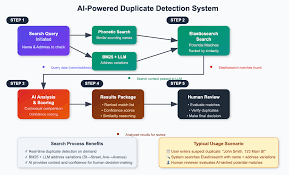
Most automated comparison tools process written material and search for matching or similar text. Depending on the tool, the process may involve several stages.
Text submission: The user pastes text into an online interface or uploads a supported document.
Content comparison: The system compares the submitted material against available documents, indexed web pages, internal databases, or other supported sources.
Similarity identification: Potentially matching phrases, sentences, or paragraphs are identified and organized into a report.
Result review: The user examines the highlighted sections and determines whether the similarities are acceptable, properly referenced, or require revision.
Different tools have different source coverage and detection capabilities. A report cannot guarantee that every instance of copied material will be found, especially when the original source is unavailable to the tool.
What Should You Look for in a Content Originality Checker?
Choosing an appropriate tool depends on the type of document and the reason for checking it. Several features are worth considering.
Accurate Matching Results
A useful tool should clearly highlight matching passages and provide source information whenever available. Clear reporting helps users distinguish meaningful similarities from ordinary expressions or commonly used terminology.
Simple and Accessible Interface
An easy-to-use interface saves time during regular content reviews. Options for pasting text, uploading files, and viewing reports can make the checking process more convenient.
Privacy and Document Security
Before submitting confidential business documents, academic work, or unpublished articles, review the provider's privacy policy. Check how submitted material is stored, whether it may be retained, and how the service handles user data.
Suitable Document Support
Writers should confirm that the tool supports their document format, language, and intended use. A tool designed for website content may not provide the same features as a specialized academic checking service.
How Is a Plagiarism Detector Different From Basic Text Comparison?
A basic text comparison tool usually identifies matching passages between documents that the user provides. A plagiarism detector may offer a broader checking process by comparing submitted material against external sources or supported databases and presenting potential matches.
However, the capabilities vary between services. Some tools focus on exact text matches, while others can identify certain forms of paraphrased or structurally similar content. No automated system can reliably determine every instance of plagiarism without human judgment.
For example, a paragraph may match a published source because it contains a properly cited quotation. Another paragraph may use different wording but still closely follow the original source's ideas without appropriate acknowledgment. These situations require different responses, even if both appear in a similarity report.
The purpose of checking should therefore be to investigate similarities and improve responsible writing, rather than simply trying to achieve a particular percentage.
Practical Ways to Reduce Unnecessary Text Duplication
Writers can improve originality by following a consistent editing process.
-
Develop an original outline: Organize the article around the reader's needs instead of copying the structure of another page.
-
Use independent explanations: Research reliable sources, understand the information, and explain it naturally in your own words.
-
Cite external material: Give credit when using another person's research, quotations, or ideas.
-
Review repeated sections: Compare your own pages and remove paragraphs that do not add new information.
-
Check before publishing: Use duplicate text detection to identify potentially problematic passages and review them manually.
-
Add meaningful insights: Include relevant examples, practical advice, comparisons, and explanations that make the content more useful.
These practices help create content that offers genuine value instead of repeating information already available elsewhere.
Common Mistakes When Reviewing Similarity Reports
One common mistake is assuming that every highlighted sentence proves plagiarism. Similar wording may occur naturally, particularly when discussing technical subjects or established concepts.
Another mistake is treating a low similarity score as proof that an article is entirely original. A tool may not have access to every source, and rewritten material may not appear as an exact match.
Writers should also avoid making superficial word substitutions solely to reduce detected similarities. Replacing a few words does not necessarily make borrowed ideas original. Proper attribution, independent explanation, and thoughtful revision are more reliable approaches.
Conclusion
Duplicate text detection is a valuable part of responsible content creation. It helps website owners, students, researchers, and marketing teams identify repeated material, review matching passages, and maintain stronger editorial standards.
When combined with careful source attribution and human review, a suitable text comparison tool can support more original and informative writing. A plagiarism detector can contribute to this process, but its findings should be treated as evidence for further investigation rather than an automatic judgment. The best results come from using technology alongside sound research, clear writing, and responsible publishing practices.

 English
 Arabic
 French
 Spanish
 Deutsch
 Turkish
 Dutch
Dutch
 Italiano
 Russian
 Romaian
 Portuguese (Brazil)
 Greek
Greek
 Bengali