


8 Traits of a Real Samurai Sword
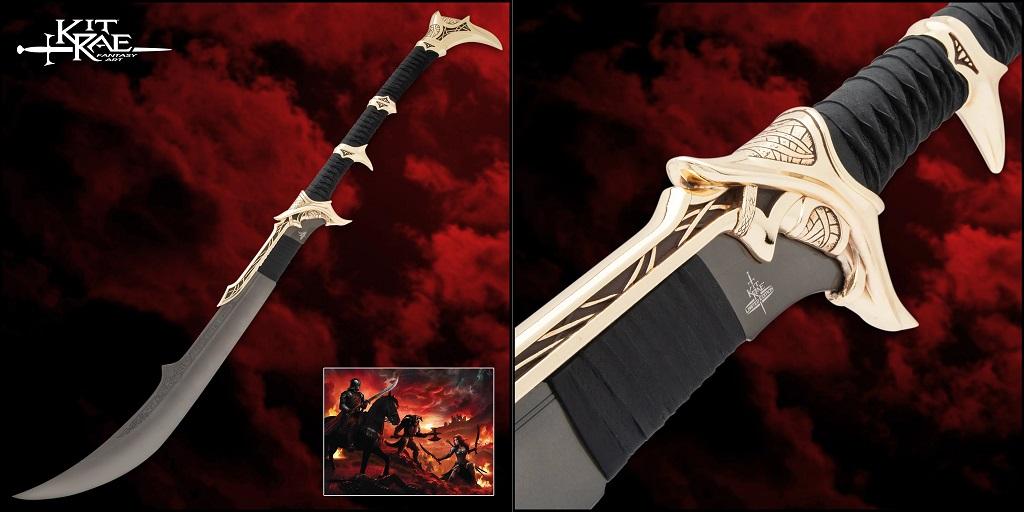
In the sword-collecting community, there is a pejorative term circulating called a “sword-shaped object” which refers to replica swords that, while they look like the real thing, certainly are not.
This goes beyond whether or not a sword is battle-ready, and in certain cases, such as that associated with traditional Japanese sword patterns like katana and odachi swords, applies to the techniques used to make the sword, as well as what the sword is literally made with.
That being said, here are a few of the ways (eight, specifically) you can discern whether or not what you’re looking at is a real samurai sword, not just in the sense that it can be used for live training and traditional Japanese martial arts, but that it has been forged according to traditional techniques.
- It will be made with tamahagane (or at least some other good steel).
Traditional, real samurai swords were made with a special grade of steel known as tamahagane, which means “precious steel” or “jewel steel” in Japanese, and which is produced from iron sand sourced from Shimane prefecture in Japan.
While historically “real” samurai swords have been made with tamahagane, in the modern era, other alloys may be used, such as 1055, 1095, T10, or even Damascus steels.
- It will have a real hamon line.
Real samurai swords are clay-tempered, which produces a differential heat treatment, yielding a harder edge and softer spine. This process, known as “yaki-ire” in Japanese, also produces a cloudy edge with a wavy margin, known as a hamon line. Modern, “real” Japanese swords don’t necessarily need to be tempered with clay, but to be considered authentic they should nevertheless be treated with a differential temper that does produce a real hamon line.
- It will have a full tang.
To be considered real, and definitely to be considered battle-ready, a samurai sword must be made with a full nakago, or tang. The full tang is not just a measure of authenticity, but of practicality; without a full tang, the sword would lack the structural integrity necessary to make it a reliable weapon.
- The grain structure is visible.
Japanese swords’ steels feature a “hada” or grain structure, arising from the folding process during forging. This structure is usually visible to the naked eye.
- The blade will be secured with a small bamboo pin known as a mekugi.
Unlike western swords, which usually have a tang that is peened over the pommel, Japanese swords are secured in the tsuka, or hilt, with a small, tapered bamboo pin known as a mekugi.
- It will have a samegawa rayskin wrap.
The hilt, or tsuka, of a traditional Japanese sword is wrapped with rayskin and then cloth. Both of these features not only increase the aesthetic appeal of the sword, but enhance the grip of the tsuka,
- It will come with a lacquered wood saya, or scabbard.
Traditionally, Japanese swords like katana swords were outfitted with lacquered wooden sheaths known as saya. A real samurai sword will still come with one of these.
- (Bonus: The tang will be stamped).
Traditionally, a smith would stamp some unique mark on the tang of his swords, sort of like a modern signature or brand. Real samurai swords, especially authentic antiques, should still bear a stamp on the tang.
Where to Get a Real Samurai Sword
Want to learn more about real samurai swords? Visit True Swords. They carry a variety of unique and strikingly beautiful traditional Japanese swords, like wakizashi, katana and odachi swords, many of which are not just display replicas, but which are battle ready. Check out their collection for more information and get in touch with them if you need assistance before you buy.
For More Information About Japanese Sword and Battle Ready Swords Please Visit: True Swords.

 English
 Arabic
 French
 Spanish
 Portuguese
 Deutsch
 Turkish
 Dutch
Dutch
 Russian
 Romaian
 Portuguese (Brazil)
 Greek
Greek
 Bengali