


Embedded Software: Powering Modern Intelligent Devices
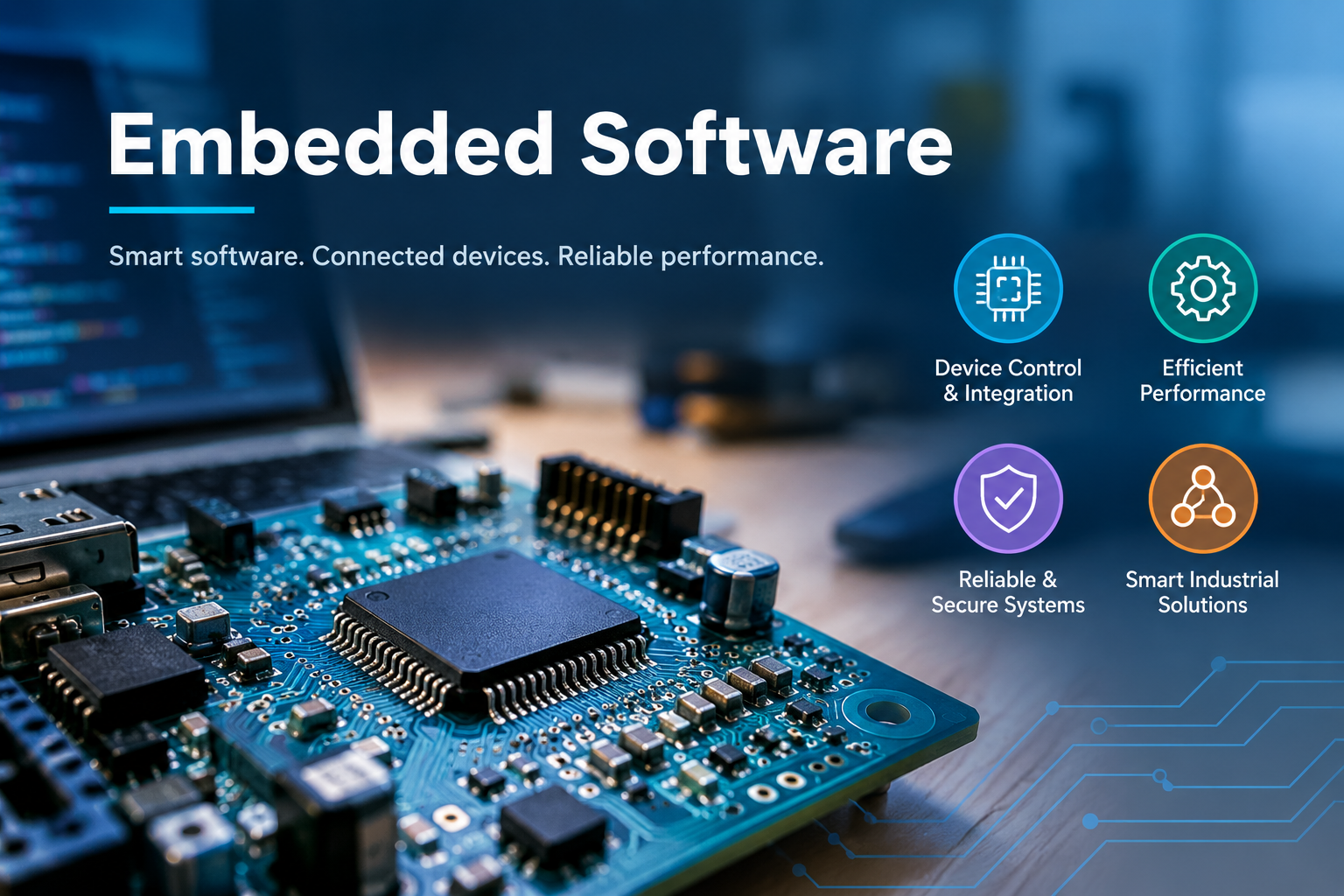
Modern electronic devices rely on software to process information, control operations, and communicate with other systems. From industrial machinery to automotive electronics, embedded technology plays an important role in making products smarter, more efficient, and more reliable. Embedded software is specifically designed to control the functions of hardware devices and help them perform their intended tasks.
Understanding Embedded Software Development
Embedded software is a specialized type of software that operates within electronic devices or dedicated computing systems. Unlike general-purpose applications, it is developed to perform specific functions while working within hardware, memory, processing, and power limitations.
Examples include software controlling sensors, monitoring equipment conditions, managing communication between electronic components, and operating automated machinery.
Developing effective embedded solutions requires an understanding of both hardware and software. Engineers must consider system requirements, processing capabilities, communication protocols, and real-time performance.
Why Embedded Software Matters
Embedded technology supports a wide range of industries, including automotive engineering, industrial automation, consumer electronics, medical equipment, and connected devices.
Well-designed embedded systems can improve operational consistency, support faster data processing, and enable intelligent control functions. They can also help manufacturers introduce advanced features without unnecessarily increasing hardware complexity.
Reliability is particularly important in applications where software directly influences equipment behavior. Testing, debugging, and verification help identify potential issues before products are deployed.
Key Considerations in Embedded Development
Successful embedded software development begins with clearly defined functional requirements. Engineers need to understand what the system must accomplish and how it will interact with the surrounding hardware.
Other important considerations include memory management, processor utilization, power consumption, communication interfaces, security, and maintainability.
Hardware-software integration is another essential part of the development process. Software must communicate correctly with sensors, controllers, and other electronic components to deliver the expected results.
Supporting Product Innovation with Engineering Expertise
Businesses developing electronic products often require specialized engineering knowledge to address complex technical challenges. Experienced engineering teams can support software architecture, firmware development, debugging, system integration, and product testing.
Servotech Inc. supports engineering projects involving embedded systems and related technologies, helping businesses address their technical requirements through application-focused engineering solutions.
Conclusion
Embedded software is a fundamental component of modern intelligent products. By combining efficient programming, hardware integration, and thorough testing, businesses can develop dependable electronic systems that meet changing industry requirements. A structured development approach helps improve product functionality, maintainability, and long-term performance.

 English
 French
 Spanish
 Portuguese
 Deutsch
 Turkish
 Dutch
Dutch
 Italiano
 Russian
 Romaian
 Portuguese (Brazil)
 Greek
Greek
 Bengali