


How Small Manufacturers Can Make Better Machinery Investment Decisions
For small manufacturing businesses, purchasing new machinery is a major financial decision. The right equipment can improve productivity, reduce operating expenses, and support business expansion. However, machinery investments also involve risks, especially when businesses depend on loans or expect immediate returns.
Before upgrading production facilities, manufacturers should understand their operational requirements, financing options, and applicable government schemes.
Understanding the Real Cost of Manufacturing Equipment
The purchase price is only one part of the total machinery investment.
Businesses must also consider installation, electricity consumption, maintenance, operator training, and financing costs.
For example, a machine with a lower purchase price may consume more electricity over its working life. Another machine with higher initial costs may deliver better efficiency and lower maintenance requirements.
Comparing the total cost of ownership can help manufacturers identify equipment that supports long-term business goals.
Why Energy Efficiency Matters for MSMEs
Energy expenses can represent a significant portion of manufacturing costs, particularly in industries that use motors, compressors, heating systems, and other power-intensive equipment.
Manufacturers considering equipment replacement should examine interest subvention for industrial energy upgrades as part of their financial planning.
The ADEETIE Scheme supports eligible micro, small, and medium enterprises investing in energy-efficient technologies.
It provides interest subvention on qualifying project loans, subject to applicable eligibility requirements, technical assessments, and energy-saving conditions.
The benefit is linked to eligible borrowing costs rather than a direct discount on machinery purchases.
Businesses should therefore review projected electricity savings alongside their financing obligations.
Machinery Planning for Export-Oriented Businesses
Manufacturers supplying international markets may require specialized equipment to maintain product quality, production capacity, and delivery timelines.
When equipment is imported, customs duties can add to the initial capital investment.
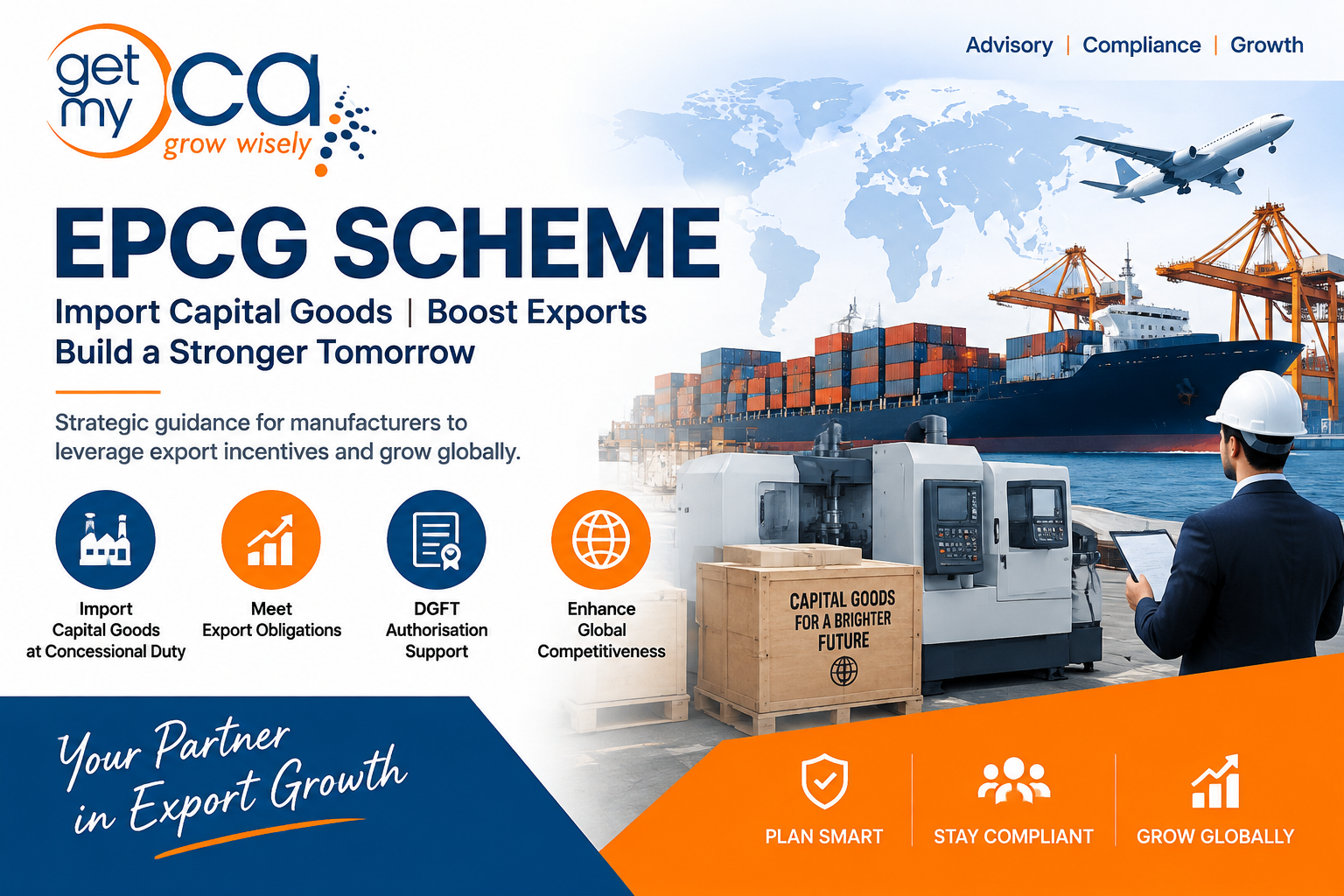
Understanding capital equipment duty exemptions under EPCG can be useful for exporters evaluating machinery purchases.
The Export Promotion Capital Goods Scheme allows eligible exporters to import qualifying capital goods at zero customs duty, subject to prescribed export obligations.
Exporters must carefully evaluate future orders and their ability to meet the applicable commitments.
The availability of duty relief should not be the only reason for purchasing imported machinery.
Important Checks Before Upgrading Machinery
Manufacturers can improve investment decisions by following a structured approach:
-
Assess existing production: Identify equipment limitations and operational problems.
-
Compare machinery options: Review capacity, quality, electricity consumption, and maintenance requirements.
-
Estimate financing costs: Understand loan interest, repayment schedules, and working-capital requirements.
-
Review scheme eligibility: Check whether the proposed investment meets relevant government programme conditions.
-
Prepare documentation: Maintain equipment quotations, business records, and technical project details.
-
Evaluate long-term returns: Compare expected operational improvements with overall project expenditure.
These steps can reduce the risk of selecting unsuitable equipment or underestimating project costs.
Conclusion
Machinery modernization can support manufacturing growth, but financial planning is equally important.
Energy-intensive MSMEs should evaluate opportunities to improve electricity efficiency, while export-oriented manufacturers should understand the regulatory obligations associated with imported capital goods.
By considering operating costs, eligibility conditions, and realistic business demand, manufacturers can make equipment investment decisions that support sustainable growth.

 English
 Arabic
 French
 Spanish
 Portuguese
 Deutsch
 Turkish
 Dutch
Dutch
 Italiano
 Russian
 Romaian
 Greek
Greek
 Bengali