


How Fire Mobile Command Center Can Prepare for Rapidly Changing Wildfires
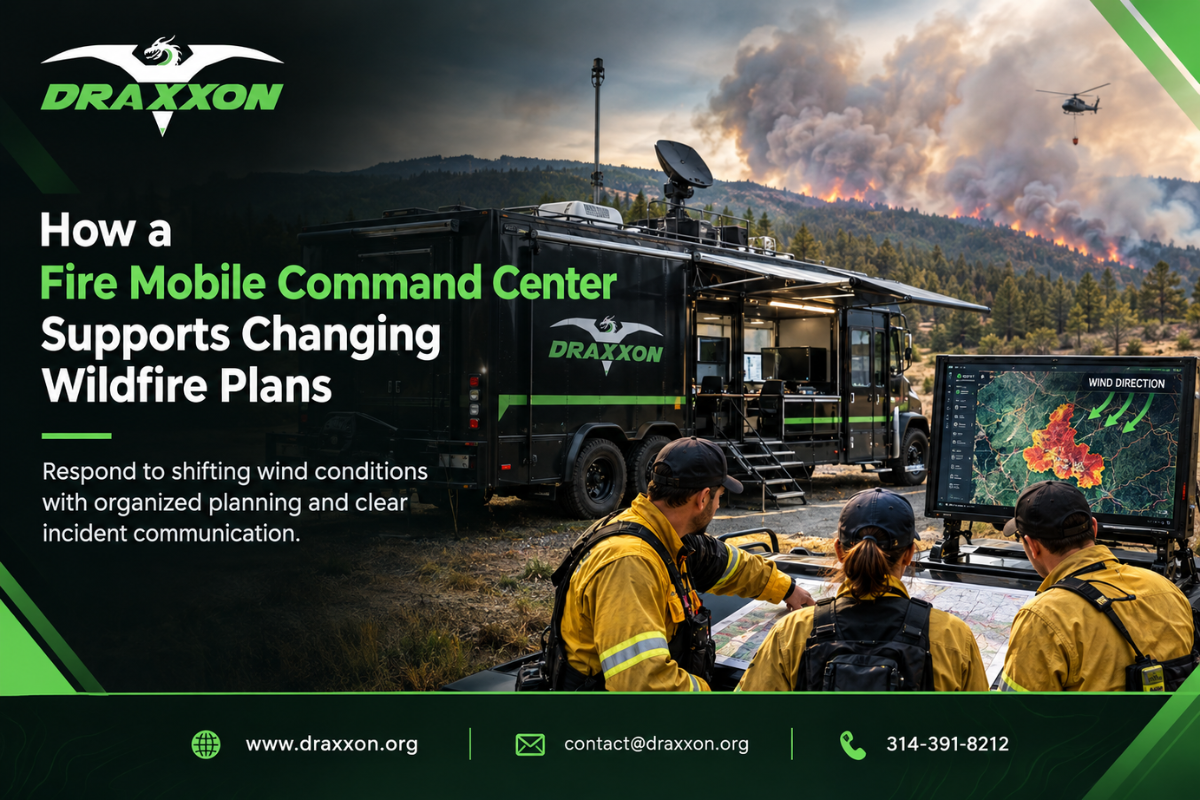
Wind changes can change a relatively simple wildfire scenario to a more complicated one quite fast. This can mean that firefighters have to change their tasking, protect more places, or change ways of entering or exiting the fire zone. It becomes increasingly difficult for the incident commander to review the situation and re-prioritize it all while taking care of the safety of firefighters.
Fire mobile command center have to be designed for such conditions, and not just be a vehicle for the transfer of communications gear. Its primary function is to serve as an operational platform where designated personnel can analyze the situation and brief about it in order to help manage the incident effectively.
The planning process begins with determining the equipment and work spaces. Incident commanders will require incident maps, weather reports, communication system, control panels, and other references. The configuration of these will depend on the department's policies and incident size. Equipment placement should allow personnel to operate effectively without increasing the number of people in the vehicle unnecessarily.
Location is an important factor. The command unit requires a location that facilitates both access and oversight, but that also meets safety requirements at an incident. As conditions and behavior of fire can change, departments require plans for reassessment of the command location if the current location proves inadequate. Relocatability of the vehicle does not eliminate the requirement for appropriate site selection.
The second key issue is the briefing process. Whenever a new plan is created, those teams who receive the plan as well as those involved in its execution require explanation of the changes, existing assignments, and future actions. This process benefits from the command center workspace.
For the fire department to determine appropriate command platforms, a variety of realistic scenarios of usage have to be assessed, such as difficulties in access, adverse weather, long-term operation, and accommodation of necessary personnel and equipment.
While a mobile command system cannot predict changes in wind direction or substitute for the experience of the command at incidents, it still allows an organized way of dealing with changing situations in a wildfire.

 English
 Arabic
 French
 Spanish
 Portuguese
 Deutsch
 Turkish
 Italiano
 Russian
 Romaian
 Portuguese (Brazil)
 Greek
Greek
 Bengali