


DongHai Rubber Chemicals for Long-Lasting Products
How Can an Anti Fatigue Agent Extend the Service Life of Rubber Products?
Rubber products are widely used in automotive systems, industrial machinery, construction equipment, and everyday applications because they combine flexibility with the ability to absorb mechanical energy. During operation, these materials may experience repeated stretching, compression, bending, vibration, and temperature fluctuations, all of which can gradually affect their structural integrity. An anti fatigue agent can contribute to fatigue-resistant rubber formulations when its properties are compatible with the selected polymer and processing conditions. For manufacturers exploring rubber chemical solutions from yg-1, understanding how fatigue develops is an important step toward choosing suitable additives. What factors should be considered when developing rubber compounds for extended service life?
Understanding Fatigue Damage in Rubber
Unlike a sudden failure caused by a single extreme load, fatigue damage develops progressively through repeated mechanical stress. Each deformation cycle can create or enlarge small defects within the material, especially around surface imperfections, filler agglomerates, or areas where stress becomes concentrated. Over time, these defects may develop into cracks that gradually spread through the rubber structure.
The consequences depend on the component's function and operating environment. A cracked seal may lose its ability to maintain pressure, while a flexible coupling may experience reduced vibration isolation. In automotive applications, repeated flexing and heat generation can place substantial demands on rubber components. Industrial hoses, conveyor belts, and vibration-control parts also require appropriate resistance to cyclic loading.
Fatigue behavior is influenced by polymer composition, reinforcing fillers, crosslink structure, manufacturing quality, and environmental exposure. Consequently, manufacturers need to evaluate the complete rubber formulation instead of assuming that one ingredient alone determines durability.
How Formulation Choices Influence Durability
Rubber compounds are developed through the coordinated use of elastomers and functional additives. Each ingredient contributes specific characteristics, and the final properties emerge from their interactions during mixing, curing, and subsequent use. The formulation must accommodate the mechanical demands of the application while maintaining suitable processing characteristics.
An additive intended to support fatigue resistance should be evaluated in relation to the polymer type, filler system, curing chemistry, and other ingredients. Compatibility is essential because an ingredient that performs appropriately in one formulation may behave differently in another. Dispersion quality also matters, since uneven ingredient distribution can produce localized differences in mechanical properties.
Flexibility and strength require careful balance. Excessive stiffness may restrict deformation recovery in certain applications, whereas insufficient reinforcement or an unsuitable crosslink structure can compromise resistance to repeated loading. Product development therefore involves evaluating the complete formulation under conditions that reflect actual use.
Manufacturers can use controlled laboratory trials to compare candidate formulations, identify processing variations, and assess whether the resulting compounds meet specified performance requirements. Such testing provides a technical basis for material selection without relying on unsupported assumptions about additive effectiveness.
Environmental Conditions and Rubber Service Life
Operating conditions have a direct influence on how rubber products age and respond to repeated stress. Temperature fluctuations can change material stiffness and deformation behavior, while exposure to oxygen, sunlight, oils, or chemicals may alter the polymer structure over time. Mechanical loading combined with environmental exposure can create demanding conditions for components expected to operate reliably over extended periods.
Different applications require different formulation priorities. Automotive seals may need to withstand compression and temperature variation, whereas conveyor belts must accommodate repeated bending and tensile forces. Industrial vibration mounts require suitable resilience, and flexible hoses may need to tolerate pressure changes alongside continuous movement.
Antioxidants can help control certain oxidative aging processes, while appropriate curing systems establish the crosslinked structure needed for the intended mechanical properties. Other formulation ingredients may influence processing behavior, flexibility, and reinforcement. The selection process should account for these interactions and the actual conditions in which the finished component will operate.
It is also important to distinguish laboratory performance from field service life. A compound may produce promising results in a controlled fatigue test, but installation methods, maintenance practices, load variation, and environmental exposure can affect its behavior in service. A combination of laboratory evaluation and application-specific validation provides a sounder basis for assessing expected durability.
Testing and Production Quality Control
Consistent manufacturing practices help reduce unwanted variation between rubber batches. Differences in raw material quality, ingredient proportions, mixing time, or curing temperature may influence the final compound and its resistance to repeated deformation. Clearly defined procedures and suitable inspection methods allow production teams to identify potential issues before finished components enter service.
Tensile testing measures resistance to stretching, while hardness testing provides information about material stiffness. Dynamic fatigue testing can help assess performance under repeated loading, and crack-growth evaluations can reveal how defects develop under specified conditions. Depending on the application, manufacturers may also examine heat aging, compression set, abrasion resistance, and elastic recovery.
No individual test can describe every aspect of rubber durability. Results should be interpreted in relation to the intended component, relevant standards, and expected operating conditions. When test data reveal weaknesses, adjustments to the polymer blend, filler dispersion, curing system, or additive package may be considered.
A documented evaluation process also supports communication between compound developers, production engineers, and chemical suppliers. Clear specifications and traceable test results help teams compare formulations and make decisions based on measurable material behavior.
Selecting Rubber Chemicals for Industrial Applications
Choosing a suitable additive involves more than comparing product names or general descriptions. Manufacturers should review technical specifications, recommended applications, handling instructions, compatibility information, and available testing data. The supplier's ability to communicate product characteristics clearly is also important when a material must be integrated into an established production process.
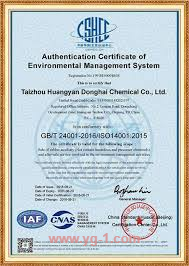
Taizhou Huangyan Donghai Chemical Co., Ltd. supplies rubber chemicals for industrial formulation and processing, with product categories that include anti-fatigue additives, vulcanizing agents, accelerators, antioxidants, scorch retarders, and processing aids. Its range provides manufacturers with options to investigate according to their rubber type and application requirements. Product suitability should be confirmed through technical documentation and controlled trials rather than assumed from a general product description.
When evaluating potential materials, rubber processors can identify the mechanical stresses their products encounter, establish target performance criteria, and discuss formulation compatibility with the supplier. This process helps clarify which properties require testing and what production conditions should be monitored. It also supports practical decisions concerning material handling, batch consistency, and integration into existing manufacturing procedures.
For companies researching an anti fatigue agent for rubber applications, yg-1 provides product information at https://www.yg-1.com/, where manufacturers can examine the available product details and consider their relevance to specific compound designs. Reviewing the technical information with the intended elastomer, processing conditions, and performance requirements in mind gives formulation teams a practical starting point for discussing suitable materials with Taizhou Huangyan Donghai Chemical Co., Ltd.

 English
 Arabic
 French
 Portuguese
 Deutsch
 Turkish
 Dutch
Dutch
 Italiano
 Russian
 Romaian
 Portuguese (Brazil)
 Greek
Greek
 Bengali