


IATA DG shipping India
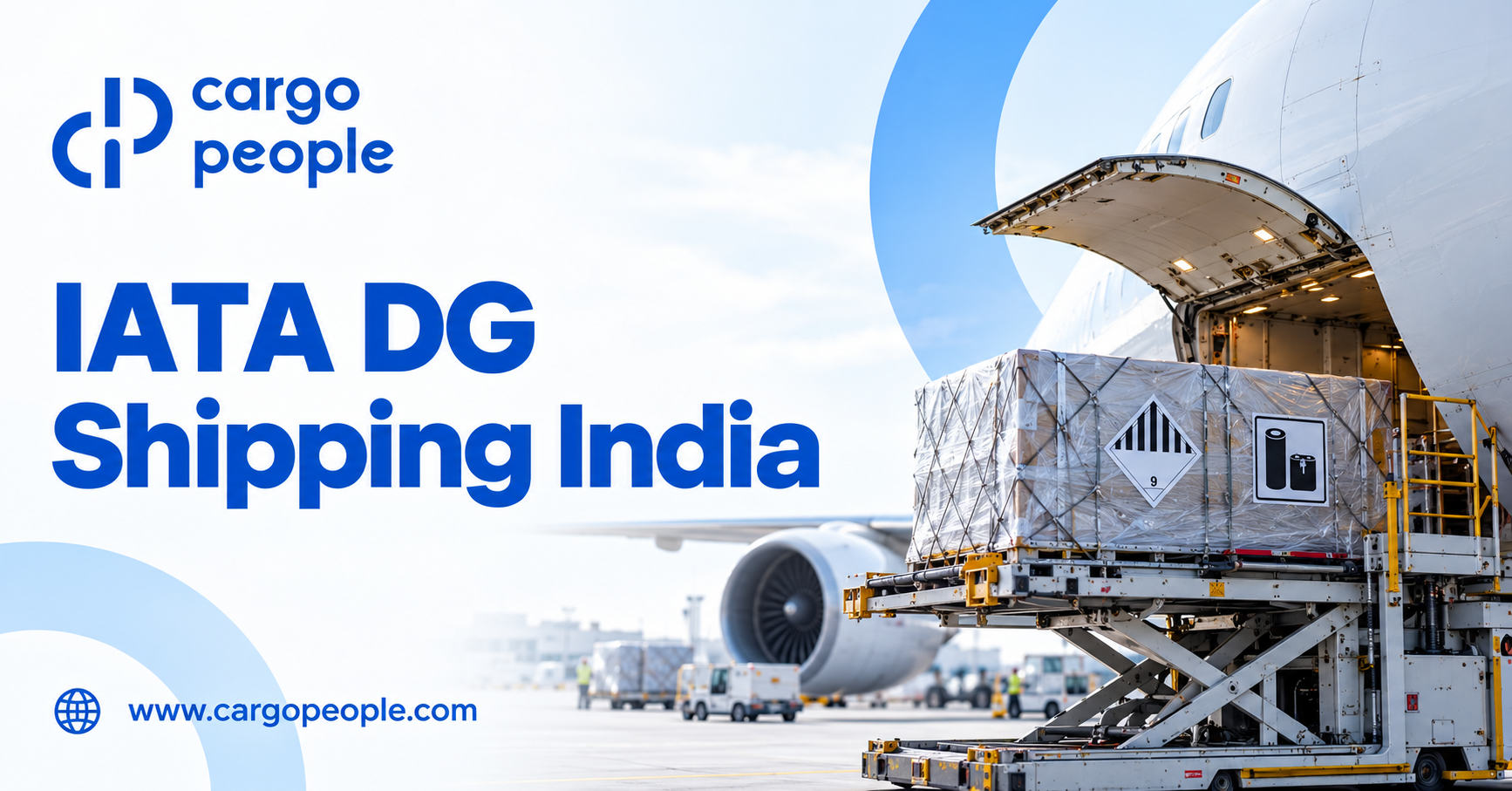
Shipping dangerous goods by air requires much more planning than a normal cargo shipment.
Products such as lithium batteries, chemicals, flammable liquids, gases, paints, aerosols and certain industrial materials may fall under dangerous goods regulations. If they are packed, labelled or declared incorrectly, airlines can reject the shipment before loading.
For Indian exporters and importers, understanding IATA DG shipping in India is therefore essential.
The International Air Transport Association's Dangerous Goods Regulations, commonly called the IATA DGR, provide the global operating framework used by airlines, freight forwarders, ground handlers and shippers for the safe transport of dangerous goods by air. The regulations cover classification, packing, marking, labelling, documentation and handling requirements.
What Is IATA DG Shipping?
IATA DG shipping refers to transportation of dangerous goods by air in accordance with applicable dangerous goods regulations.
Dangerous goods are materials or articles that can create risks to health, safety, property or the environment during transportation.
Depending on the product, the cargo may need a specific UN number, hazard class, packing group, packaging method and declaration.
Airlines generally check DG shipments carefully before acceptance because an incorrect declaration can create serious safety risks.
Why Is IATA DG Compliance Important in India?
Indian manufacturers and exporters increasingly ship products such as batteries, chemicals, pharmaceuticals and industrial materials worldwide.
However, air cargo has strict safety requirements.
A product that can move easily by road or sea may have additional restrictions when transported by air.
IATA's Dangerous Goods Regulations are updated annually, so businesses handling DG cargo should use the current requirements rather than relying on old packing or documentation practices. IATA's 67th Edition applies for 2026, while the next edition comes into force from 1 January 2027.
In India, dangerous goods carriage by air also falls under the country's aviation regulatory framework administered by DGCA. DGCA currently lists the Aircraft (Carriage of Dangerous Goods) Rules, 2026 among its aviation regulations.
Who Needs IATA DG Shipping Services?
DG shipping support may be required by companies exporting or importing regulated cargo.
Common industries include:
- Lithium-ion battery manufacturers and traders
- Chemical manufacturers
- Automotive and EV companies
- Pharmaceutical businesses
- Paint and coating manufacturers
- Electronics companies
- Industrial gas suppliers
- Laboratory and research companies
- Engineering companies
- Medical and healthcare businesses
The requirement depends on the actual product composition and classification.
Businesses should therefore verify whether their cargo is regulated before booking an air shipment.
Common Dangerous Goods Shipped by Air
Dangerous goods are divided into different hazard classes.
Examples include explosives, gases, flammable liquids, flammable solids, oxidizing substances, toxic substances, radioactive materials and corrosive materials.
Lithium batteries are particularly important because they are widely used in electronics, EV components, power banks and energy-storage products.
Battery-related requirements have received significant updates in recent editions of the IATA regulations as battery volumes transported by air continue to grow.
IATA DG Shipping Process in India
A properly planned DG shipment generally follows several stages.
1. Product Classification
The first step is determining whether the cargo qualifies as dangerous goods.
The shipper may need information such as:
- Product composition
- Safety Data Sheet
- UN number
- Proper Shipping Name
- Hazard class
- Packing group, where applicable
- Flash point or technical characteristics
Correct classification is critical because the remaining shipping requirements depend on it.
2. Check Airline Acceptance
Not every airline accepts every type of dangerous cargo.
Even when a product is permitted under IATA regulations, individual airlines may have additional restrictions known as operator variations.
Therefore, DG cargo should not be booked only on the basis of freight rate.
Before finalizing the shipment, the shipper should confirm that the selected airline actually accepts the particular commodity and configuration.
3. Select the Correct Packaging
Dangerous goods normally require packaging that meets the applicable packing instruction.
Depending on the commodity, this may involve approved combination packaging, UN specification packaging, inner packaging, cushioning or other protective measures.
IATA DGR provides detailed packing instructions for different classes of dangerous goods.
Using ordinary export packaging where certified packaging is required can result in cargo rejection.
4. Marking and Labelling
The package must carry the appropriate markings and hazard labels.
Depending on the shipment, these may include:
- UN number
- Proper Shipping Name
- Hazard label
- Orientation arrows
- Handling label
- Shipper and consignee details
Incorrect or missing labels are a common reason for DG shipment rejection.
5. DG Documentation
Documentation must match the physical cargo.
Depending on the shipment, documents can include:
- Commercial invoice
- Packing list
- Air Waybill
- Safety Data Sheet
- Shipper's Declaration for Dangerous Goods, where applicable
- Test reports or certifications
- Battery-related documents where applicable
- Export or import approvals, where required
IATA specifically includes the shipper's declaration and air waybill within its DG documentation requirements.
6. Airline Acceptance Check
Before loading, the airline or handling agent checks whether the shipment complies with the applicable rules.
IATA also publishes acceptance checklists for non-radioactive dangerous goods, radioactive goods and dry ice shipments.
If the packaging, labels or documents do not match, the cargo may be rejected until corrections are made.
Important Documents for IATA DG Shipping
Documentation requirements vary depending on the commodity.
However, businesses commonly need:
Safety Data Sheet: Provides information about the chemical or hazardous characteristics of the product.
Shipper's Declaration: Used for many fully regulated dangerous goods shipments.
Commercial Invoice and Packing List: Required for commercial and customs purposes.
Air Waybill: Contains shipment and carriage details.
UN-related classification details: Used to establish the correct dangerous goods entry.
For lithium batteries, additional testing and shipment documentation may also be relevant depending on battery type and configuration.
Benefits of Proper DG Shipping Planning
Proper planning can reduce shipment rejection and unnecessary storage charges.
It also helps businesses choose airlines and routes that are suitable for their commodity.
Correct classification and packing can prevent last-minute repacking at the airport.
For exporters, reliable DG handling also helps maintain delivery commitments to overseas customers.
Most importantly, correct compliance improves safety throughout the transportation chain.
Common Challenges in IATA DG Shipping
Dangerous goods shipments can become complicated quickly.
Airline Rejection
A common problem occurs when businesses book freight before checking airline acceptance.
The freight rate may look attractive, but the airline may not accept the particular commodity.
Incorrect Classification
Wrong UN numbers, hazard classes or Proper Shipping Names can lead to shipment rejection.
Packaging Problems
Ordinary cartons or drums may not be suitable for regulated dangerous goods.
Some commodities require UN-tested packaging.
Documentation Errors
The description appearing on the declaration, packaging and Air Waybill should be consistent.
Even relatively small discrepancies can delay acceptance.
Changing Regulations
Dangerous goods regulations are updated regularly.
For example, the current 2026 IATA DGR introduced multiple battery-related changes, making it important for regular shippers to keep their procedures updated.
How Can a DG Freight Forwarder Help?
A freight forwarder experienced in dangerous goods can coordinate the shipment from the planning stage.
The process may include checking cargo classification, verifying airline acceptance, coordinating suitable packaging, reviewing documentation and arranging air freight.
For complex DG shipments, route selection is also important.
A direct flight may not always be available, and transit airports or connecting carriers can have additional restrictions.
The logistics partner should therefore evaluate the complete routing before confirming the shipment.
Special Attention for Lithium Battery Shipping
Lithium battery shipments require particular attention because requirements can change depending on:
- Lithium-ion or lithium-metal battery
- Battery watt-hour rating
- Battery capacity
- Batteries shipped separately
- Batteries packed with equipment
- Batteries contained in equipment
- State of charge
- Passenger or cargo aircraft restrictions
A battery shipment should therefore be reviewed before cargo reaches the airport.
Businesses should also maintain the applicable battery testing and technical documents required for their specific shipment.
Why Businesses Should Plan DG Cargo Before Booking
For normal cargo, businesses may sometimes compare freight rates first and finalize the booking quickly.
DG cargo should be handled differently.
Before confirming a shipment, the shipper should ideally verify:
Classification -> Packaging -> Documents -> Airline Acceptance -> Routing -> Freight Rate.
This order reduces the risk of finding a low freight rate only to discover later that the carrier will not accept the cargo.
For Indian manufacturers shipping batteries, chemicals and other regulated products regularly, this approach can prevent repeated cargo rejection and additional handling costs.
Conclusion
IATA DG shipping in India requires accurate classification, compliant packaging, correct labels, complete documentation and airline acceptance.
Businesses dealing with batteries, chemicals, industrial products or other hazardous materials should therefore treat dangerous goods logistics as a specialized process rather than normal air freight.
Working with an experienced freight forwarder can help identify problems before cargo reaches the airport and ensure that the shipment is planned according to the applicable dangerous goods requirements.
Get Expert Assistance for IATA DG Shipping in India
Cargo People Logistics & Shipping Pvt. Ltd. assists Indian businesses with dangerous goods air freight, lithium battery shipping, international freight forwarding, customs clearance and door-to-door logistics.
If you are planning a DG shipment, share your cargo details before booking so that airline acceptance, documentation and shipping options can be evaluated properly.
👉https://cargopeople.com/blog/dg-cargo-logistics-india/
Website: https://www.cargopeople.com/
Phone: +91 97174 65454
Email: wecare@cargopeople

 English
 Arabic
 French
 Spanish
 Portuguese
 Deutsch
 Turkish
 Dutch
Dutch
 Italiano
 Russian
 Romaian
 Greek
Greek
 Bengali