


SBC 801 2024: Important Changes for Building Safety
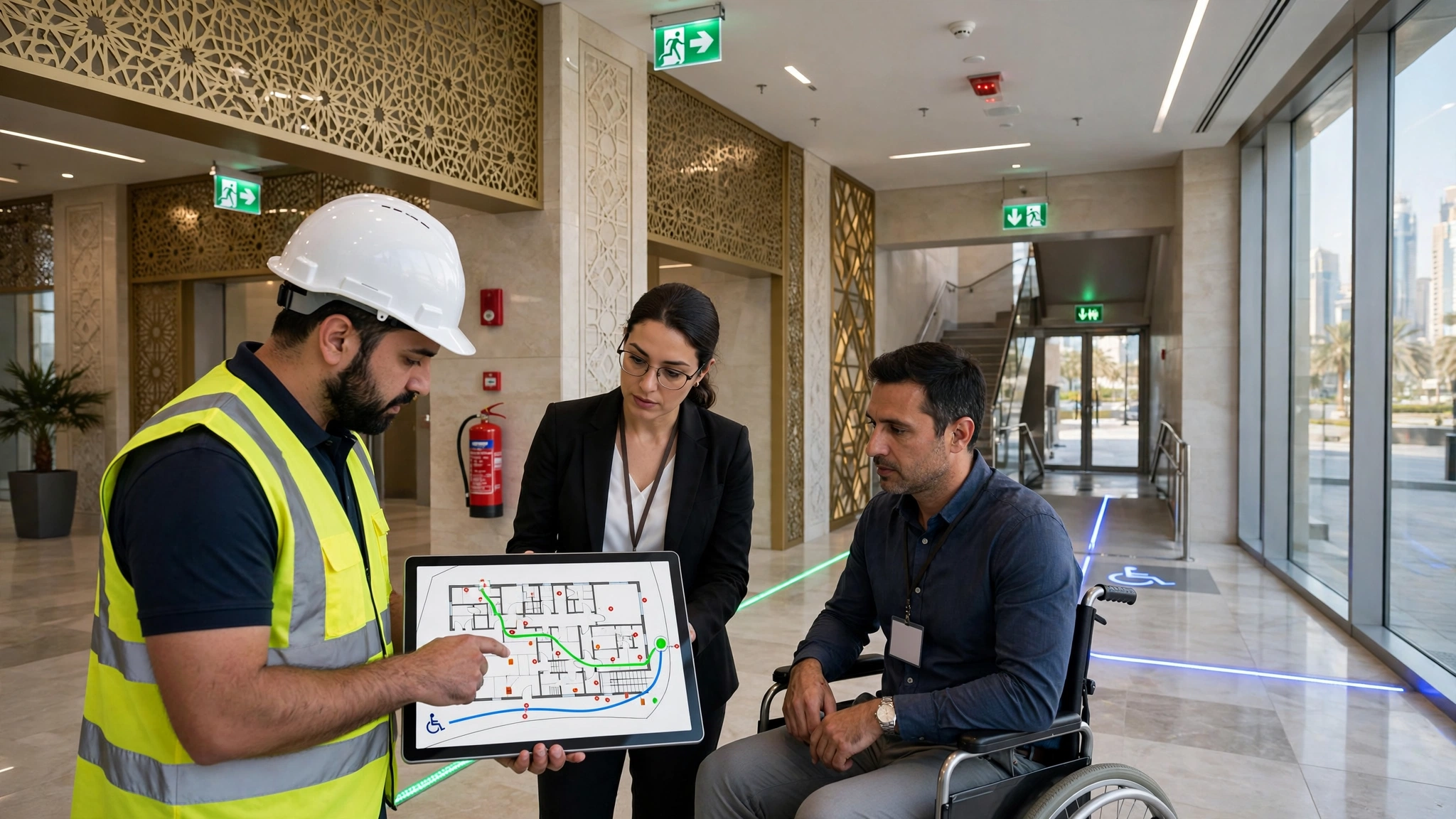
External wall safety is an important responsibility for building owners, developers, and property managers. When a facade contains uncertain materials or concealed construction defects, it can be difficult to decide whether immediate action is needed. The sbc 801 2024 edition provides an important reference for fire protection requirements, while SBC 201 addresses broader building design provisions. Combining code review with a structured facade investigation allows stakeholders to replace assumptions with evidence, understand potential consequences, and develop a realistic plan for protecting occupants and property.
Start With the Building's Actual Condition
A reliable assessment should begin by understanding the building as it exists today. Original drawings may not show later alterations, replacement panels, or repairs carried out by different contractors. These changes can affect the performance of the external wall system.
Building managers should identify the facade type, approximate installation date, available product information, occupancy, building height, and previous fire safety concerns. They should also establish whether any renovation work has affected window openings, insulation, joints, or cavity barriers.
This initial review helps define the investigation. For example, a property with complete installation records may require a different approach from a tower where the original contractor cannot provide reliable product information.
The purpose is not to label a building unsafe before the evidence has been reviewed. Instead, the team should identify confirmed facts, unresolved questions, and the information needed to reach a defensible conclusion.
Evaluate Materials and Installation Details Together
External wall fire performance depends on more than the name of a panel or insulation product. A facade may contain several layers that interact when exposed to heat. Even a material with favourable characteristics can be part of a poorly detailed assembly if protective barriers are missing or incorrectly installed.
The review should examine panel cores, insulation, membranes, support systems, cavity arrangements, and connections around windows and floors. It should also consider whether fire stopping is continuous and suitable for the intended application.
The sbc 801 2024 requirements should be considered within the wider regulatory framework, alongside the applicable provisions governing building design and fire safety. The precise requirements must be confirmed against the official code and the project's circumstances.
Where the installed materials cannot be verified, a specialist may recommend carefully selected samples. This helps distinguish between assumptions based on appearance and conclusions supported by technical evidence.
Establish a Clear Investigation Strategy
An organised investigation reduces unnecessary disruption and helps stakeholders understand why each action is required. The first stage should include a document review and site visit to examine the facade's extent, visible condition, and relationship with the existing fire strategy.
If combustible cladding is present or its composition remains uncertain, laboratory screening may help establish relevant material characteristics. Tests should be selected according to the questions being investigated rather than performed without a clear purpose.
A preliminary report should summarise the available evidence and explain whether further assessment is recommended. It should identify important limitations, particularly where concealed components have not been inspected or tested.
If significant concerns remain, the investigation can progress to quantitative fire engineering analysis. This staged approach helps owners understand the reasons for additional work and avoids treating every uncertainty as evidence of an immediate emergency.
Understand the Potential Consequences for Occupants
The seriousness of a facade fire depends on several factors, including the building's design, occupancy, external wall construction, fire protection measures, and evacuation arrangements. An assessment should consider how a credible fire scenario could affect people inside and around the building.
External flames may expose upper windows, while concealed cavities can create pathways for fire spread. Smoke entering occupied spaces or affecting escape routes may create additional challenges for evacuation and firefighting.
Engineers may use fire scenario analysis to examine potential conditions and estimate how quickly they could become unsafe. Evacuation analysis can then help estimate the time occupants need to reach safety. Comparing these results can inform an assessment of the available safety margin.
Such calculations depend on appropriate assumptions and reliable input data. They should not be presented as an exact prediction of every possible fire. Their purpose is to provide a structured basis for evaluating risk and comparing practical options.
Compare Remedial Options Before Committing Resources
When an assessment identifies a concern, stakeholders need to compare possible responses. Depending on the findings, options may include further testing, local repairs, improvements to fire barriers, replacement of unsuitable materials, or comprehensive facade remediation.
The decision should consider risk reduction, construction access, building occupancy, cost, disruption, and the requirements of the responsible authority. A cheaper option is not necessarily suitable if it fails to address the identified hazard.
A prioritised action plan can divide work into immediate precautions, planned improvements, and long-term measures. It should explain why each action is recommended and identify who will approve, deliver, and verify the work.
Building owners should also consider how remedial activities will affect residents, tenants, and nearby areas. Safe access, communication, and suitable temporary arrangements may be necessary while work is underway.
Technical review during construction helps confirm that proposed repairs are installed correctly and that changes do not introduce new weaknesses.
Conclusion
Managing facade fire risk requires a clear process that connects building records, site observations, material evidence, engineering analysis, and corrective action. A staged investigation helps owners understand the extent of a problem before committing to major works and supports decisions that reflect the building's actual circumstances.
Vortex Fire's published service approach includes initial reviews, laboratory screening, detailed assessment where needed, and technical support for remedial works. A Cladding Fire Safety Risk Assessment can help stakeholders understand potential external fire spread and identify appropriate next steps. A Cladding Fire Safety Risk Assessment can also support decisions about mitigation and remedial priorities when recommendations are based on suitable evidence and professional judgement.
FAQs
Why can external wall fire risks be difficult to identify?
Important materials and barriers may be concealed behind panels, and building records may not accurately reflect later changes.
What happens during an initial cladding review?
The reviewer examines available documents, visits the building where appropriate, considers the existing fire strategy, and identifies uncertainties that need further investigation.
What is the difference between screening and detailed assessment?
Screening helps establish material characteristics. Detailed assessment may use engineering analysis to evaluate potential fire spread and its implications for occupant safety.
Can remedial work be planned while a building remains occupied?
Possibly, but the arrangements depend on the building, the work, the identified risk, and any requirements imposed by the responsible authority. Suitable precautions must be established.
What should owners retain after remediation?
They should keep assessment reports, approved drawings, product information, inspection findings, installation records, and evidence that the completed work has been appropriately verified.

 English
 Arabic
 French
 Spanish
 Portuguese
 Deutsch
 Turkish
 Dutch
Dutch
 Russian
 Romaian
 Portuguese (Brazil)
 Greek
Greek
 Bengali