


How Professional Contractors Build Long-Lasting Equestrian Driveways
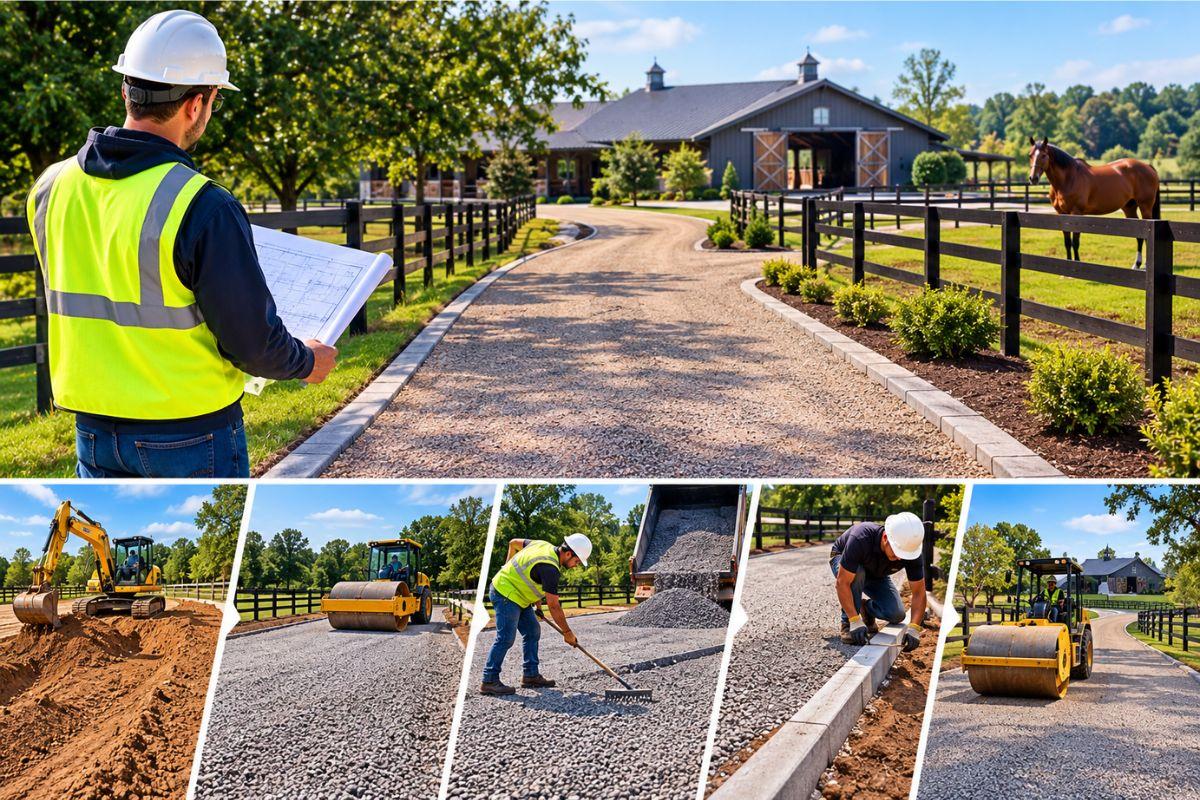
An equestrian property needs more than a beautiful riding arena, comfortable stables, and secure fencing. A durable driveway is equally important because it provides reliable access for horse owners, visitors, feed deliveries, maintenance vehicles, and horse trailers. Without proper planning and drainage, driveways can develop potholes, muddy areas, standing water, and uneven surfaces that affect daily operations.
Professional contractors use suitable materials, effective drainage systems, and careful site preparation to create driveways that withstand regular use and changing weather conditions. Permeable driveway construction equestrian projects are particularly valuable for properties where managing rainwater and maintaining stable access are important priorities.
1. Understanding the Needs of an Equestrian Driveway
Equestrian driveways have different requirements from ordinary residential driveways. They may need to support horse trailers, delivery trucks, tractors, and other heavy vehicles while providing safe movement around barns, paddocks, and riding arenas.
Before starting construction, professional contractors evaluate the property's layout and intended use. They consider traffic volume, soil conditions, existing slopes, drainage patterns, and access requirements.
Important planning considerations include:
-
Vehicle loads: The driveway must support the expected weight of vehicles and equipment.
-
Horse safety: Surfaces should provide suitable traction and avoid hazardous uneven areas.
-
Weather conditions: Materials should be appropriate for local rainfall, temperature changes, and seasonal conditions.
-
Accessibility: Routes should provide practical access to barns, arenas, parking areas, and service entrances.
Understanding these requirements helps contractors design a driveway that supports the property's long-term needs.
2. Preparing the Ground for Long-Term Stability
Proper ground preparation is one of the most important steps in driveway construction. Even high-quality materials can fail when installed over weak, poorly compacted, or waterlogged soil.
Professional contractors begin by removing vegetation, organic matter, and unsuitable soil. They then assess the subgrade to determine whether additional excavation, stabilization, or reinforcement is necessary.
The ground is shaped and compacted to establish a stable foundation. Depending on soil conditions and the expected traffic, contractors may install geotextile separation fabric or other suitable reinforcement to help prevent the underlying soil from mixing with the aggregate base.
A properly prepared foundation distributes vehicle loads more effectively and reduces the risk of rutting, settlement, and premature surface damage.
3. Choosing the Right Permeable Driveway Materials
Material selection directly affects driveway performance, maintenance requirements, and water management. Permeable driveway construction equestrian projects use systems designed to allow rainfall to pass through the surface or connected openings into a prepared base.
Common options include:
-
Permeable gravel: Properly graded aggregates can create a practical driveway surface when the complete system is designed for the site.
-
Gravel stabilization grids: These structures help contain aggregate and reduce movement under vehicle traffic.
-
Permeable paving systems: Specially designed blocks or pavers allow water to enter through joints or openings.
-
Open-graded aggregate systems: Carefully selected stone layers provide structural support and temporary water storage.
The best option depends on the soil's infiltration capacity, the expected vehicle loads, local rainfall, and the property's maintenance requirements.
Contractors should evaluate the entire driveway system rather than choosing materials based on appearance alone.
4. Designing an Effective Drainage System
Water management is essential for maintaining an equestrian driveway. Heavy rainfall can soften the subgrade, wash away loose material, create muddy entrances, and make access difficult.
A well-designed permeable driveway allows water to move through suitable surface materials into a prepared aggregate base. From there, the water may infiltrate the underlying soil or move through an engineered drainage system, depending on site conditions.
Professional contractors evaluate natural slopes, low points, soil permeability, and nearby structures before finalizing the drainage design.
Effective drainage measures may include:
-
Establishing appropriate surface gradients.
-
Installing suitable aggregate layers for water storage and movement.
-
Incorporating drainage pipes or collection systems where needed.
-
Directing overflow away from barns, arenas, foundations, and frequently used horse areas.
-
Providing safe discharge points that comply with local requirements.
Permeable surfaces do not automatically solve every drainage problem. Sites with heavy clay soils, high groundwater, or steep slopes may require additional engineering or an alternative drainage strategy.
5. Building a Strong, Properly Compacted Base
The driveway base provides structural support and helps maintain the surface under repeated traffic. Contractors select aggregate sizes and layer depths according to the design, ground conditions, and anticipated loads.
For many permeable systems, open-graded stone is used to create interconnected spaces that store and convey water. The base must also provide adequate strength for vehicles and trailers.
Installation involves placing materials in controlled layers and using appropriate compaction methods. Excessive compaction or unsuitable aggregate can reduce permeability, so the construction approach must match the specific system.
A well-designed base helps limit movement, uneven settlement, and recurring maintenance problems. It also supports more reliable access during wet weather.
6. Maintaining Horse Safety and Everyday Accessibility
A driveway should function safely for both vehicles and people moving around an equestrian facility. Loose stones, deep ruts, slippery surfaces, and poorly designed transitions can create unnecessary hazards.
Contractors should consider turning areas, gradients, trailer access, and connections between the driveway and stable entrances. Surface materials should provide suitable traction without creating excessive dust or loose debris.
Where horses may walk across the driveway, the selected surface should be appropriate for their intended movement and maintained to prevent dangerous depressions or displaced material.
Clear drainage channels, stable edges, and properly finished transitions also improve usability. These details help create a more organized property while supporting daily equestrian activities.
7. Reducing Long-Term Maintenance Costs
A durable driveway requires routine inspection, even when it has been professionally constructed. Maintenance helps preserve drainage performance and identify small problems before they become expensive repairs.
Property owners should periodically inspect the surface for ruts, displaced aggregate, sediment buildup, blocked drainage outlets, and signs of settlement.
Recommended maintenance practices include:
-
Remove leaves, sediment, and other debris that may obstruct water movement.
-
Repair depressions and replenish compatible surface aggregate when necessary.
-
Inspect drainage channels and outlets after heavy rainfall.
-
Address erosion or standing water promptly.
-
Arrange professional assessments when repeated failures appear.
Permeable surfaces may require periodic restorative cleaning or aggregate replacement, depending on their design and surrounding conditions. Regular care helps extend the useful life of the driveway.
8. Choosing Professional Equestrian Driveway Contractors
Selecting experienced contractors can make a significant difference in project quality. Property owners should look for professionals who understand ground preparation, aggregate selection, drainage design, and the demands of equestrian traffic.
Before approving a project, ask about the proposed construction layers, expected vehicle loads, water-management strategy, maintenance requirements, and warranty coverage.
A detailed proposal should explain the work involved and identify any site conditions that could affect the final cost or performance. Contractors should also follow applicable building, stormwater, and environmental requirements.
Working with knowledgeable professionals helps property owners make informed decisions and avoid preventable construction problems.
Conclusion
Long-lasting equestrian driveways depend on sound planning, stable foundations, suitable materials, and effective drainage. Each construction stage contributes to a surface that can handle regular vehicle traffic while supporting safe and reliable access throughout the property. Permeable driveway construction equestrian solutions can be an excellent choice when the site conditions and drainage design support their use. By investing in professional installation and consistent maintenance, equestrian property owners can reduce surface deterioration, manage rainwater more effectively, and create dependable access to their barns, arenas, and paddocks.

 English
 Arabic
 French
 Spanish
 Portuguese
 Deutsch
 Dutch
Dutch
 Italiano
 Russian
 Romaian
 Portuguese (Brazil)
 Greek
Greek
 Bengali