


Paint Correction: Restore Your Car’s Shine and Finish
Paint Correction by Paint Type: Why Black, White, Soft, and Matte Finishes Need Different Approaches
It is easy to conceive about paint restoration service as a single, typical procedure: polish the vehicle till the swirl marks go away.In practice, experienced detailers adapt their approach to the specific paint in front of them. Colour, hardness, finish type, and age all change how defects look, how much correction is possible, and which techniques are safe. This article explains how different paint types influence the way correction is planned and carried out.
Why Paint Type Changes the Approach
Every car's paint job consists of three layers: primer, base colour, and, in the majority of contemporary cars, a clear finish on top. Paint correction works by levelling the clear coat, or the paint itself on older single-stage finishes. Because formulations, thicknesses, and finishes vary, a technique that works beautifully on one car can be too aggressive or too gentle on another. This is why a test spot is such an important first step.
Dark Colours: Black, Navy, and Deep Greys
Why Defects Show More
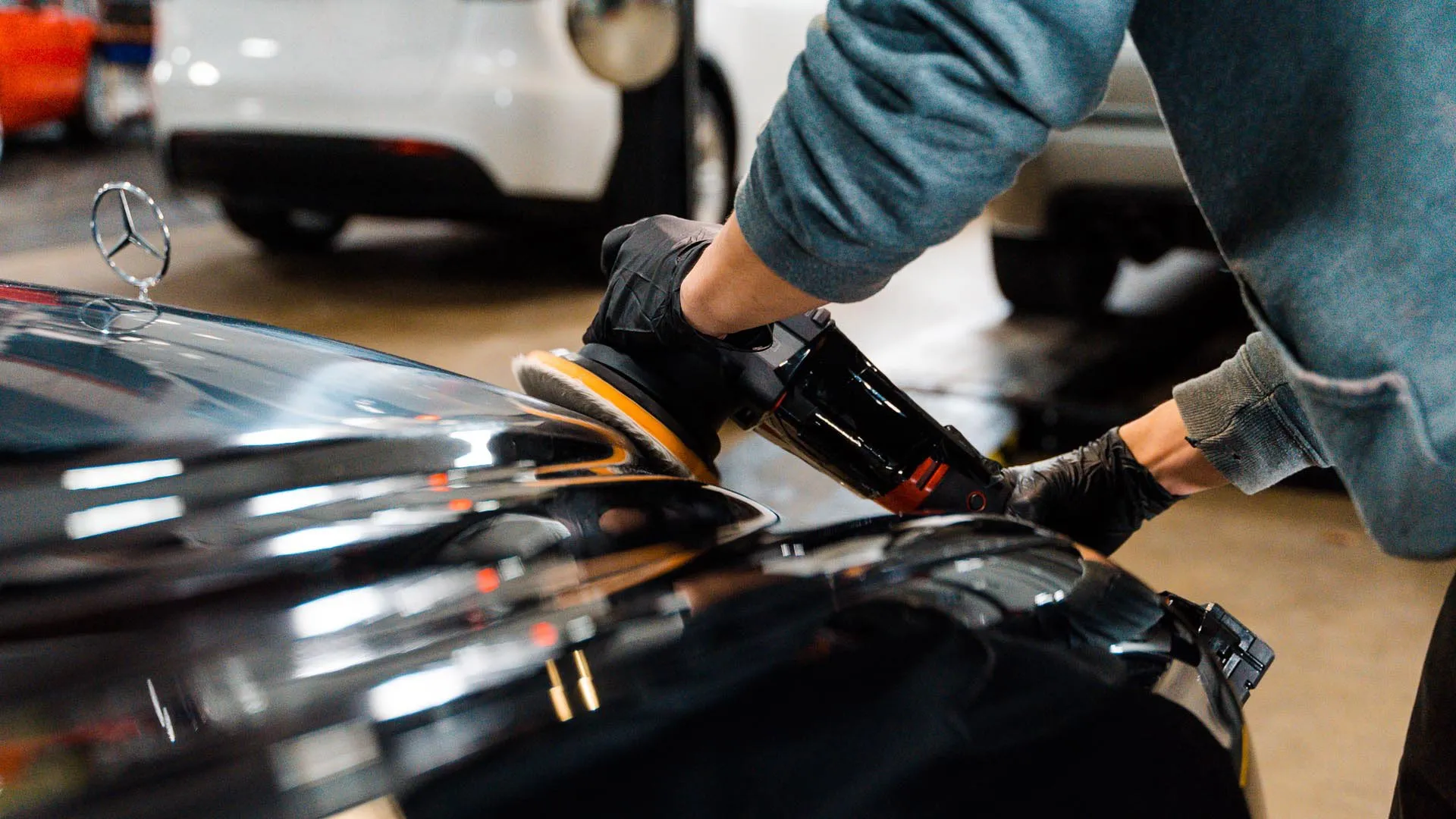
Dark paint acts almost like a mirror, which makes swirl marks, holograms, and fine scratches highly visible, particularly in direct sunlight. Owners of black cars often notice imperfections that would pass unseen on a lighter colour.
Correction Implications
Achieving a result that looks truly clear on a dark car usually demands a more refined finishing stage. Skipping the final polish can leave a faint haze that is obvious on black but easy to miss on silver. Dark cars also require careful maintenance afterwards, since new marks reappear quickly if washing technique is poor.
Light Colours: White, Silver, and Champagne
Why Defects Hide
Lighter colours scatter light, which masks fine swirl marks. A white car may look perfectly acceptable even with considerable micro-marring.
Correction Implications
Correction on light colours is often aimed at restoring gloss, removing oxidation, or addressing deeper scratches rather than chasing every last swirl. Owners may reasonably choose a lighter correction level, since the visible gain from an aggressive multi-stage process can be smaller than on a dark car.
Metallic and Pearl Finishes
Added Depth, Added Care
Flakes give metallic and pearl paints their depth and shine.A well-corrected metallic finish can look amazing, but poor workmanship might make the flakes appear fuzzy or uneven.Correction Implications
Detailers often take extra care with pad and polish selection on these finishes, aiming for a clean, consistent surface so that the flake pattern reflects light properly.
Soft Paint vs. Hard Paint
What the Terms Mean
Paint hardness varies between manufacturers and even between models and production years. It is often said that some brands use softer clear coats that scratch easily but correct quickly, while others use harder clear coats that resist scratching but need more effort to polish. These are generalisations, and individual cars can differ, which is why measuring and testing matter more than assumptions.
Ceramic coating helps protect your vehicle’s paint, enhance its gloss, and make the exterior easier to clean and maintain.
Correction Implications
Soft paint may respond to a gentle combination of pad and polish, and over-aggressive products risk removing more material than necessary. Hard paint may need a more assertive cutting stage, followed by careful refinement. Either way, a test spot reveals how the paint reacts.
Single-Stage Paint on Older and Classic Cars
How It Differs
Older vehicles, and some commercial vehicles, may have single-stage paint, where colour and gloss are combined in one layer with no separate clear coat. Oxidation on these finishes appears as a chalky, faded surface.
Correction Implications
Polishing single-stage paint often produces coloured residue on the pad, which is normal because the paint itself is being worked. However, material is removed from the colour layer, so a gentle, measured approach is important.Thin or previously over-polished paint may not tolerate much correction.
Repainted Panels
Respray work can differ in thickness and hardness from factory paint. A repainted door or bonnet may behave differently from the rest of the car, and some aftermarket paint can be thinner or softer. A good detailer will check panel thickness and treat questionable areas with caution.
Matte and Satin Finishes: A Warning
Do Not Polish Them
Matte and satin paints and wraps get their appearance from a microscopically textured surface. Polishing these finishes flattens the texture and creates shiny patches that cannot be reversed. Paint correction is not appropriate for matte finishes, which instead require specialist cleaning and care products.
Thin or Previously Corrected Paint
Clear coat is finite. Cars that have been polished repeatedly, or that began life with thin paint, may have little margin left. In such cases, detailers may recommend a very light polish, careful spot work, or protection only, rather than a major correction. A paint depth gauge helps make this judgment.
-
Choosing the Right Level for Your Paint
-
Black or dark cars often justify a thorough multi-stage correction with a careful final polish.
-
Light cars may be well served by a lighter correction focused on gloss and obvious defects.
-
Soft paint benefits from gentle products and conservative passes.
-
Hard paint may need stronger cutting followed by refinement.
-
Matte finishes should not be machine polished at all.
Conclusion
Paint correction is not a one-size-fits-all service. Colour changes how defects appear, paint hardness affects how it responds, single-stage and repainted finishes carry their own risks, and matte surfaces must be left alone entirely. By understanding how paint type shapes the process, car owners can discuss their vehicle's needs more knowledgeably and choose a detailer who adapts the approach to the paint rather than applying the same routine to every car.
Discover practical automotive resources covering vehicle detailing, paint care, surface protection, and long-term exterior maintenance.

 English
 Arabic
 French
 Spanish
 Portuguese
 Deutsch
 Dutch
Dutch
 Italiano
 Russian
 Romaian
 Portuguese (Brazil)
 Greek
Greek
 Bengali