


What Buyers Should Evaluate When Sourcing Industrial Transformers
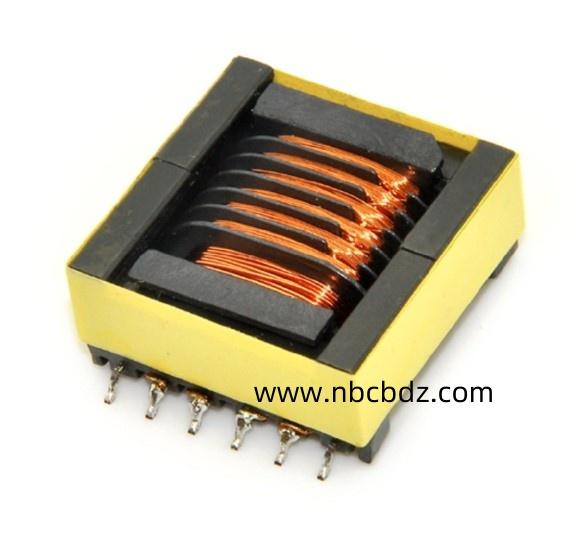
Industrial machinery depends on control circuits to coordinate switching, monitoring, and equipment operation. During component sourcing, an BK Control Transformer Factory may be considered by businesses looking for transformer solutions for industrial automation and electrical control equipment. Beyond the product's basic electrical function, buyers need to understand how its core, windings, insulation, connections, and physical construction work together to support dependable integration into a larger machine.
Material selection provides the foundation for transformer construction. An EI core commonly uses laminated electrical steel to create a magnetic path while helping limit losses associated with changing magnetic fields. The characteristics and assembly of these laminations influence the transformer's magnetic behavior. Winding conductors also matter because they carry electrical energy between circuits. Copper and aluminum may be used depending on the design, and their suitability should be evaluated alongside electrical requirements, connection methods, and thermal conditions.
Insulation is particularly important in control applications because the transformer may serve circuits that interact with relays, contactors, sensors, and other electrical devices. Insulating materials separate conductive sections and help support electrical safety. Their placement, condition, and compatibility with the intended environment all contribute to the complete design. Buyers should communicate the application's operating conditions and safety requirements clearly so that the manufacturer can identify an appropriate construction and provide relevant product documentation.
A useful purchasing process begins with the equipment rather than a general product description. Buyers should establish the control circuit's electrical requirements, the nature of the connected load, the installation environment, and the available mounting space. They should also consider the behavior of the equipment during startup and switching, when electrical demands may change. Sharing these details early helps suppliers evaluate product compatibility and reduces the risk of selecting a transformer that does not suit the intended system.
Core and winding design influence how a transformer responds to changes in electrical demand. The magnetic structure supports energy transfer, while winding arrangement and conductor selection affect electrical losses and heat generation. In control systems, where connected devices may switch between operating states, the transformer must be selected for the conditions expected in the complete circuit. Engineers should verify the manufacturer's documented performance rather than assuming that visually similar transformers will behave identically.
Electrical isolation is another important consideration. By separating circuits through magnetic coupling, a suitably designed transformer can help support the electrical architecture of control equipment. However, the degree of protection depends on the transformer's construction and applicable requirements. Isolation should therefore be evaluated alongside the rest of the system, including wiring, protective devices, grounding arrangements, and enclosure design. Clear documentation helps engineers determine whether a particular product is appropriate for the application.
Thermal behavior affects both performance and service life. Core and winding losses generate heat, while the surrounding enclosure, ventilation, and nearby components influence how that heat dissipates. A transformer installed in a crowded control cabinet may experience different conditions from one mounted in a more open arrangement. Buyers should account for the actual installation environment and ensure that the selected component can operate appropriately within it. Good cabinet planning can also make inspection and maintenance easier.
Manufacturing consistency is essential when transformers are used in equipment produced repeatedly. Core assembly, winding placement, insulation application, lead termination, and mechanical fastening all require suitable process control. Inconsistent winding arrangements or poorly secured connections can create difficulties during assembly and operation. Incoming material inspection, in-process checks, and final electrical testing help manufacturers identify potential issues before products are shipped. Purchasing teams can ask suppliers how these checks are organized and documented.
The installation experience depends on practical details that are sometimes overlooked during initial selection. Lead positioning, terminal accessibility, mounting arrangements, and the orientation of the transformer can affect how easily technicians fit it into a control cabinet. Clear identification can also support wiring, troubleshooting, and later replacement. A component that integrates neatly into the equipment layout may reduce assembly complications and make routine servicing more straightforward.
Product appearance in this context is closely connected with orderly construction. Secure insulation, clean assembly, well-positioned leads, and consistent finishing can help technicians identify and handle the component during manufacturing. External design should accommodate mounting and ventilation requirements without obstructing nearby parts. Although appearance cannot replace electrical testing, neat construction and clear labeling contribute to a more manageable installation and maintenance process.
For equipment manufacturers, supplier communication is part of effective product selection. Discussing the control system, installation conditions, expected operating behavior, and documentation needs allows the transformer manufacturer to understand the project more completely. Sample evaluation can then help engineers check physical fit, connection accessibility, and suitability within the actual equipment layout before wider production begins.
Ningbo Chuangbiao Electronic Technology Co., Ltd. manufactures BK control transformers and other electronic transformer products for industrial control and electrical applications. The company describes its production process as including material selection, manufacturing, quality assurance, and testing. Buyers evaluating a transformer for machinery or automation equipment can discuss their application requirements and product integration needs with the company. Further information about its transformer range is available at https://www.nbcbdz.com/product/

 English
 Arabic
 French
 Spanish
 Portuguese
 Deutsch
 Turkish
 Dutch
Dutch
 Italiano
 Russian
 Romaian
 Portuguese (Brazil)
 Bengali