


How to Identify Battery Problems Caused by Incompatible Charging Equipment
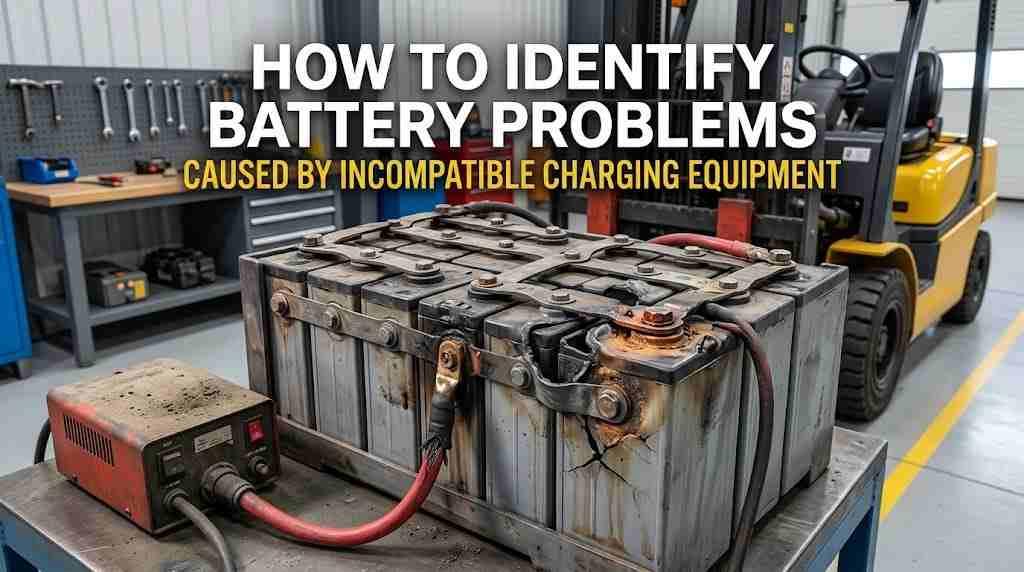
Industrial batteries play an essential role in keeping warehouses, manufacturing facilities, distribution centers, and other commercial operations running smoothly. From powering forklifts to supporting material-handling equipment, these batteries provide the energy businesses need to maintain productivity. However, even a high-quality battery can experience problems when it is paired with the wrong charging equipment.
Charging issues are not always caused by an old battery or poor maintenance. Sometimes, the real problem is an incompatible charger that supplies the wrong voltage, uses an unsuitable charging profile, or cannot communicate correctly with the battery's management system. When these problems go unnoticed, they can reduce battery performance, shorten service life, and create unnecessary operating expenses. Understanding when to seek Industrial battery repair can help businesses identify the source of these issues before they lead to more serious equipment failures.
The good news is that incompatible charging equipment often produces warning signs. By learning what to look for, understanding the differences between battery technologies, and following a few practical inspection steps, businesses can protect their equipment and make better maintenance decisions.
Why Battery and Charger Compatibility Matters
A battery charger does more than supply electricity. It controls how energy enters the battery, regulates charging voltage and current, and adjusts the charging process according to the battery's requirements.
Different batteries have different charging needs. For example, traditional flooded lead-acid batteries, sealed lead-acid batteries, and lithium-ion batteries do not necessarily use the same charging methods. Even batteries within the same general category can have different requirements depending on their capacity, design, and manufacturer specifications.
Using an incompatible charger can create several problems, including:
- Excessive heat during charging.
- Incomplete charging and reduced operating time.
- Overcharging or inappropriate charging current.
- Unexpected charger shutdowns or error messages.
- Premature battery deterioration.
- Safety risks associated with overheating or damaged components.
Compatibility is especially important in busy industrial environments, where equipment may operate across multiple shifts and batteries are expected to deliver consistent performance.
1. Watch for Unusually Long Charging Times
One of the first signs of a charger compatibility problem is a noticeable change in charging time.
If a battery that previously charged within its normal operating window suddenly takes much longer to reach full capacity, the charger may not be delivering the appropriate current or following the correct charging profile.
For example, a charger designed for a different battery capacity may supply insufficient current for the battery being used. Similarly, a charger with an incorrect charging algorithm may stop before the battery has reached its intended state of charge.
However, slow charging does not automatically mean the charger is incompatible. Battery aging, low temperatures, damaged connections, and internal battery faults can produce similar symptoms.
What should you check?
Start by comparing the current charging time with the manufacturer's recommendations and the battery's previous performance. Check whether the charger displays an error code or repeatedly stops before charging is complete.
Also, inspect the charging cables and connectors for looseness, corrosion, or visible damage. If the battery consistently takes longer to charge after being connected to a particular charger, have the battery and charger compatibility verified by a qualified technician.
2. Look for Excessive Heat During Charging
Heat is another important warning sign. Some warmth may be normal during charging, depending on the battery chemistry, charging stage, and operating conditions. However, excessive or unusual heating should never be ignored.
An incompatible charger may apply an unsuitable voltage or current, forcing the battery to operate outside its recommended charging conditions. In lead-acid batteries, improper charging can contribute to excessive gassing, water loss, and accelerated deterioration. In lithium-ion batteries, charging outside permitted limits can trigger protective shutdowns or, in severe cases, create a thermal safety hazard.
Heat may also originate from damaged cables, loose connections, poor ventilation, or internal battery defects rather than the charger itself.
Warning signs to recognize
Pay attention to these symptoms:
- The battery becomes significantly hotter than usual.
- Charging cables or connectors feel unusually warm.
- The charger repeatedly stops because of temperature warnings.
- A burning smell, swelling, leaking, or visible damage appears.
If the battery becomes dangerously hot, swells, leaks, or produces smoke, stop using the equipment if it is safe to do so and follow the site's emergency procedures. Do not disconnect or handle a hazardous battery unless trained to do so.
For routine temperature concerns, compare observed conditions with the battery manufacturer's operating limits. A technician can determine whether the problem comes from charger settings, electrical connections, environmental conditions, or a failing battery.
3. Notice Reduced Runtime After a Full Charge
A battery that indicates a full charge but runs out of power unusually quickly may not be receiving the correct charging treatment.
For instance, an incompatible charger may terminate charging too early or use a charging profile that does not properly suit the battery. The charger display might show completion even though the battery has not reached the expected usable capacity.
In industrial settings, reduced runtime can affect forklift availability, interrupt warehouse workflows, and increase the number of battery changes required during a shift.
However, poor runtime can also result from battery aging, excessive equipment loads, low temperatures, or a failing cell. The key is to look for changes in performance rather than assuming that every runtime problem comes from the charger.
How to investigate reduced runtime
First, record how long the battery operates under typical working conditions. Compare the results with previous shifts, taking workload and environmental factors into account.
Next, check whether the battery reaches its expected charging endpoint and whether the charger records any errors. Where appropriate, a qualified technician can perform a capacity test and review the battery's charging history.
If runtime consistently decreases after charging with one particular unit, inspect that charger for incorrect settings, unsuitable specifications, or communication problems.
4. Pay Attention to Charger Error Codes and Repeated Shutdowns
Modern industrial chargers often include diagnostic displays, indicator lights, and protective shutdown functions. These features help prevent damage when the charger detects abnormal conditions.
Repeated error messages may indicate that the charger cannot recognize the battery correctly, detects an unsuitable voltage, or encounters a temperature or communication problem.
Some chargers are designed for specific battery types and may refuse to charge a battery that falls outside their supported range. Others may require compatible communication systems before charging can begin.
Common issues worth investigating
A charger may display warnings related to:
- Battery voltage being too high or too low.
- Incorrect battery type selection.
- Temperature limits being exceeded.
- Poor electrical connections.
- Battery identification or communication failures.
- Internal charger faults.
Always consult the charger's manual to interpret its exact error code. The same indicator can mean different things across manufacturers and models.
Avoid repeatedly resetting a charger without identifying the underlying cause. Protective shutdowns are often intended to prevent unsafe operation, and bypassing those protections can make the problem worse.
5. Check Whether the Charger Matches the Battery Specifications
Sometimes, the clearest indication of incompatibility comes from comparing the equipment specifications.
A charger can physically connect to a battery and still be unsuitable for it. Connector shape alone does not establish electrical compatibility.
Before using a charger, verify the following details.
Battery voltage
The charger's supported output voltage must match the battery system's requirements. A mismatch can prevent proper charging or cause serious damage.
Battery chemistry
Confirm that the charger supports the battery's chemistry, such as flooded lead-acid, AGM, gel, or lithium-ion. Charging profiles designed for one chemistry should not automatically be used with another.
Charging current
The charger's current output must fall within the battery manufacturer's permitted charging range. Excessive current can create overheating or other damage, while insufficient current may lead to prolonged charging.
Capacity and charging profile
The charger should be suitable for the battery's capacity and specified charging procedure. Features such as equalization charging must only be used when expressly permitted for the particular battery.
Communication requirements
Some lithium-ion batteries rely on a battery management system to communicate charging limits and operating conditions. If the charger cannot communicate correctly with the battery, charging may be restricted or prevented.
Review both manuals rather than relying on assumptions based on appearance or connector type. When specifications are unclear, ask the battery or charger manufacturer to confirm compatibility before connecting the equipment.
6. Investigate Repeated Battery Failures After Charger Changes
A sudden increase in battery problems following a charger replacement is an important clue.
Suppose a warehouse changes its charging equipment to standardize the fleet. Within a few weeks, several batteries begin showing shorter runtimes, charging interruptions, or unusual heat. Although the batteries may initially appear to be the problem, the timing suggests that the new chargers deserve closer inspection.
This does not prove incompatibility, but it provides a useful starting point for troubleshooting.
Look for patterns across the equipment
Ask the maintenance team a few practical questions:
- Did the symptoms begin after a charger was installed or reconfigured?
- Are multiple batteries experiencing the same problem?
- Do the affected batteries share the same charger model?
- Are the problems limited to a particular charging station?
- Have charging times or operating temperatures changed?
Documenting these patterns can help technicians distinguish a charger-related issue from individual battery failures.
If the same symptoms occur across multiple batteries connected to the same charging equipment, investigating the shared charger or its configuration may be more productive than replacing every battery separately.
7. Inspect Charging Connectors and Electrical Connections
Not every charging problem originates inside the charger. Poor connections can create symptoms that resemble incompatibility.
Worn connectors, damaged insulation, loose terminals, and corrosion can increase electrical resistance. This may produce localized heating, interrupted charging, or inconsistent power delivery.
In industrial environments, charging connectors may be subjected to frequent handling, impacts, dust, and vibration. Over time, this wear can interfere with reliable operation.
What maintenance teams should do
During routine inspections, look for cracked connector housings, bent contacts, discoloration, damaged cables, and visible corrosion. Check that the connector is the manufacturer-approved type for the battery and charger combination.
Never attempt to force together connectors that do not fit properly or modify them to make incompatible equipment work. Electrical modifications can introduce serious hazards and may damage both components.
Disconnect equipment only according to the manufacturer's procedures and site safety requirements. Repairs involving damaged wiring, high-current connections, or exposed electrical components should be handled by qualified personnel.
8. Understand the Long-Term Cost of Using the Wrong Charger
An incompatible charger can create expenses that extend beyond the cost of replacing a damaged battery.
When charging equipment repeatedly undercharges or improperly charges a battery, businesses may experience shorter operating periods, additional charging interruptions, and more frequent maintenance requirements.
For example, a forklift that cannot complete a full shift may need an unplanned battery change or replacement equipment. If several machines experience similar problems, the combined downtime can affect order fulfillment and labor productivity.
Other potential costs include:
- Increased electricity consumption due to inefficient charging.
- More frequent battery inspections and repairs.
- Premature battery replacement.
- Lost productivity from charging interruptions.
- Additional spending on emergency equipment or backup batteries.
The most effective way to control these expenses is to identify compatibility issues early. Confirming charger specifications before installation and tracking battery performance over time can help businesses avoid preventable damage.
9. Create a Practical Battery and Charger Inspection Routine
A simple inspection routine makes it easier to recognize problems before they disrupt operations.
The routine should cover both the battery and the charging equipment rather than treating them as separate systems.
Daily checks
Operators should report unusual charging times, warning indicators, unexpected shutdowns, reduced runtime, and abnormal heat. They should also report damaged connectors or cables.
Periodic maintenance
Maintenance personnel should inspect charging connections, verify charger settings, review diagnostic records, and compare battery performance against established baselines.
Compatibility reviews
Whenever a business purchases a new battery, replaces a charger, or changes battery chemistry, the equipment specifications should be checked before the system is placed into service.
Performance records
Maintain a record of battery identification, charger model, charging time, error codes, inspection findings, and recurring problems. These records can reveal patterns that are difficult to identify from a single inspection.
A consistent process also helps staff distinguish normal performance changes from developing electrical or battery faults.
10. Know When to Seek Professional Diagnosis
Some charging problems can be identified through routine checks, but others require specialized testing. Repeated charging failures, persistent overheating, unexplained capacity loss, or recurring diagnostic errors deserve professional attention.
A qualified technician can evaluate charger output, confirm the charging profile, inspect electrical connections, and test battery performance. Depending on the battery type, testing may include voltage measurements, capacity assessments, cell inspections, or a review of battery management system data.
Professional diagnosis is particularly valuable when several batteries show similar symptoms or when the cause of repeated failures remains unclear.
It can also help determine whether the problem can be corrected through charger configuration, whether a component needs repair, or whether the battery has sustained damage that makes replacement necessary.
Avoid opening chargers, bypassing protective circuits, or experimenting with charging settings unless the work is authorized and performed by appropriately trained personnel.
Conclusion
Identifying battery problems caused by incompatible charging equipment starts with paying attention to changes in charging time, operating temperature, runtime, and charger error messages. Businesses should also verify voltage, battery chemistry, charging current, and communication requirements whenever they install new equipment or replace existing chargers. These simple precautions can help prevent unnecessary battery damage, reduce downtime, and support more reliable industrial operations.
When problems continue despite routine inspections, a professional evaluation can help determine whether the charger, electrical connections, or battery itself is responsible. Working with an experienced provider such as Battery Rescue LLC can help businesses explore suitable battery inspection, maintenance, and repair options based on their equipment's needs. By treating the battery and charger as a connected system, companies can make better maintenance decisions, protect their investment, and keep essential equipment operating more consistently.

 English
 Arabic
 French
 Spanish
 Portuguese
 Deutsch
 Dutch
Dutch
 Italiano
 Russian
 Romaian
 Portuguese (Brazil)
 Greek
Greek
 Bengali