


How Does an Interior Door Factory Control Product Quality
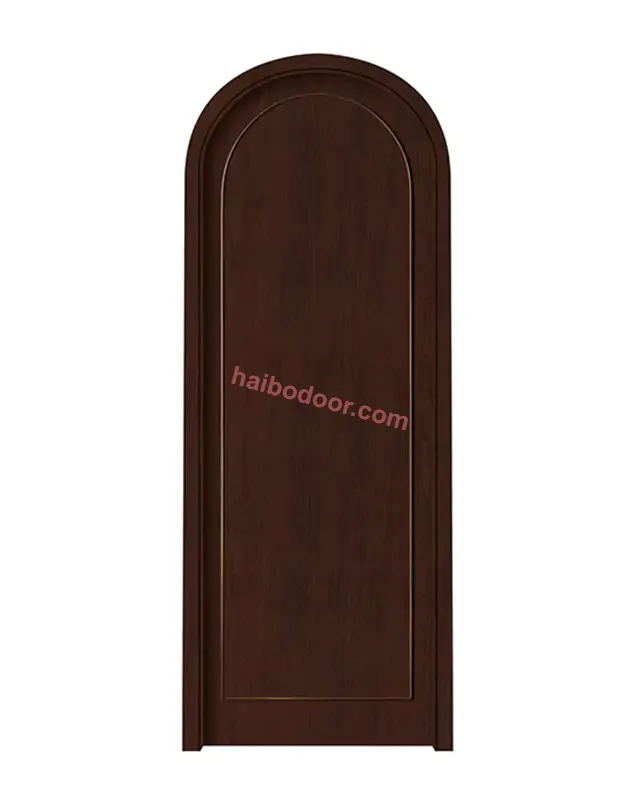
An Interior Door Factory needs to manage every stage of production carefully, from raw material selection to final packaging, to provide doors that meet project requirements. For developers, contractors, distributors, and renovation companies, consistent dimensions, reliable construction, and an attractive finish all influence purchasing decisions. At haibodoor, understanding these production details helps customers evaluate interior door options for residential and commercial spaces. What processes can help a factory maintain stable product quality while meeting different design and installation needs?
Selecting Suitable Raw Materials
Material selection is one of the first steps in interior door quality control. Different projects have different requirements for appearance, weight, moisture resistance, maintenance, and budget. A factory must understand these needs before deciding which materials and door structures are appropriate.
MDF is commonly used in interior door manufacturing because it provides a relatively smooth surface for decorative finishes. Depending on the product design, manufacturers may also use PVC coverings, veneer, engineered wood components, or other surface materials. Each option has specific characteristics, so material selection should reflect the intended environment and expected use.
Incoming materials should be checked before entering production. Inspections may include verifying dimensions, surface condition, material specifications, and consistency between supplied batches and approved samples. Damaged panels, visible defects, or materials that do not meet agreed specifications should be identified before they affect finished products.
Surface materials also deserve attention. A decorative covering should have a suitable appearance, consistent color, and reliable adhesion. For doors intended for frequently used areas, the selected finish should be compatible with normal cleaning and everyday contact. Careful material checks reduce avoidable production problems and help maintain a consistent appearance across an order.
Maintaining Control During Manufacturing
After materials are approved, manufacturing procedures become central to product quality. Cutting, shaping, bonding, pressing, edge treatment, and surface finishing all affect the final door. If one process is inconsistent, the finished product may develop dimensional deviations, uneven edges, visible marks, or assembly problems.
Accurate cutting helps door panels meet the dimensions specified in the order. Equipment settings and measuring tools should be checked regularly, while operators need clear production instructions. Consistent procedures are especially important when a project requires multiple doors with matching dimensions and finishes.
Bonding and pressing also require appropriate control. Incorrect pressure, unsuitable processing conditions, or uneven adhesive application can affect the connection between materials. These issues may not always be visible immediately, which makes process monitoring important. Manufacturers should follow established operating procedures and examine products at suitable points during production.
Edge treatment and surface finishing influence both appearance and daily use. Uneven edges can affect installation, while visible bubbles, scratches, stains, or inconsistent coating may reduce the visual quality of a door. Inspecting these details before the next production stage allows problems to be corrected earlier, avoiding unnecessary rework after assembly.
Checking Dimensions and Assembly Accuracy
Dimensional accuracy is particularly important for interior doors because installation depends on the relationship between the door leaf, frame, hinges, lock positions, and surrounding opening. A door that does not match the project specifications may require adjustments on site, increasing installation time and creating additional costs.
Quality inspections should therefore verify the main dimensions against approved drawings or order specifications. Depending on the product, checks may cover height, width, thickness, squareness, edge alignment, and hardware preparation. Measuring samples at different production stages can help identify deviations before a full batch is completed.
Assembly accuracy also matters. Hinges and lock components need to be positioned according to the agreed design. Pre-drilled holes should match the intended hardware, and the door surface should remain free from damage during machining. When hardware is supplied separately, its specifications should be confirmed so that the components are compatible with the door design.
For customized orders, clear communication is essential. Drawings, color references, surface samples, opening directions, and hardware requirements should be confirmed before mass production begins. Changes made after production has started can create confusion if the latest specifications are not shared with every relevant department.
Evaluating Surface Quality and Product Function
Visual inspection helps identify defects that may affect the customer's experience. Inspectors can examine the front and back surfaces, edges, corners, decorative patterns, and color consistency under suitable lighting. The inspection criteria should be established before production so that different batches are assessed using the same standards.
Function-related checks depend on the type and specification of the door. These may include examining the fit of installed hardware, checking that the door operates as intended, and confirming that the structure is consistent with the approved sample. If the product is designed for a particular environment, the manufacturer should also clarify its relevant performance characteristics and limitations.
It is important not to assume that every interior door has the same resistance to moisture, impact, or changes in temperature. These properties depend on the materials, construction, surface treatment, and intended application. A suitable product specification allows customers to select doors based on actual project conditions rather than appearance alone.
Documentation can support this process. Inspection records, material information, approved samples, and production references help connect finished goods with their manufacturing requirements. If a concern arises after delivery, these records can make it easier to identify the relevant batch and review the issue.
Packaging and Preparation for Delivery
Even a carefully manufactured door can be damaged if it is packed or handled incorrectly. Scratches, chipped corners, pressure marks, and moisture exposure may occur during storage, loading, or transportation. Packaging should therefore be treated as part of quality management rather than a final administrative step.
The packaging method should reflect the door's dimensions, surface finish, shipping distance, and transport conditions. Protective materials can help reduce friction and impact, while suitable corner protection can minimize damage to vulnerable edges. Products should be arranged and secured to reduce movement during handling and transit.
Before shipment, staff should confirm product quantity, specifications, labels, and packaging condition. Customized orders may require clear identification for different sizes, colors, rooms, or installation locations. Accurate labeling can simplify warehouse management and help installers sort products when the shipment arrives.
Export orders may also involve specific documentation and packing requirements. These should be confirmed in advance with the supplier, freight forwarder, and receiving party. Clear arrangements help reduce misunderstandings and support a smoother delivery process.
Communication and Continuous Improvement
Quality control depends on coordination between sales staff, production teams, inspectors, packaging personnel, and customers. If project requirements are incomplete or inconsistent, even a well-equipped factory may produce doors that do not match the intended application.
A clear order confirmation should identify dimensions, materials, surface finishes, hardware preparation, quantities, packaging requirements, and delivery arrangements. Samples and technical drawings can help clarify details that are difficult to explain through written descriptions alone. When a specification changes, the updated information should be documented and shared with the relevant teams.
Customer feedback is another useful source of information. Reports about installation difficulties, surface damage, packaging issues, or mismatched specifications can help a manufacturer identify weaknesses in its procedures. Reviewing recurring issues and making targeted process adjustments supports more consistent production over time.
For international projects, communication about lead times, production schedules, inspection arrangements, and shipping requirements is also important. Customers should confirm which product characteristics are guaranteed by the specification and which depend on site conditions or installation practices. This creates clearer expectations for both parties.
A dependable manufacturing relationship is built through practical coordination, transparent product information, and attention to details that affect installation and everyday use. An Interior Door Factory that combines material inspection, controlled manufacturing, dimensional checks, surface evaluation, and protective packaging can provide a clearer quality process for different project needs. Haibodoor offers interior door solutions for residential and commercial applications, and its PVC interior door range can be viewed at https://www.haibodoor.com/. Contact Zhejiang Haibo Door Co., Ltd. to discuss product styles, material choices, customization details, and supply arrangements for your next project.

 English
 French
 Spanish
 Portuguese
 Deutsch
 Turkish
 Dutch
Dutch
 Italiano
 Russian
 Romaian
 Portuguese (Brazil)
 Greek
Greek
 Bengali