


DevOps as a Service: A Practical Approach to Modern Software
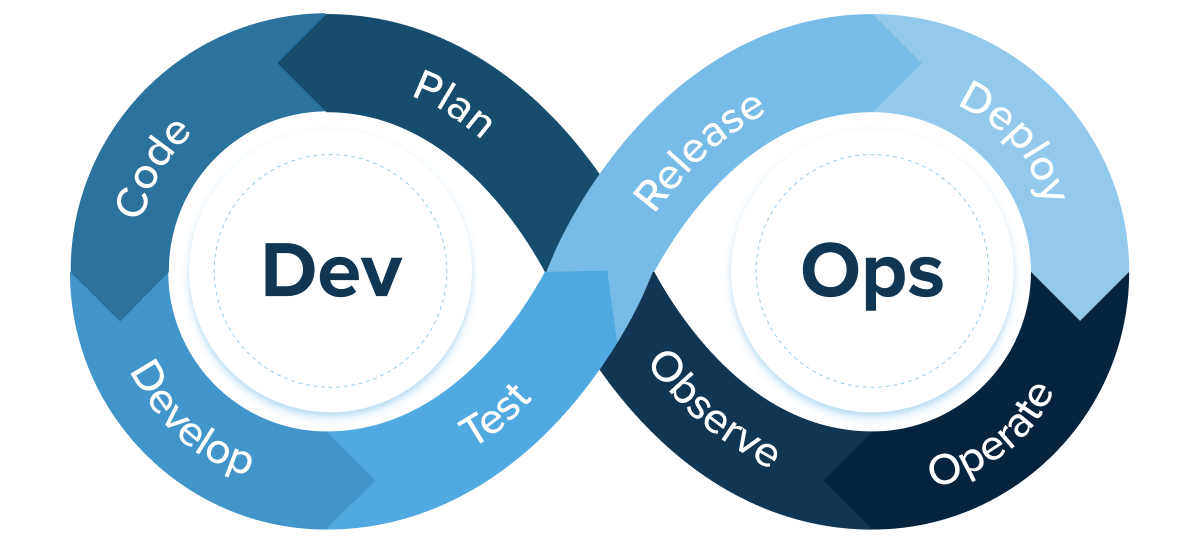
Software development has changed dramatically over the last decade. Businesses are expected to release features faster, respond to customer feedback sooner, and keep applications available around the clock.
At the same time, cloud environments have become more distributed, infrastructure has become increasingly programmable, and security can no longer be treated as something that happens at the end of a development project. Keeping up with all of this is not easy.
Many organizations have talented developers but struggle to build and maintain the DevOps capabilities needed to support modern applications. Hiring specialists, setting up automation, managing cloud infrastructure, monitoring systems, and maintaining deployment pipelines can quickly become a significant operational commitment.
This is one reason DevOps as a Service has become an increasingly practical option for businesses that want the benefits of DevOps without building every capability internally.
What Is DevOps as a Service?
DevOps as a Service is essentially an outsourced or managed approach to DevOps practices.
Instead of asking an internal development team to handle everything from application development to infrastructure automation and production monitoring, an experienced DevOps provider can take responsibility for selected parts—or, in some cases, most—of the DevOps lifecycle.
The exact arrangement varies from one organization to another.
A company may need help setting up a continuous integration and continuous delivery pipeline. Another may need assistance managing cloud infrastructure, containers, monitoring, or infrastructure-as-code. A growing SaaS business might need broader operational support as its application moves from a small user base to a much larger one.
The important point is that DevOps as a Service is not simply about outsourcing IT work. Done properly, it provides access to established processes, automation practices, tools, and expertise that can complement an organization's existing team.
Why Traditional Development Processes Start to Struggle
A small development team can often manage a surprising amount of infrastructure on its own. But as an application grows, the operational workload grows with it.
There are more environments to maintain, more deployments to coordinate, more cloud resources to monitor, and more potential points of failure. A manual deployment process that seemed perfectly reasonable when releases happened once a month can become a serious bottleneck when teams need to deploy several times a week—or several times a day.
The problem is not necessarily a lack of effort. Developers are often pulled in multiple directions. They need to deliver features, fix bugs, review code, respond to production incidents, and still find time to improve the underlying development process.
Eventually, something gives. DevOps practices help address this by bringing development and operations closer together and, wherever practical, replacing repetitive manual work with automation.
The Real Value Is in Automation
Automation is probably one of the clearest benefits of a mature DevOps approach.
Consider a typical software release. Without automation, someone may need to build the application, run tests, prepare an environment, deploy the new version, verify that it is working, and potentially roll it back if something goes wrong. Each manual step introduces the possibility of human error.
A properly designed CI/CD pipeline can automate much of this process. Code can be tested automatically when changes are submitted. Builds can be created consistently. Approved releases can be deployed through a defined process, while monitoring tools can help teams identify problems after deployment.
The goal is not to eliminate people from the process. It is to make sure skilled people are spending their time on decisions that require judgment rather than repeating the same operational tasks.
Faster Releases Without Reckless Releases
There is a common misconception that DevOps is primarily about releasing software as quickly as possible. Speed matters, but speed without control creates problems. A mature DevOps environment focuses on making releases both faster and safer.
Automated testing, deployment approvals, version control, infrastructure-as-code, security checks, monitoring, and rollback procedures can all contribute to a more predictable release process. This creates an important shift in mindset.
Instead of treating every production deployment as a major event that requires extensive manual coordination, organizations can make smaller, controlled changes more frequently.
Smaller changes are generally easier to understand and troubleshoot. If something does go wrong, teams have a narrower set of changes to investigate.
Cloud Infrastructure Makes DevOps Even More Important
The growth of cloud computing has made DevOps practices increasingly relevant.
Modern cloud platforms make it possible to provision computing resources, databases, networking components, storage, and other services through software. That flexibility is valuable, but it also means organizations can create complex environments very quickly.
Without proper processes, cloud infrastructure can become difficult to manage.
Infrastructure-as-code is one way DevOps teams address this challenge. Rather than manually configuring environments, infrastructure can be defined in code, reviewed, versioned, and deployed through repeatable processes.
This makes environments more consistent and can also make infrastructure changes easier to audit. For organizations operating across development, testing, staging, and production environments, that consistency can make a substantial difference.
Monitoring Shouldn't Begin After Something Breaks
Another important part of DevOps is observability.
It is not enough to deploy an application and assume everything will continue working as expected. Production systems behave differently from development environments, and real users often expose problems that internal testing never reveals.
Monitoring can provide visibility into application performance, infrastructure health, resource consumption, errors, and availability.
More advanced observability practices can also help teams understand how individual requests move through distributed systems.
The benefit is straightforward: when an issue occurs, the team has information to work with instead of relying entirely on guesswork. Good monitoring can also reveal problems before customers report them.
Security Needs to Be Part of the Pipeline
Security is another area where DevOps practices have evolved.
Modern applications depend on open-source libraries, APIs, cloud services, containers, third-party integrations, and continuously changing infrastructure. Waiting until the final stage of development to look for security problems is no longer a particularly effective strategy.
DevSecOps brings security considerations into the development and delivery process. Automated dependency checks, vulnerability scanning, secrets management, access controls, image scanning, and policy checks can be incorporated into development and deployment workflows.
This does not replace security professionals or comprehensive security assessments. Instead, it creates additional layers of protection and helps teams identify common issues earlier.
When Does DevOps as a Service Make Sense?
Not every organization needs an external DevOps provider. A large enterprise with an established platform engineering team may already have the necessary skills and infrastructure internally.
On the other hand, a growing company may find it difficult to hire enough experienced DevOps engineers to keep pace with its requirements.
DevOps as a Service can be particularly useful when an organization:
- Is moving applications to the cloud
- Needs to establish a CI/CD pipeline
- Has too many manual deployment processes
- Is struggling with infrastructure consistency
- Needs better application and infrastructure monitoring
- Wants to introduce infrastructure-as-code
- Has a small engineering team supporting a growing application
- Needs additional DevOps expertise for a modernization project
- Wants to improve release reliability without significantly expanding its internal team
The key is to define the problem before choosing the service. Outsourcing DevOps simply because it is fashionable rarely produces good results. Knowing exactly what needs improvement makes it much easier to determine whether a managed service is appropriate.
Choosing the Right Provider
The technology stack is important, but it should not be the only factor considered when evaluating a DevOps partner.
A good provider should understand the organization's application, development workflow, security requirements, business priorities, and existing infrastructure. It is also worth asking how the provider handles documentation and knowledge transfer.
A relationship where an external team performs everything without explaining the environment can create a new dependency. A stronger engagement should improve the organization's capabilities over time, even when some responsibilities remain managed externally.
Experience with relevant cloud platforms and tools matters, but practical problem-solving experience matters just as much.
Ask potential providers how they approach failed deployments, production incidents, security issues, cloud costs, disaster recovery, and scaling. Those conversations often reveal much more than a list of certifications.
DevOps Is Ultimately About Better Ways of Working
Technology gets most of the attention when people talk about DevOps, but the underlying change is organizational.
Development and operations teams need to share responsibility for the software they build and run. Automation should reduce unnecessary manual work. Feedback from production should make its way back into development. Security should be considered throughout the lifecycle rather than added as an afterthought.
DevOps as a Service can help organizations make that transition without requiring them to build every capability from scratch.
The best implementations are rarely the ones with the most tools. They are the ones where the tools, processes, and people work together to solve real business problems.
For companies trying to deliver software more reliably while keeping up with the pace of modern cloud computing, that practical approach may be more valuable than any individual DevOps technology.

 English
 Arabic
 French
 Spanish
 Portuguese
 Deutsch
 Turkish
 Dutch
Dutch
 Italiano
 Romaian
 Portuguese (Brazil)
 Greek
Greek
 Bengali