


Electronic Manufacturing Company and Printed Circuit Board Assembly: Building Reliable Electronics
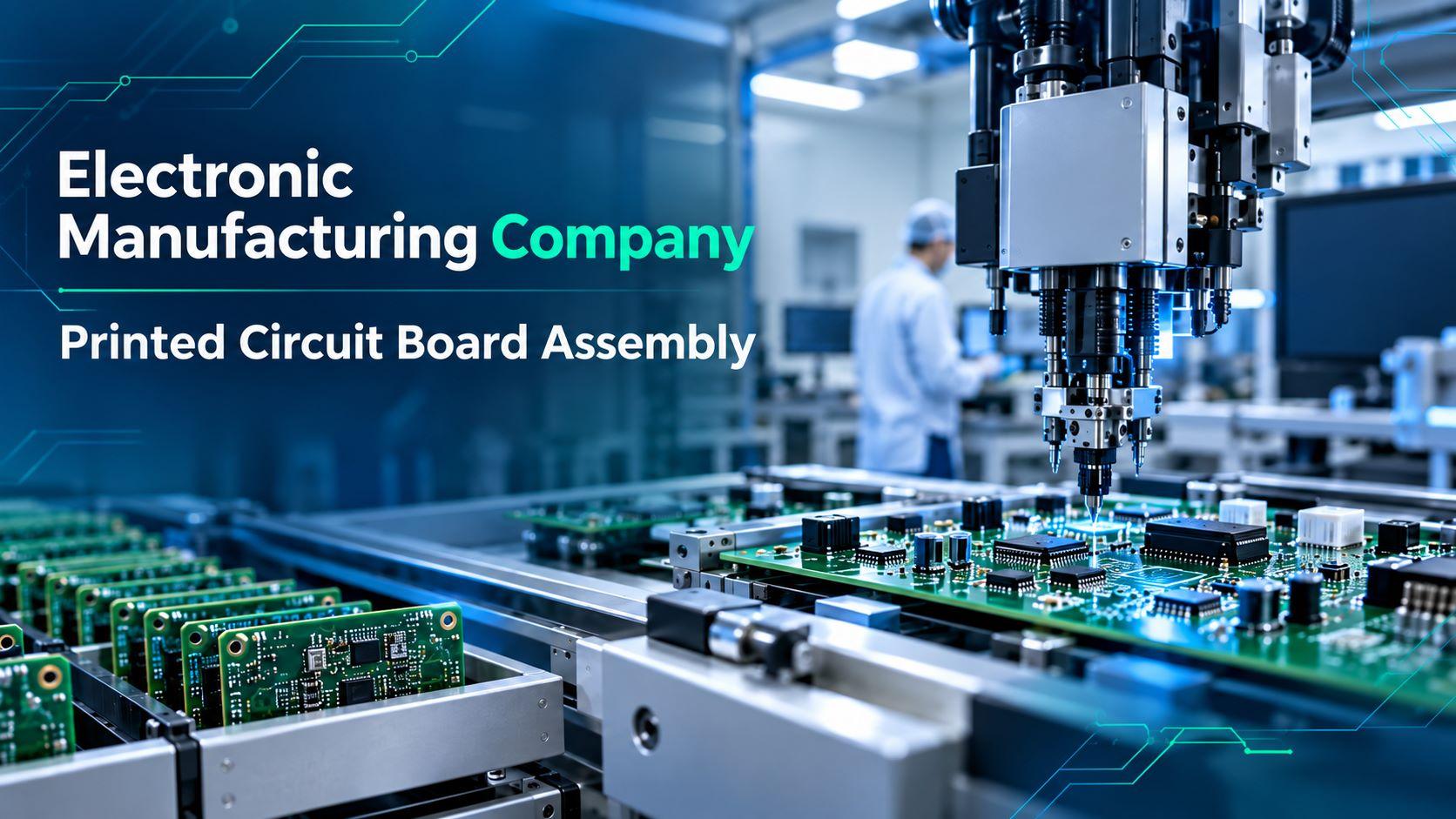
Choosing the right electronic manufacturing company can determine whether an electronic product achieves consistent performance, reliable quality, and efficient production.
At the center of this manufacturing ecosystem is printed circuit board assembly, the process that transforms a bare PCB into a functional electronic unit by mounting and connecting electronic components. As products become smaller, smarter, and more complex, manufacturers must combine engineering expertise, automation, component management, inspection, testing, and quality control.
Understanding how electronics manufacturing and PCB assembly work together can help businesses reduce production risks and move confidently from prototype development to commercial manufacturing.
What Is an Electronic Manufacturing Company?
An electronic manufacturing company provides specialized services for producing electronic components, assemblies, modules, and finished products. Instead of building an entire manufacturing infrastructure internally, product companies can work with experienced manufacturing partners.
Typical capabilities may include:
-
PCB assembly
-
Component sourcing
-
Prototype manufacturing
-
Surface mount assembly
-
Through-hole assembly
-
Product testing
-
Box-build assembly
-
Cable and wire integration
-
Quality inspection
-
Production engineering
A capable manufacturer does more than assemble components. It helps coordinate materials, equipment, production processes, engineering requirements, and quality systems throughout the manufacturing lifecycle.
Understanding Printed Circuit Board Assembly
Printed circuit board assembly is the process of attaching electronic components to a fabricated PCB so that the board performs its intended electrical functions.
The bare circuit board contains conductive pathways, pads, and connection points. Components such as resistors, capacitors, integrated circuits, connectors, sensors, and processors are positioned on the board and electrically connected.
Modern PCB assembly commonly uses Surface Mount Technology, through-hole technology, or a combination of both.
Surface Mount Technology
Surface Mount Technology, commonly known as SMT, places compact electronic components directly onto PCB surfaces.
The process can include:
-
Applying solder paste
-
Automatically placing components
-
Passing boards through reflow soldering
-
Inspecting component placement
-
Conducting electrical or functional tests
SMT supports compact designs and automated high-volume production.
Through-Hole Technology
Through-hole assembly involves inserting component leads through drilled holes in the PCB and soldering them to conductive pads.
This technique remains useful for components requiring mechanical strength, including certain connectors, transformers, switches, and power components.
Mixed PCB Assembly
Some products require both SMT and through-hole components. In these cases, an experienced electronic manufacturing company develops a production sequence that maintains efficiency while protecting assembly quality.
Why Printed Circuit Board Assembly Quality Matters
Reliable printed circuit board assembly directly influences final product performance. Even a well-designed electronic system can experience failures when components are incorrectly positioned, solder joints are weak, or unsuitable materials are used.
Effective manufacturing quality management can help prevent:
-
Incorrect component placement
-
Solder bridging
-
Open connections
-
Component polarity errors
-
Insufficient solder joints
-
Contamination
-
Damaged components
-
Electrical failures
Strong inspection and process control are therefore essential throughout production rather than being treated only as final-stage activities.
Electronic Manufacturing Process from Design to Production
An experienced electronic manufacturing company follows a structured workflow to convert engineering data into repeatable production.
| Production Stage | Main Purpose |
|---|---|
| Engineering Review | Check manufacturing requirements |
| Component Sourcing | Secure suitable electronic parts |
| PCB Preparation | Prepare boards for assembly |
| Component Placement | Position components accurately |
| Soldering | Create electrical connections |
| Inspection | Identify manufacturing defects |
| Testing | Confirm electrical functionality |
| Final Assembly | Integrate boards into products |
| Quality Verification | Confirm production consistency |
This coordinated process helps manufacturers maintain traceability and reduce unnecessary production interruptions.
Component Sourcing and Supply Chain Management
Components are fundamental to successful printed circuit board assembly. One unavailable, incompatible, or incorrectly specified component can delay an entire production schedule.
Manufacturing partners may manage:
-
Bill of Materials review
-
Supplier coordination
-
Component availability
-
Approved alternatives
-
Packaging requirements
-
Inventory planning
-
Component traceability
A professional electronic manufacturing company should also communicate clearly when substitutions or design adjustments are required rather than introducing uncontrolled changes.
Technology Used in Modern PCB Assembly
Automation has transformed electronics manufacturing. Advanced equipment can improve speed, placement consistency, inspection accuracy, and production repeatability.
Automated Component Placement
Pick-and-place machines position electronic components rapidly and precisely according to programmed assembly data.
Reflow Soldering
Controlled heating profiles melt solder paste and create secure connections between surface-mounted components and PCB pads.
Automated Optical Inspection
Optical inspection systems examine assembled boards for visible production defects such as incorrect placement, missing components, alignment issues, or solder problems.
Testing and Verification
Depending on product requirements, manufacturers may perform electrical testing, functional verification, programming, or other inspections before assembled boards proceed to final integration.
Technology provides powerful capabilities, but engineering knowledge remains important for interpreting results and solving manufacturing problems.
Prototype and Low-Volume Electronics Manufacturing
Not every project begins with mass production. Startups, engineering teams, research organizations, and established manufacturers often need prototypes or smaller production batches before committing to larger quantities.
Prototype printed circuit board assembly allows teams to evaluate:
-
Circuit functionality
-
Component compatibility
-
Assembly feasibility
-
Product dimensions
-
Thermal behavior
-
Testing procedures
-
Potential manufacturing challenges
A flexible electronic manufacturing company can support the transition from early prototypes to low-volume manufacturing and eventually higher production quantities.
Benefits of Working With an Experienced Manufacturing Partner
Choosing an experienced electronics manufacturer can provide several practical advantages.
Technical expertise: Skilled manufacturing teams understand PCB materials, soldering processes, assembly equipment, and component handling.
Scalable production: Businesses can increase manufacturing volumes without immediately investing in additional internal production infrastructure.
Quality consistency: Standardized workflows and inspection procedures support repeatable results.
Faster commercialization: Integrated sourcing, assembly, testing, and manufacturing support can simplify the path from design to finished product.
Production visibility: Organized documentation and traceability can make troubleshooting and continuous improvement easier.
Electronic Manufacturing Company vs Basic PCB Assembly Provider
The services available can differ significantly between suppliers.
| Capability | Basic Assembly Provider | Full Electronic Manufacturing Company |
|---|---|---|
| PCB Assembly | Yes | Yes |
| Component Sourcing | Limited | Comprehensive |
| Prototype Support | Sometimes | Commonly Available |
| Testing | Basic | Multiple Testing Options |
| Box Build | Limited | Often Available |
| Production Scaling | Moderate | Strong |
| Engineering Support | Limited | Broader Support |
Businesses should evaluate capabilities according to product complexity rather than selecting a supplier based only on assembly price.
How to Choose an Electronic Manufacturing Company
Selecting the right electronic manufacturing company requires careful evaluation. Consider whether the manufacturer understands your technology, production requirements, testing expectations, and future volume.
Important factors include:
-
Manufacturing capabilities
-
Engineering support
-
Component sourcing procedures
-
Quality control processes
-
Inspection technology
-
Testing capabilities
-
Prototype flexibility
-
Scalability
-
Communication
-
Documentation and traceability
The lowest quotation does not always represent the lowest overall manufacturing cost. Quality problems, production delays, component mistakes, and rework can create greater expenses later.
Sustainability and Efficiency in Electronics Manufacturing
Modern manufacturing increasingly focuses on reducing material waste and improving resource efficiency. Better production planning can minimize rejected boards, excessive component inventories, unnecessary energy use, and packaging waste.
Efficient printed circuit board assembly also reduces rework by detecting production problems earlier.
Manufacturers can further improve sustainability through responsible material management, optimized equipment utilization, process monitoring, and thoughtful production scheduling.
Future of Electronic Manufacturing and PCB Assembly
Electronics manufacturing will continue advancing as products demand higher processing power, compact dimensions, intelligent connectivity, and greater reliability.
Future production environments are likely to depend increasingly on automation, real-time process monitoring, machine-assisted inspection, advanced manufacturing analytics, flexible production lines, and improved traceability.
The role of the electronic manufacturing company will therefore continue expanding beyond component assembly. Manufacturers will increasingly become strategic production partners supporting engineering, sourcing, testing, scalability, and continuous product improvement.
Frequently Asked Questions
1. What does an electronic manufacturing company do?
An electronic manufacturing company manufactures electronic assemblies or complete products through services such as sourcing, PCB assembly, testing, inspection, integration, and production support.
2. What is printed circuit board assembly?
Printed circuit board assembly is the process of mounting and soldering electronic components onto a fabricated PCB to create a functioning electronic assembly.
3. What is the difference between PCB fabrication and PCB assembly?
PCB fabrication creates the bare circuit board, while PCB assembly installs and connects the electronic components required for the board to operate.
4. What is SMT assembly?
Surface Mount Technology places electronic components directly onto the surface of a PCB and is widely used for compact electronic designs.
5. When is through-hole assembly used?
Through-hole technology is commonly selected for components requiring additional mechanical strength or specific electrical characteristics.
6. Can manufacturers produce PCB prototypes?
Yes. Many manufacturers provide prototype printed circuit board assembly to support testing and design verification before larger production runs.
7. Why is PCB inspection important?
Inspection identifies assembly problems such as misplaced components, solder defects, polarity mistakes, or missing parts before products progress further.
8. Can an electronics manufacturer source components?
Many manufacturing companies offer component procurement and supply chain management based on the project's Bill of Materials.
9. What should businesses check before selecting a PCB manufacturer?
Evaluate technical capabilities, quality processes, testing options, communication, scalability, sourcing procedures, and manufacturing experience.
10. Can PCB assembly scale from prototype to volume production?
Yes. A suitably equipped electronic manufacturing company can establish processes during prototyping and refine them as production quantities increase.

 English
 Arabic
 French
 Portuguese
 Deutsch
 Turkish
 Dutch
Dutch
 Italiano
 Russian
 Romaian
 Portuguese (Brazil)
 Greek
Greek
 Bengali