


DG sea freight India
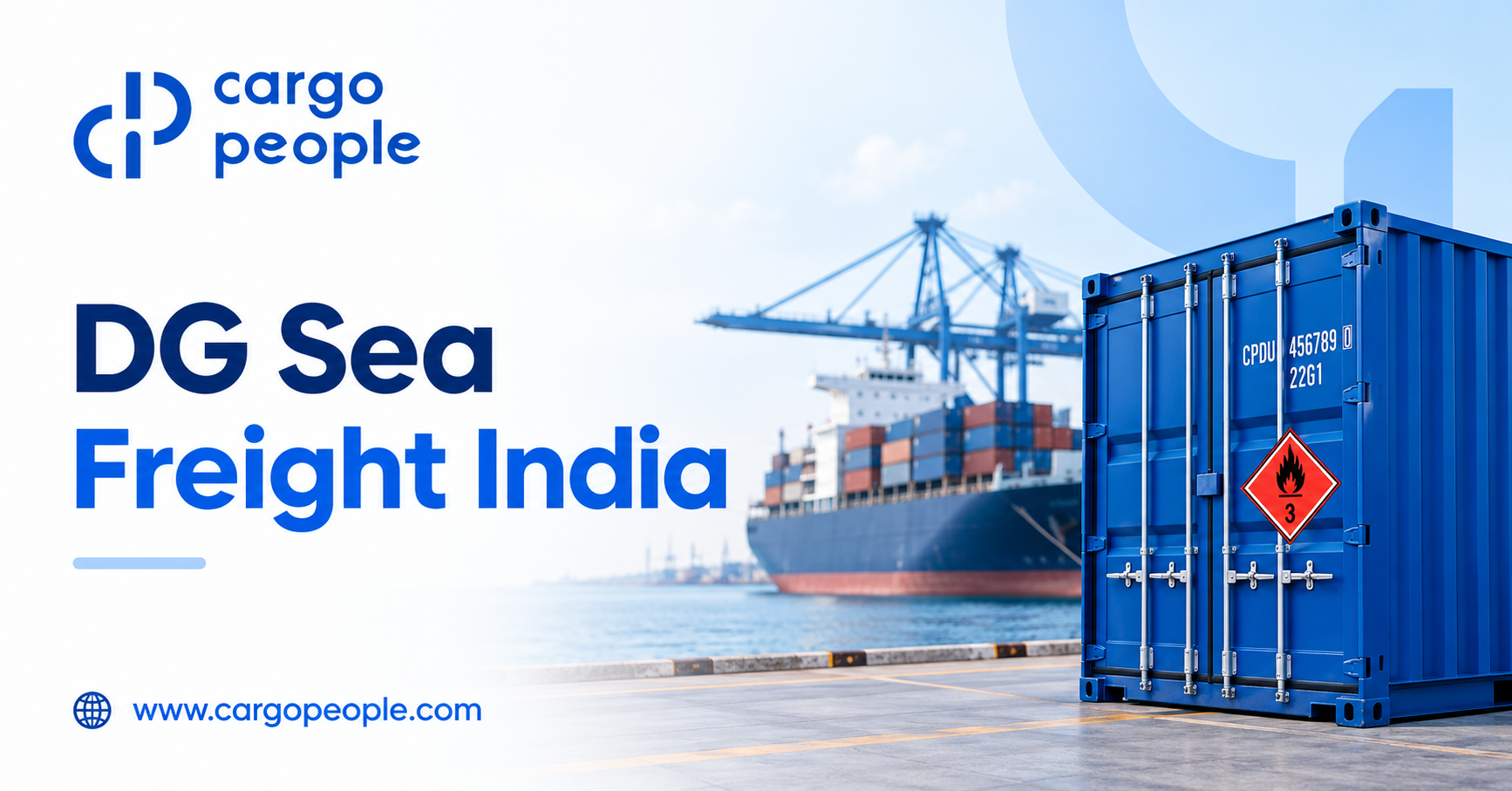
DG Sea Freight India: A Practical Guide for Dangerous Goods Shipping
DG sea freight in India requires much more planning than normal container shipping. Chemicals, batteries, paints, solvents, gases, corrosive products and other hazardous cargo cannot simply be packed into a container and handed over to the shipping line.
Before a dangerous goods shipment can move, the cargo needs to be correctly classified, packed, labelled, documented and approved by the carrier.
For Indian manufacturers, importers, exporters and traders, the biggest risk is usually not the ocean freight rate. It is cargo rejection, incorrect DG declaration, unsuitable packaging, missed vessel cut-off or Customs delays.
A properly planned DG sea freight India shipment generally follows this sequence:
SDS review - DG classification - UN number confirmation - packing - labelling - shipping line approval - container planning - Customs clearance - sea movement - final delivery
Getting these steps right before cargo reaches the port can save several days and significant additional cost.
What Is DG Sea Freight?
DG stands for Dangerous Goods.
These are substances or articles that can create risks to people, property, transport equipment or the environment during transportation.
Common commercial examples include industrial chemicals, paints, solvents, acids, aerosols, certain batteries, gases and other hazardous materials.
Dangerous goods are divided into 9 main hazard classes.
The classification determines how the product needs to be packed, marked, documented, segregated and transported.
This is why a shipping line cannot approve a DG booking only on the basis of weight and container size.
The carrier usually needs technical information about the product before confirming space.
For businesses, this means the DG process should start before the ocean freight booking.
Why Dangerous Goods Sea Freight Needs Special Planning
Normal container cargo can often be booked using basic information such as commodity, weight, volume and port pair.
Dangerous goods require additional details.
The shipping line may ask for the UN number, Proper Shipping Name, hazard class, Packing Group, flash point where applicable, package type and quantity.
The carrier then checks whether the goods can be carried on the proposed vessel.
This matters because DG cargo is subject to stowage and segregation controls.
A vessel may have normal container space available but still be unable to accept a particular DG container.
For example, certain hazardous substances cannot be positioned next to incompatible dangerous goods.
This creates an important operational reality:
Available vessel space does not always mean available DG space.
Businesses should therefore plan dangerous goods bookings earlier than general cargo.
Who Needs DG Sea Freight Services in India?
DG sea freight is used across many manufacturing and trading sectors.
Chemical manufacturers and traders frequently use sea freight for bulk commercial quantities.
Battery companies may use ocean freight where the volume is too large or the delivery timeline does not justify air freight.
Automotive, engineering and industrial businesses may also import hazardous chemicals, coatings, adhesives or specialised production materials.
Typical users include:
- chemical manufacturers and importers
- battery and electronics companies
- paint, coating and adhesive businesses
- automotive and engineering companies
DG sea freight may also be suitable for exporters shipping hazardous products from India to international customers.
For larger planned volumes, sea freight generally offers better economics than air freight.
DG Classification Comes Before Shipping Line Booking
Correct classification is the foundation of dangerous goods shipping.
The first document normally reviewed is the Safety Data Sheet, commonly called SDS or MSDS.
Section 14 of the SDS often contains transport information.
This may include the UN number, Proper Shipping Name, hazard class and Packing Group.
The UN number is especially important because it identifies the hazardous substance or article for transportation.
A commercial product name is not enough.
For example, an invoice may describe the cargo as "industrial solvent".
The shipping line needs the official transport information to determine whether and how it can carry the product.
A wrong UN number can affect the declaration, packaging, labels and vessel stowage.
That is why DG classification should be confirmed before the final sea freight quote is accepted.
Understanding the 9 Dangerous Goods Classes
Dangerous goods are divided into 9 major classes.
These include explosives, gases, flammable liquids, flammable solids, oxidising materials, toxic substances, radioactive material, corrosives and miscellaneous dangerous goods.
Each class can have different shipping requirements.
Class 3 flammable liquids, for example, may require information about flash point and Packing Group.
Class 8 corrosives can require specific packaging and segregation controls.
Class 9 includes several miscellaneous dangerous goods, including certain lithium battery shipments.
The important point for businesses is that the hazard class influences the entire logistics process.
Two 20-foot containers weighing exactly 10 tonnes each can have completely different booking requirements if one carries general cargo and the other contains dangerous goods.
IMDG Requirements for DG Sea Freight
Dangerous goods transported by sea are handled under the International Maritime Dangerous Goods, or IMDG, framework.
The IMDG requirements cover classification, packaging, marking, documentation, stowage and segregation.
Shipping lines use this information when deciding whether a dangerous goods container can be accepted.
The rules also help determine where the container can be placed on the vessel.
This is important because hazardous materials with incompatible characteristics cannot always be stored close to each other.
For Indian businesses, compliance therefore needs to be considered at both ends of the movement.
The shipment must be properly prepared at origin and also meet the documentation and handling requirements at the Indian destination port.
Packaging Requirements for DG Sea Freight
Dangerous goods cannot automatically be packed in normal drums, cartons or containers.
Depending on the cargo, approved packaging may be required.
Typical DG packaging can include steel drums, plastic drums, fibreboard boxes, jerricans, composite packaging and Intermediate Bulk Containers.
The applicable packaging depends on the UN number, hazard class and Packing Group.
A package may look physically strong but still fail the required dangerous goods standard.
This is one of the common reasons cargo needs to be repacked before shipping.
If repacking is required after the cargo reaches the freight facility, the shipment can lose 1 to 3 working days or more.
For regular exporters, packaging should therefore be standardised before the cargo leaves the factory.
DG Marks and Labels
Dangerous goods packages and containers need clear identification.
Depending on the cargo, markings may include the UN number, Proper Shipping Name and applicable hazard labels.
The container itself may also require the relevant placards.
These markings communicate the hazard to terminal staff, vessel operators and emergency-response teams.
The documents and physical labels must also match.
If a package shows one UN number while the Dangerous Goods Declaration lists another, the shipping line may stop the shipment.
The same problem can occur if the declared quantity does not match the packed quantity.
A final package and document review before port movement can prevent these errors.
Shipping Line Approval for DG Cargo
Dangerous goods cargo generally needs carrier approval before loading.
The shipping line may review the SDS, DG declaration, UN number, class, Packing Group, package quantity and container details.
A practical approval timeline can be around 1 to 5 working days, although complicated cargo may take longer.
The route can also affect approval.
A direct service may accept the cargo, while a transshipment route may not be possible because the connecting port or second vessel has different restrictions.
This is why businesses should not assume that a normal FCL booking automatically becomes a DG booking after adding a surcharge.
The dangerous goods approval should be completed before the container is moved to the port.
FCL and LCL Options for Dangerous Goods
FCL is commonly used for larger DG shipments.
A Full Container Load provides better control because the container is dedicated to one shipper's cargo.
This can make documentation, segregation and handling easier.
LCL dangerous goods can also be possible on selected routes, but acceptance is usually more restricted.
The consolidation company must consider what other cargo will be loaded into the same container.
Certain dangerous goods may not be permitted in the same consolidation.
This means a carrier that accepts a particular product as FCL may not necessarily accept it as LCL.
For businesses with regular DG volumes, FCL can therefore provide better schedule predictability.
Main Process for DG Sea Freight India
The process begins with technical cargo review.
The shipper provides the SDS, cargo quantity, packing details and commercial documents.
The freight forwarder then checks the DG classification and approaches suitable shipping lines.
Once the carrier gives DG approval, the cargo can be packed or containerised according to the approved requirements.
The declaration and container markings are then completed.
For exports, Customs documentation is prepared before port handover.
For imports into India, the Customs broker should review the file before the vessel arrives.
Typical DG Sea Freight Workflow
StageTypical Planning TimeMain RiskSDS ReviewSame day-1 dayIncomplete technical dataDG ClassificationSame day-2 daysWrong UN numberPacking Review1-3 daysIncorrect packagingShipping Line Approval1-5+ daysCarrier rejectionContainer Movement1-2 daysMissed cut-offSea TransitRoute dependentSchedule delayCustoms Clearance1-4+ daysQuery or examinationFinal Delivery1-2 daysInland handling issue
These are planning ranges rather than guaranteed timelines.
Documents Required for DG Sea Freight
Dangerous goods sea shipments require both commercial and technical documentation.
A typical file can include:
DocumentPurposeSDS / MSDSHazard and transport informationCommercial InvoiceCustoms value and descriptionPacking ListPackage details and weightDangerous Goods DeclarationOfficial DG shipping informationBill of LadingMain sea freight documentBill of Entry / Shipping BillIndian Customs documentationProduct ApprovalRegulatory compliance where applicable
The most important point is consistency.
The product description, quantity and technical information should align across the documents.
Small differences can create carrier or Customs queries.
Customs Clearance for Dangerous Goods in India
Imported dangerous goods also need Indian Customs clearance.
The Customs broker should ideally review the HS code, product description, invoice and applicable regulatory approvals before the vessel arrives.
Some products can require additional licences or regulatory documentation.
Chemicals may require technical information.
Battery-related shipments may involve different regulatory considerations.
For properly prepared imports, businesses may plan around 1 to 3 days for straightforward clearance, although examination or licensing issues can increase the timeline.
The important point is to prepare in advance.
If Customs documentation begins only after the DG container is discharged, storage exposure can rise quickly.
Cost of DG Sea Freight in India
DG sea freight normally costs more than equivalent general cargo.
The total logistics cost may include:
Ocean freight + hazardous cargo surcharge + DG documentation + origin handling + container charges + destination THC + Customs clearance + storage + inland delivery
Some shipping lines may also apply commodity or class-specific charges.
The actual freight rate depends on the port pair, UN number, container size and carrier.
Businesses should avoid comparing quotations only on the base ocean freight.
A lower freight rate can become expensive if the carrier has higher DG charges or an indirect routing.
The better comparison is total door-to-door cost.
Storage, Demurrage and Delay Costs
DG cargo delays can become expensive because hazardous containers may have specific storage and handling requirements.
The actual charges depend on the shipping line, port, terminal and container type.
For planning, a business may sometimes model broad delay exposure of around ₹7,000 to ₹15,000 per day, but this is only an illustrative range.
For example, if additional storage and equipment-related cost reaches ₹12,000 per day, a 5-day delay creates:
₹12,000 x 5 = ₹60,000
in additional expense.
This does not include re-documentation, repacking or missed production schedules.
Early documentation is therefore one of the best cost-control measures.
Common Challenges in DG Sea Freight
One of the biggest problems is incomplete SDS information.
Without correct transport data, the forwarder may not be able to obtain carrier approval.
Incorrect packaging is another major issue.
The shipping line may approve the commodity but reject the container because the cargo has not been packed correctly.
Document mismatch can also create problems.
The DG declaration, SDS, labels and packing list should all align.
Another common issue is booking too late.
DG space can be more restricted than general cargo, particularly on busy routes.
Importers and exporters should therefore provide technical documents several days before the planned vessel cut-off.
Benefits of Using a DG Sea Freight Forwarder
A specialist freight forwarder helps businesses avoid trial-and-error booking.
The forwarder first reviews the technical details and identifies carriers that are more likely to accept the cargo.
This can save several days compared with approaching unsuitable shipping lines one after another.
The forwarder can also coordinate DG documentation, container movement, port handling and Customs clearance.
For regular shipments, the biggest benefit is consistency.
The company can build a standard process for each recurring product.
Once the UN classification, packaging and carrier options are established, repeat shipments become easier to plan.
How a DG Sea Freight Forwarder Can Help
A professional DG freight forwarder should start with the SDS and product details before discussing the final route.
The forwarder checks the classification, package quantity and container requirement.
Suitable shipping lines are then identified and DG approval is obtained.
After booking confirmation, the forwarder coordinates container pickup, loading, declaration and port handover.
For imports, support can continue through Indian Customs clearance and door-to-door delivery.
For exporters, the forwarder manages the process through origin Customs and vessel loading.
This creates one coordinated workflow covering:
technical review - carrier acceptance - sea freight - Customs - delivery
Conclusion
DG sea freight India requires careful coordination between the shipper, freight forwarder, shipping line, Customs broker and transporter.
The process should begin with correct classification and SDS review.
Packaging and labels should be checked before cargo reaches the port, while shipping-line approval should be secured before container movement.
Carrier approval can take around 1 to 5 working days, which is why dangerous goods should be planned earlier than normal cargo.
For manufacturers, chemical companies, battery businesses and traders, a specialist DG sea freight forwarder can help reduce carrier rejection, documentation errors, storage costs and shipment delays.
Cargo People Logistics & Shipping Pvt. Ltd. supports DG sea freight, FCL and LCL planning, Customs clearance and door-to-door logistics for dangerous goods moving into and out of India.
Get Expert Assistance
👉https://www.cargopeople.com/sea_freight.php
Website: https://cargopeople.com
Phone: +91 97174 65454
Email: wecare@cargopeople.com

 English
 Arabic
 Spanish
 Portuguese
 Deutsch
 Turkish
 Dutch
Dutch
 Italiano
 Russian
 Romaian
 Portuguese (Brazil)
 Greek
Greek
 Bengali