


dangerous goods freight forwarder India
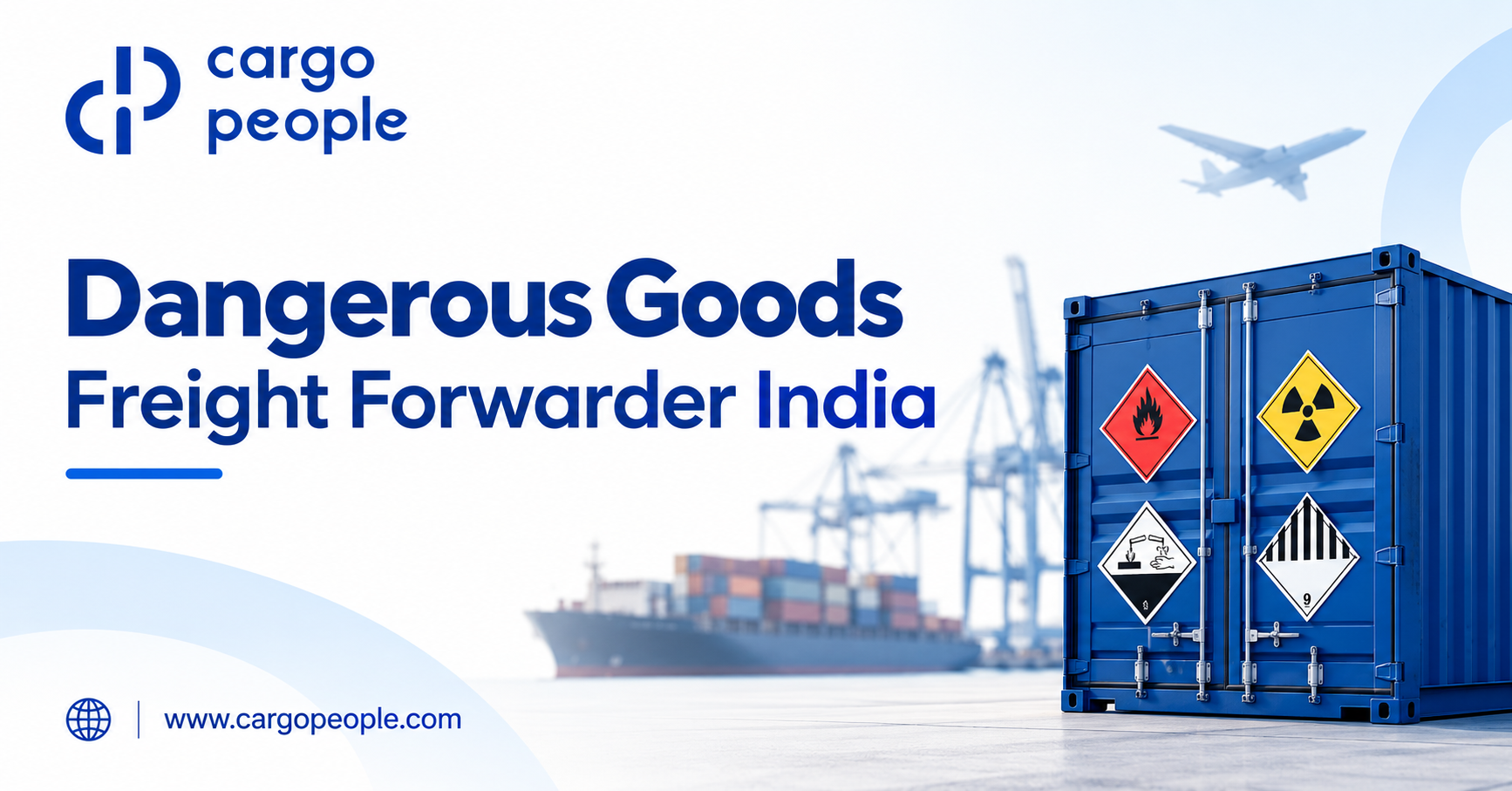
Shipping dangerous goods is very different from moving ordinary commercial cargo. Chemicals, batteries, paints, gases, aerosols, corrosive materials and other hazardous products require correct classification, approved packaging, proper labels, documentation and carrier acceptance before the shipment can move.
This is where an experienced dangerous goods freight forwarder in India becomes important.
For Indian manufacturers, importers, exporters and traders, the challenge is not simply finding an airline or shipping line. The real challenge is making sure the cargo is accepted, transported safely, cleared through Customs and delivered without unnecessary delays.
A dangerous goods shipment should ideally follow this sequence:
Product review - SDS verification - DG classification - packaging - labelling - carrier approval - freight booking - Customs clearance - final delivery
When one stage is handled incorrectly, the entire shipment can be delayed or rejected.
What Are Dangerous Goods in Freight Shipping?
Dangerous goods, commonly called DG cargo, are substances or articles that can create risks to people, property, transport equipment or the environment during transportation.
The product may be completely safe when stored or used normally but may require special precautions during air, sea or road transportation.
Common commercial examples include lithium batteries, industrial chemicals, paints, solvents, aerosols, compressed gases, acids, adhesives and certain cleaning products.
Dangerous goods are divided into 9 main hazard classes, ranging from explosives and gases to corrosive substances and miscellaneous hazardous materials.
The classification determines how the cargo must be packed, labelled, documented and transported.
For businesses, this is important because a product cannot be treated as general cargo simply because it is packed in a normal carton or drum.
The transportation classification must be checked first.
Why Dangerous Goods Freight Forwarding Is Important
Dangerous goods shipping has more compliance checkpoints than normal freight.
An ordinary export may mainly require the invoice, packing list, Customs documentation and transport document.
DG cargo can require additional technical information such as the UN number, Proper Shipping Name, hazard class, Packing Group and Safety Data Sheet.
Carriers may also have their own acceptance policies.
This means receiving a freight rate does not automatically mean that the airline or shipping line will accept the cargo.
For example, a freight forwarder may receive a rate for a 500 kg shipment, but once the carrier reviews the SDS and finds that the product belongs to a restricted hazard class, the booking may require a different aircraft, sailing or packaging method.
The compliance review therefore needs to happen before final booking.
Who Needs a Dangerous Goods Freight Forwarder in India?
Businesses involved in chemicals, batteries, engineering products, automotive components, pharmaceuticals, industrial gases and specialised manufacturing frequently need DG logistics support.
Importers bringing chemicals or batteries into India may require help with international freight as well as Indian Customs clearance.
Exporters need to ensure the shipment meets the requirements of the destination country and the selected airline or shipping line.
Manufacturers may also require DG support for regular raw material imports and finished-product exports.
Typical businesses that may use dangerous goods freight forwarding include:
- chemical manufacturers and traders
- battery and electronics companies
- automotive and engineering manufacturers
- paint, adhesive and solvent companies
Businesses should confirm the transport classification even when they are unsure whether their cargo is dangerous.
It is better to check the product before booking than discover the issue after the cargo reaches the airport or port.
Dangerous Goods Classification Comes Before Freight Booking
Classification is the first technical step in a DG shipment.
A freight forwarder generally begins by reviewing the Safety Data Sheet, commonly called the SDS or MSDS.
Section 14 of an SDS often provides transportation-related information.
This may include the UN number, Proper Shipping Name, hazard class and Packing Group where applicable.
The UN number is particularly important because it identifies the dangerous substance or article for transport purposes.
For example, a commercial invoice may describe a product as "industrial chemical".
That description is not sufficient for DG transportation.
The carrier needs to understand exactly what type of dangerous goods are being offered.
A mistake at the classification stage can affect packaging, labels, declarations and carrier acceptance.
This is why an experienced freight forwarder should review the technical information before offering the final transportation plan.
Packaging Requirements for Dangerous Goods
Dangerous goods cannot always be packed in ordinary commercial packaging.
Depending on the product classification, the shipment may require tested and approved packaging.
Common formats can include fibreboard boxes, steel drums, plastic drums, jerricans, combination packaging and Intermediate Bulk Containers.
The packaging should be suitable for the substance being transported and comply with the relevant packing requirements.
For some cargo, absorbent material, inner packaging or specialised closures may also be required.
One of the most common shipping mistakes is assuming that a strong carton is automatically suitable for DG cargo.
It is not.
A package may look physically strong but still fail the applicable dangerous goods packaging requirement.
If this is discovered after the cargo reaches the freight facility, repacking can add 1 to 3 working days or more to shipment preparation.
Labels and Marks on DG Cargo
Dangerous goods packaging needs clear hazard communication.
Depending on the product, packages may require hazard labels, UN numbers, handling marks or orientation arrows.
Additional marks may apply to specific cargo types.
The most important requirement is consistency.
If the package carries one UN number but the transport declaration shows another, the carrier may reject the shipment.
The same issue can occur if the quantity declared on the documentation does not match the actual package.
A professional DG freight forwarder should therefore check the package and documents together rather than treating them as separate tasks.
A short pre-shipment verification can prevent several days of correction later.
Air Freight for Dangerous Goods in India
Air freight is suitable when DG cargo is urgent, relatively small or commercially time-sensitive.
However, airlines generally apply strict acceptance procedures.
Depending on the product, restrictions may apply to package quantity, aircraft type, packing method and route.
Some dangerous goods can move on both passenger and cargo aircraft, while others may have stricter limitations.
The airline may also have its own operator-specific restrictions.
This creates an important distinction:
DG compliance does not automatically mean every airline will accept the shipment.
Carrier approval can sometimes take around 1 to 5 working days, depending on the product, route and documentation.
For international DG air freight, businesses should therefore allow additional preparation time before the planned departure date.
Sea Freight for Dangerous Goods
Sea freight is usually preferred for larger quantities of dangerous goods where urgency is lower.
Chemicals, industrial materials and other DG cargo can move through FCL or, where accepted, LCL arrangements.
The shipping line reviews the dangerous goods information before confirming the booking.
Sea freight also involves vessel stowage and segregation requirements.
Some dangerous goods cannot be placed near certain other substances.
As a result, a vessel may still have normal container capacity available but may not have a suitable position for a particular DG container.
This means:
Available container space does not always mean available DG space.
For this reason, DG sea freight should usually be booked earlier than normal general cargo.
Documents Required for Dangerous Goods Shipping
Documentation is one of the most important parts of DG freight forwarding.
The commercial documents remain necessary, but additional dangerous goods documents may also be required.
A typical shipment file may contain:
DocumentMain PurposeSDS / MSDSProvides technical and hazard informationCommercial InvoiceProvides value and commercial descriptionPacking ListShows package quantity, weight and dimensionsDG DeclarationProvides formal transport classificationAir Waybill / Bill of LadingMain transport documentCustoms DocumentsSupports import or export clearanceProduct ApprovalUsed where commodity-specific approval applies
The exact requirements depend on the commodity and mode of transport.
The important point is that all documents should contain consistent information.
If the SDS, invoice, declaration and package labels contradict each other, the shipment can face delays.
Customs Clearance for Dangerous Goods in India
DG cargo still needs to pass through Indian Customs like other imports and exports.
However, hazardous cargo can require additional technical documentation and more careful handling.
For imports, the Customs broker should review the HS classification, invoice, packing list and product-specific regulatory requirements before the shipment arrives.
Depending on the commodity, additional approvals may be required.
A chemical shipment, for example, may need supporting technical literature or regulatory documentation.
A battery shipment may involve different compliance considerations.
For well-prepared cargo, Customs clearance can often be planned within approximately 1 to 3 days, although actual timing depends on assessment, examination and applicable regulatory requirements.
Businesses should not treat this as a guaranteed timeline.
The best approach is pre-arrival preparation.
Common Challenges in Dangerous Goods Shipping
One of the most common problems is incomplete or outdated SDS information.
Without reliable technical information, classification becomes difficult.
Incorrect packaging is another major issue.
Cargo can reach the airport or port and then fail carrier acceptance because the package does not meet the required standard.
Document mismatch also causes frequent delays.
The invoice may show one product description while the DG declaration shows something different.
Carrier restrictions can create another challenge.
An airline that accepted the cargo on a previous shipment may not necessarily accept the same routing today if aircraft type, transit point or operational conditions have changed.
For sea freight, vessel availability and DG segregation can also affect the booking.
These problems are why dangerous goods logistics should begin several days before the intended cargo handover.
Benefits of Using a Specialist DG Freight Forwarder
The biggest benefit is risk reduction.
A specialist forwarder can review the cargo classification and identify potential problems before the shipment reaches the terminal.
This can reduce the chances of repacking, re-documentation and carrier rejection.
Another benefit is route selection.
The lowest freight rate is not always useful if the carrier cannot accept the specific cargo.
A forwarder familiar with DG movements can compare carriers based on acceptance capability as well as cost and transit time.
For regular importers and exporters, the process can also be standardised.
Once a product has been correctly classified and the packaging requirements are understood, the business can build a repeatable logistics process for future shipments.
This improves both speed and predictability.
How a Dangerous Goods Freight Forwarder in India Can Help
A professional dangerous goods freight forwarder in India should manage more than transportation.
The process normally begins with reviewing the SDS and shipment details.
The forwarder then identifies the relevant classification and checks the packaging and documentation requirements.
Suitable airline or shipping-line options can then be evaluated.
The forwarder can coordinate carrier approval, booking, cargo acceptance and international transportation.
For imports, the process may continue through Indian Customs clearance and final door-to-door delivery.
For regular shipments, the forwarder can also help establish a standard operating process covering classification, documents, packaging and carrier booking.
The result is a more predictable supply chain with fewer last-minute problems.
How Much Time Should Businesses Keep for DG Shipments?
Businesses should avoid planning dangerous goods shipments with the same lead time as general cargo.
For air freight, classification, documentation and carrier approval can add several days before departure.
A practical planning sequence could include:
Technical review: same day to 2 days
Packing and documentation: 1 to 3 days
Carrier approval: 1 to 5+ working days
The actual international transit is then added after acceptance.
For sea freight, businesses should also allow time for DG approval before vessel cut-off.
If cargo is production-critical, planning 5 to 7 days earlier can be much cheaper than paying for urgent repacking or missing a sailing.
Conclusion
Dangerous goods shipping requires careful coordination between classification, packaging, documentation, carrier acceptance, Customs clearance and final delivery.
For Indian manufacturers, importers and exporters, the biggest mistake is treating DG cargo like normal freight.
The process should begin with the SDS and transport classification before the freight booking is confirmed.
A specialist dangerous goods freight forwarder in India can help identify suitable carriers, coordinate compliant documentation and packaging, manage Customs clearance and arrange air, sea or door-to-door transportation.
Early planning can reduce carrier rejection, avoid unnecessary storage costs and make regular DG movements far more predictable.
Get Expert Assistance
👉https://cargopeople.com/blog/tag/dangerous-goods-transportation/
Website: https://cargopeople.com
Phone: +91 97174 65454
Email: wecare@cargopeople.com

 English
 Arabic
 French
 Spanish
 Portuguese
 Turkish
 Dutch
Dutch
 Italiano
 Russian
 Romaian
 Portuguese (Brazil)
 Greek
Greek
 Bengali