


How Are Returns Distributed to RWA Token Holders?
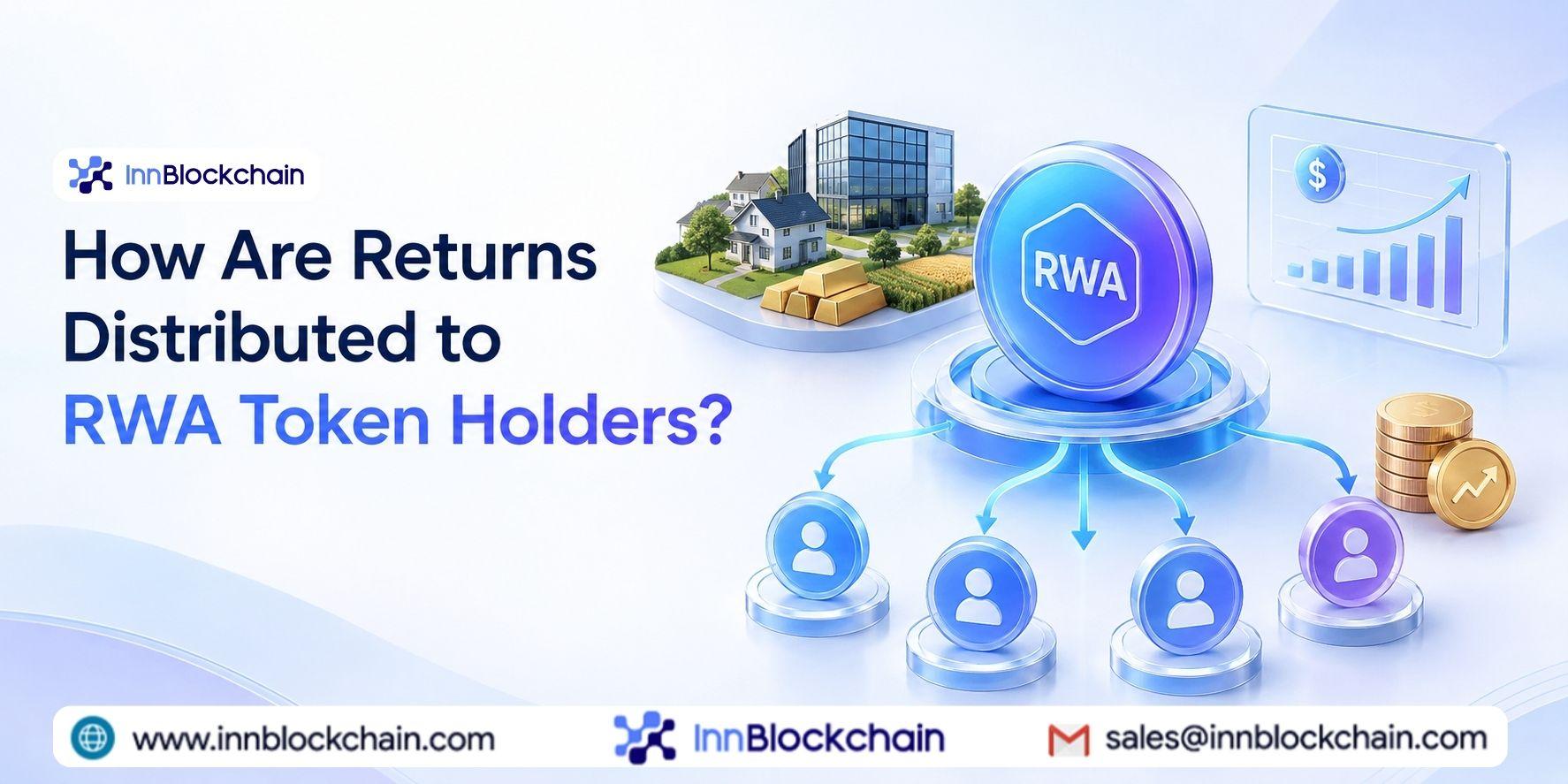
A fund manager tokenizes a rental portfolio. Units go to 300 investors in six countries. The question that lingers on every investor’s mind is “When do I get paid, and how?”
In a traditional fund, a registrar and a paying agent handle this by hand. With RWA tokenization, the ledger always shows who holds what. Payouts get faster and easier to audit. This only works if the legal and technical setup is right from day one.
Below, you'll see how income moves from the asset to the holder, which payout models exist, and what changes under EU and US rules.
Where the Money Comes From
A token does not hold cash. It is a claim on an asset, usually held through a special purpose vehicle (SPV). An SPV is a company that owns the asset and nothing else. It earns the income. The token proves the investor's share.
The SPV pays out in a fixed order like,
-
Income arrives (rent, interest, sale proceeds).
-
Costs, taxes and fees are paid.
-
A reserve is set aside for repairs or defaults.
-
What is left is distributed.
Here is an example.
A €10 million building earns 6% net rent, or €600,000 a year. Paid quarterly, that is €150,000 per cycle. An investor holding 1% of the tokens receives €1,500 each quarter.
How Payouts Reach Token Holders
Every payout starts with a record date. On that date, the system takes a snapshot of all verified wallets and their balances. Each holder's share is their tokens divided by the total supply.
The money then moves in one of three ways.
-
Stablecoin or e-money token: a smart contract sends each share directly. Settlement takes minutes.
-
Fiat through a paying agent: the SPV pays a bank. The bank pays each investor's registered account. It is slower but familiar to institutions.
-
Reinvestment in new tokens: the payout becomes extra units. Funds that compound often use this.
Manual reconciliation across hundreds of investors can take days. An automated run finishes in one pass and leaves an on-chain record.
|
Return type |
Source |
Typical payout |
Frequency |
|
Rental income |
Tenants of a building or portfolio |
Cash or stablecoin |
Monthly or quarterly |
|
Interest or coupon |
Loans, bonds, invoices |
Cash or stablecoin |
Monthly, quarterly or at maturity |
|
Profit share or dividend |
Operating business or fund profits |
Cash, stablecoin or new tokens |
Annual or semi-annual |
|
Capital gain |
Sale of the asset |
Lump sum on exit |
Once, at sale |
|
Redemption proceeds |
Investor exit or buy-back |
Cash at current valuation |
On request or at set windows |
What the Asset Owner Still Controls
Automation does not remove the owner's say. For each payout, the owner or administrator still decides.
-
Eligibility: only wallets that passed identity checks get paid. Failed or expired wallets are held back.
-
Lock-up terms: units can stay non-transferable for a set period. This also fixes who is on the register at the record date.
-
Frozen or recovered wallets: if an investor loses access or a court order applies, the administrator can pause or reissue the position.
-
Reserves and timing: the SPV sets how much to retain before each run, within its legal documents.
Investors get faster payment and verified access. Owners get less manual reconciliation and fewer payout errors.
EU and US: What Changes
The mechanics are similar on both sides of the Atlantic. The legal treatment is not.
EU: tokens with profit rights are generally financial instruments. Prospectus and MiFID II-style rules apply, not crypto-asset rules. Distributions usually need a regulated paying agent. Investors may face withholding tax, depending on their country.
US: these tokens are usually securities. They are often sold under a private exemption, such as Regulation D (US investors) or Regulation S (offshore). Payouts are reported on tax forms such as 1099 or K-1. Holders may need to be accredited.
In both regions, settle three things before launch.
-
Which entity pays?
-
From which account?
-
Who reports to the tax authorities?
A strong RWA tokenization development team builds these answers into the contract logic. They are hard to add later.
Before You Commit
Returns are only as reliable as the structure behind them. Before you build, ask for a candid read on three points.
Is the asset's income documented?
Is the SPV sound?
Does the payout route suit your investors' home markets?
The review costs little and prevents redesigns.
Visit: https://www.innblockchain.com/solutions/rwa-tokenization

 English
 Arabic
 French
 Spanish
 Deutsch
 Turkish
 Dutch
Dutch
 Italiano
 Russian
 Romaian
 Portuguese (Brazil)
 Greek
Greek
 Bengali