


Improving Air Circulation in Large Factory Spaces
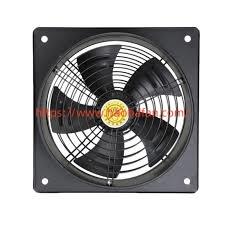
Large industrial buildings can accumulate heat, humidity, dust, fumes, and other unwanted air contaminants when natural or mechanical air exchange is insufficient. Effective ventilation helps remove this accumulated air and replace it with cleaner air from appropriate intake points. For many workshops, warehouses, manufacturing plants, and commercial structures, selecting a suitable Factory Roof Ventilation Fan can become an important part of an overall air management strategy, particularly where warm air naturally rises and collects beneath the roof.
Roof-mounted ventilation works by using the upper section of a building as a primary exhaust point. As warm air rises, mechanical equipment can help remove it from the interior and encourage fresh air to enter through designated openings or supply systems. This approach can improve air circulation throughout large spaces where wall-mounted equipment alone may not provide sufficient coverage. Proper airflow planning is therefore essential before selecting ventilation equipment for a specific building.
The physical design of the fan has a direct influence on its ability to perform in an industrial environment. Housing materials need to withstand continuous exposure to temperature changes, humidity, dust, and other environmental conditions. A robust structure can also help maintain stable positioning when the equipment is installed on a roof or elevated platform. Depending on the building and application, protective surface treatment may provide additional resistance against corrosion and long-term environmental exposure.
The motor and rotating assembly are equally important. Continuous roof ventilation can require long operating periods, making motor reliability a significant consideration for facility managers. Proper alignment between the motor and impeller helps minimize vibration, while suitable bearings and accurately assembled components can contribute to smoother operation. Manufacturing accuracy becomes particularly important because excessive vibration may transfer through mounting structures and eventually affect surrounding building components.
Airflow efficiency should also be evaluated as part of the complete ventilation system rather than by looking at the fan alone. Roof ventilation equipment works together with intake openings, ducts where applicable, louvers, filters, and the building layout. If intake areas are insufficient, an exhaust fan may not achieve the desired air exchange. Similarly, poor placement can create dead zones where air remains stagnant. A professional ventilation plan should therefore consider air movement across the entire facility.
Noise is another practical issue for industrial facilities. Although some factory environments naturally have higher background noise, unnecessary fan noise can still affect workers and nearby areas. Aerodynamic turbulence, mechanical vibration, impeller imbalance, and structural resonance can all contribute to unwanted sound. Accurate balancing and appropriate installation methods can help reduce mechanical noise, while proper airflow design can minimize turbulence.
Weather exposure also needs to be considered for roof-mounted equipment. Rain, sunlight, wind, dust, and seasonal temperature changes can place additional demands on outdoor components. Suitable housing construction, protective finishes, secure mounting, and appropriate electrical protection can help improve reliability. Regular inspections are also useful for identifying loose fasteners, accumulated debris, surface deterioration, or other conditions that may gradually affect performance.
Maintenance planning should begin at the purchasing stage. Industrial ventilation equipment is easier to manage when inspection and service points can be accessed without unnecessary downtime. Cleaning the impeller and housing can help prevent dust accumulation from affecting airflow and rotational balance. Periodic checks of bearings, fasteners, electrical connections, and mounting structures can also help identify potential problems before they become major failures.
For facility operators, the value of roof ventilation extends beyond temperature control. Better air exchange can help remove unwanted airborne contaminants, support more stable working conditions, and reduce the accumulation of excessive heat in production areas. In some buildings, effective ventilation may also reduce the workload placed on other cooling or air-conditioning systems, potentially improving overall energy management.
When selecting equipment, buyers should consider building size, roof structure, airflow requirements, operating environment, maintenance access, and expected operating schedule. Working with an experienced manufacturer can make it easier to match equipment characteristics with actual facility conditions. Taizhou Haoba Electromechanical Co Ltd. provides industrial ventilation solutions for different building applications, and more information about its product range is available at https://www.haobafan.com/product/mixed-flow-fan/.

 English
 Arabic
 French
 Spanish
 Portuguese
 Deutsch
 Turkish
 Dutch
Dutch
 Italiano
 Russian
 Portuguese (Brazil)
 Greek
Greek
 Bengali