


Choosing Pump Equipment for Industrial Processes
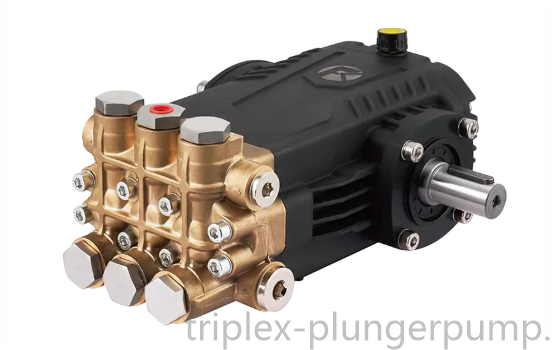
Industrial processes often require reliable equipment capable of moving fluids consistently through repeated operating cycles. The performance of a pump depends on the interaction between its working components, materials, sealing system, valves, drive mechanism, and installation conditions. A Plunger Pump uses reciprocating movement to displace fluid through a controlled sequence, making its construction an important consideration for applications where stable operation and dependable fluid movement are required. Understanding the basic factors affecting its performance can help users make more practical equipment decisions.
The operating principle is based on the movement of a plunger inside a working chamber. As the plunger moves through its cycle, pressure conditions change within the chamber, allowing fluid to enter and leave through designated flow paths. Valves control the direction of fluid movement and help separate the intake and discharge stages. The accuracy of this sequence influences the consistency of the overall operation, which makes proper component manufacturing and assembly particularly important.
Material selection should reflect the characteristics of the working fluid. Components that come into direct contact with the fluid may experience chemical exposure, moisture, temperature changes, or mechanical effects caused by suspended particles. Structural components must also withstand repeated mechanical forces. Different materials provide different combinations of strength, corrosion resistance, hardness, and wear resistance. Choosing suitable materials according to the actual process conditions can help reduce premature deterioration and unnecessary maintenance.
The plunger and surrounding surfaces require appropriate dimensional accuracy and surface quality. Repeated movement creates continuous interaction between the moving component and its sealing area. If the surfaces are poorly finished or incorrectly aligned, friction and wear may increase. Manufacturing precision therefore contributes directly to stable mechanical movement. Regular inspection can help identify surface damage, unusual wear patterns, or other changes that may affect operating performance.
Sealing components are essential for controlling fluid leakage. Because the plunger moves continuously during operation, the sealing arrangement must accommodate movement while maintaining an effective barrier. Seal materials need to be compatible with the working fluid and operating temperature. Installation procedures also matter because incorrect compression, contamination, damaged surfaces, or poor alignment can reduce sealing effectiveness. Monitoring the sealing area during routine service can help operators identify developing problems early.
Valves must respond consistently to pressure changes throughout each operating cycle. Repeated opening and closing can gradually affect contact surfaces and other internal components. If the working fluid contains particles or deposits, valve movement may become less reliable. Appropriate fluid management and regular inspection can help maintain the condition of these components. When maintenance is required, compatible replacement parts should be selected to preserve the intended operating relationship.
The drive mechanism also influences the overall stability of the equipment. Shafts, bearings, connecting components, and other mechanical parts experience repeated loads as the plunger moves. Proper alignment can reduce unnecessary friction and vibration. A stable foundation provides additional support and helps prevent unwanted movement during operation. If noise or vibration changes noticeably, operators should inspect alignment, lubrication, mounting conditions, and component wear to identify the underlying cause.
Application conditions should be evaluated before selecting equipment. Fluid composition, viscosity, temperature, required pressure, operating frequency, duty cycle, and installation environment can all affect equipment suitability. A system handling clean fluids may have different material and maintenance requirements from one exposed to abrasive particles or aggressive chemicals. Continuous operation may also require a more structured inspection schedule than intermittent use.
Maintenance planning can support longer and more predictable service. Operators can periodically inspect seals, valves, connections, moving components, and lubrication points. Early signs of leakage, vibration, noise, or unusual operating behavior should be investigated rather than ignored. Timely replacement of worn components can reduce the possibility of secondary damage and unexpected downtime.
Installation should also be considered as part of the complete equipment selection process. Piping should be arranged so that unnecessary mechanical stress is not transferred to pump connections. The mounting structure should provide sufficient stability, while adequate space should be maintained around the equipment for inspection and servicing. Environmental conditions such as moisture, dust, chemical exposure, and temperature changes may also influence maintenance requirements.
For industrial users, selecting a Plunger Pump requires more than comparing individual equipment specifications. Fluid characteristics, material compatibility, sealing performance, valve construction, mechanical alignment, operating conditions, and maintenance requirements should all be considered together. A systematic approach can help users establish a more dependable pumping arrangement and reduce avoidable service issues. Further information about available pump products and configurations can be found at https://www.triplex-plungerpump.com/product/pumps/ when evaluating suitable solutions.

 English
 Arabic
 French
 Spanish
 Deutsch
 Turkish
 Dutch
Dutch
 Italiano
 Russian
 Romaian
 Portuguese (Brazil)
 Greek
Greek
 Bengali