


Why Can Showing the Lowest Price First Attract Clicks but Weaken Purchase Confidence?
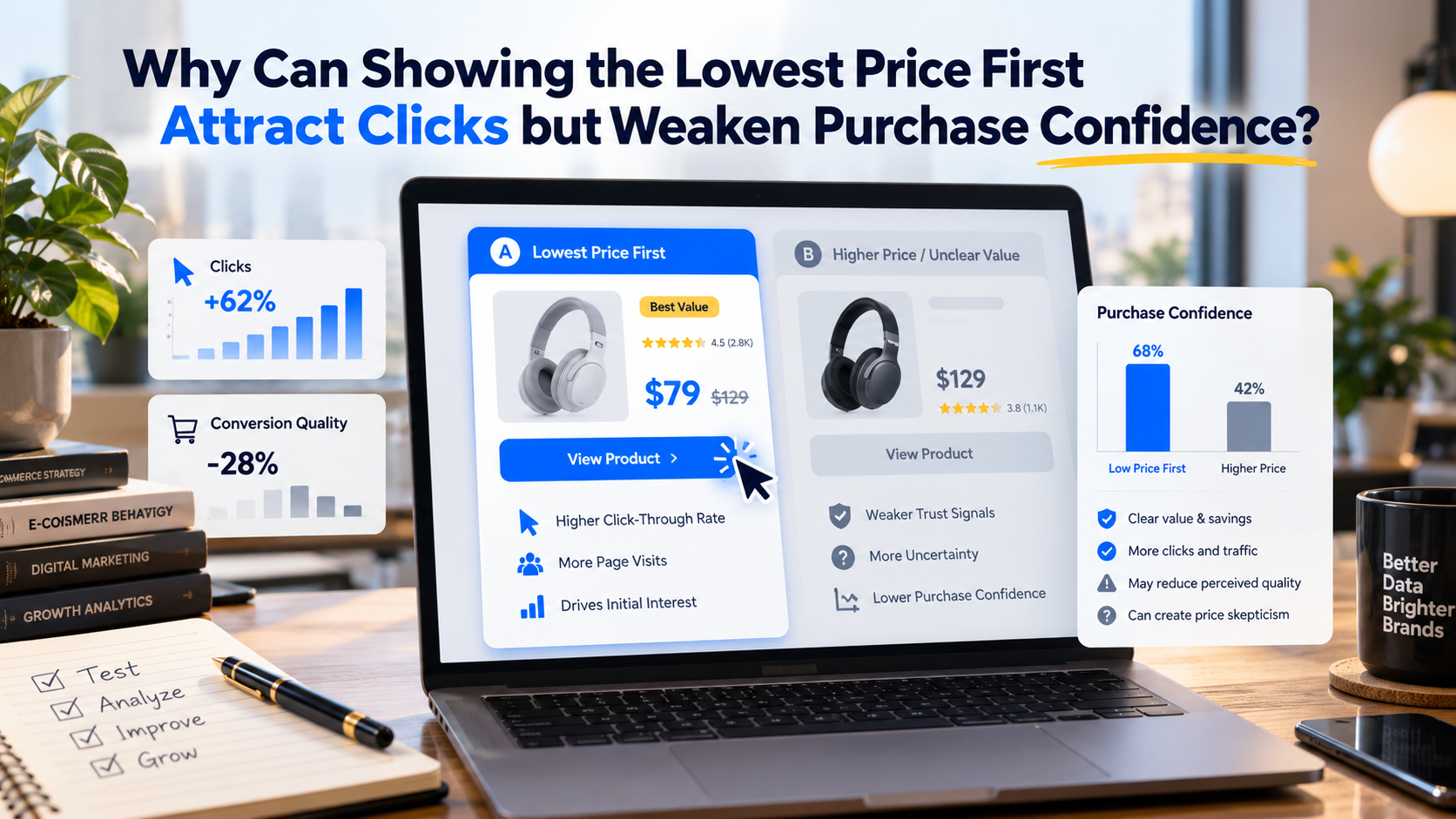
Price is one of the fastest ways to attract attention in paid advertising. A low starting price can make an advertisement feel relevant, affordable, and worth exploring. It may increase clicks because potential customers immediately understand one part of the offer.
However, the same pricing message can weaken trust when the amount shown in the advertisement does not match what most customers will actually pay.
A successful price anchoring in paid advertising strategy must attract attention without creating unrealistic expectations. If users click because of the lowest possible price but discover higher costs, conditions, or necessary upgrades later, the campaign may produce strong engagement while reducing purchase confidence.
Why Low Prices Generate Immediate Attention
Customers often use price as a quick filtering tool. Before they study features, quality, or long-term value, they want to know whether an offer appears affordable.
This makes price-focused advertising useful for:
· Entering a competitive market
· Promoting a genuine discount
· Introducing a lower-cost package
· Reaching price-sensitive customers
· Communicating a simple product offer
· Encouraging comparison shopping
The problem begins when the advertised price represents an uncommon version, excludes necessary costs, or requires conditions that are not clearly explained.
The advertisement may still achieve a high click-through rate, but the landing page then creates surprise instead of confidence.
Where Price-First Advertising Creates Friction
The Advertised Price Is Not the Typical Price
Businesses sometimes promote the cheapest possible option even when most customers need a more expensive package.
A service may advertise a low monthly rate that only applies to a limited plan. A product may appear inexpensive before delivery, installation, accessories, or required upgrades are added. A software company may promote a per-user price without explaining the minimum number of users.
The stated amount may be technically accurate, but it does not reflect the usual customer experience.
A skilled creative strategist should consider whether the advertised price helps prospects understand the offer or simply creates a reason to click.
The Landing Page Changes the Meaning of the Offer
An advertisement might use language such as “starting from,” but the landing page may not explain what the starting package includes.
If customers cannot determine whether the entry option meets their needs, they may assume the business is hiding information. Uncertainty can become more damaging than a higher but clearly explained price.
The advertisement and landing page should use the same pricing language, conditions, and offer structure.
The Low Price Attracts the Wrong Audience
A price-led advertisement can attract people whose main priority is finding the cheapest available option.
That audience may not value quality, customization, support, experience, or long-term results. When the sales team explains the complete offer, these leads may decide that the service is too expensive.
The campaign has not necessarily failed to reach interested people. It has attracted people whose expectations do not match the business model.
The Price Appears Too Low to Be Credible
A low price does not always create a positive reaction.
For professional services, technical products, healthcare, education, and high-value purchases, an unusually low price can create doubt. Customers may question quality, reliability, experience, safety, or the level of support included.
Price should reduce uncertainty, not create a different form of risk.
When Should Price Appear in the Advertisement?
There is no universal rule. The decision depends on the product, audience, sales process, and competitiveness of the market.
Price is usually helpful when:
· The product is straightforward
· The amount is easy to understand
· Most customers pay approximately the advertised price
· The offer does not require detailed customization
· Price is a major competitive advantage
· Additional costs can be explained briefly
· Customers actively compare similar options
Price may require more context when the offer depends on scope, usage, company size, implementation, location, or customer requirements.
Professional paid advertising services should test price communication as part of the complete campaign journey rather than judging it only through clicks.
How to Use Price Without Weakening Trust
1. Clarify What the Price Includes
Customers should understand what they receive for the advertised amount.
Instead of displaying only “Plans from $49,” the advertisement or landing page can briefly explain the type of customer, usage level, or features included in the starting plan.
This prevents users from imagining a more complete offer than the business is providing.
2. Explain Important Conditions Early
If the price requires an annual contract, minimum order, limited usage, specific location, or separate installation charge, customers should see that information before they invest significant time.
Not every condition must appear inside a small advertisement. However, the landing page should make essential details easy to find.
Transparency may reduce the total number of clicks, but it can improve the quality of the remaining traffic.
3. Connect Price to a Meaningful Outcome
Price becomes easier to evaluate when customers understand the value behind it.
A software subscription can explain which manual tasks it replaces. A marketing service can clarify the strategy, creative work, campaign management, or reporting included. A product can highlight durability, convenience, support, or another relevant benefit.
The goal is not to justify every price with exaggerated claims. It is to provide enough context for an informed comparison.
4. Present Options Without Creating Confusion
Multiple packages can help customers find a suitable level of service, but too many choices may create hesitation.
Each option should serve a clear type of customer or requirement. The differences should be meaningful rather than based on complicated feature combinations.
A simple structure might include:
· An entry option for basic needs
· A standard option for the most common requirements
· An advanced option for greater scope or support
The campaign can promote the most relevant option instead of always leading with the lowest one.
5. Use Proof to Support the Value
Case studies, reviews, demonstrations, and practical examples can help customers understand why an offer costs what it does.
Proof should relate to the outcome or concern being evaluated. General praise may create reassurance, but specific evidence is usually more useful when customers compare price and value.
Relevant campaign case studies can demonstrate how advertising, creative strategy, and business outcomes are connected without relying only on promotional claims.
How to Test Price Messaging Properly
Businesses should avoid comparing advertisements only by click-through rate or cost per click.
A low-price message may win the click but lose the sale. A value-focused message may generate fewer clicks while producing stronger conversion quality.
Useful metrics include:
· Landing-page conversion rate
· Cost per qualified lead
· Add-to-cart or checkout rate
· Sales-call booking rate
· Lead-to-customer conversion rate
· Average order or contract value
· Refund and cancellation rate
· Revenue generated per advertising dollar
Marketers can test several approaches:
1. Showing the complete price
2. Using a genuine starting price
3. Presenting a price range
4. Promoting value without showing price
5. Showing the most popular package
6. Explaining savings or long-term cost
Each test should keep other major campaign elements as consistent as possible. Otherwise, the team may not know whether the result came from the price, creative, audience, or offer.
Common Pricing Message Mistakes
One mistake is using a low price to maximize clicks while ignoring lead quality. Another is hiding conditions in small text that most users will not notice.
Businesses can also weaken trust by using discounts continuously. If every advertisement claims that the offer is ending soon, customers may stop believing the urgency.
Another problem is changing the price message across different stages. The advertisement, landing page, sales representative, and checkout process should communicate a consistent offer.
Finally, businesses should not assume that lower prices always produce better results. Some customers use price as an indicator of quality, expertise, or risk. The right price message should attract people who understand and value the complete offer.
Final Thoughts
Showing the lowest price first can increase attention, but it can also create expectations the business cannot maintain.
Effective price anchoring in paid advertising requires clarity about what the amount includes, which customers it suits, and what additional conditions may apply. The advertisement should create interest while the landing page provides enough context for a confident decision.
Campaigns should be evaluated by qualified leads, customers, revenue, and long-term satisfaction—not clicks alone.
When pricing, creative, and the customer journey communicate the same value, businesses can attract attention without sacrificing trust.
Frequently Asked Questions
1. What is price anchoring in paid advertising?
Price anchoring is the use of a specific price or comparison point to shape how customers evaluate the cost and value of an offer.
2. Should every advertisement include a price?
No. Price is most useful when it is easy to understand and accurately represents what customers normally pay. Complex or customized offers may require additional context.
3. Can showing a higher price improve lead quality?
Yes. A realistic price can discourage unsuitable prospects and attract people whose budgets and expectations match the offer.
4. Is it acceptable to use “starting from” pricing?
Yes, provided the starting option is genuinely available, useful to a reasonable group of customers, and clearly explained.
5. Which metric should be used to judge price-focused advertisements?
Businesses should prioritize qualified lead cost, sales conversion, average customer value, and revenue instead of judging performance only by clicks.

 English
 Arabic
 French
 Spanish
 Portuguese
 Deutsch
 Turkish
 Dutch
Dutch
 Italiano
 Russian
 Portuguese (Brazil)
 Greek
Greek
 Bengali