


How Office Layout & Interior Design Can Improve Employee Productivity
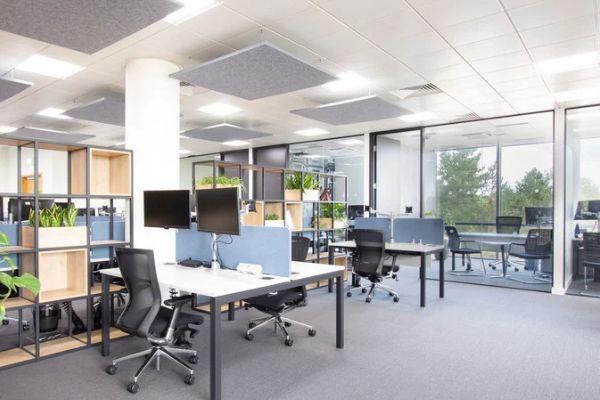
An office is more than a place where employees complete their daily tasks. The way a workspace is planned can influence concentration, communication, creativity, comfort, and even how employees feel about coming to work every day. Poor layouts can create distractions and unnecessary movement, while thoughtfully designed offices can support productivity and collaboration.
This is why businesses increasingly consider professional commercial interior design an investment rather than simply an aesthetic expense. Working with an experienced commercial interior designer in Mumbai can help organisations create workplaces that balance functionality, employee needs, and brand identity.
Here are some of the most important ways office layout and interior design can contribute to a more productive workplace.
1. Smart Space Planning Improves Workflow
A productive office begins with an efficient layout. Employees should be able to move between their desks, meeting rooms, collaborative areas, and common facilities without unnecessary interruptions.
Effective office space planning considers how different teams work and interact. Departments that collaborate frequently can be positioned closer together, while employees requiring concentration can have access to quieter zones.
A commercial interior designer in Mumbai can analyse available floor space and develop a layout that improves movement while making better use of every square foot.
2. Natural Light Can Create a Better Work Environment
Lighting has a major influence on how a workplace feels. Dark or poorly illuminated offices can make spaces appear smaller and less inviting, while balanced lighting can create a brighter and more comfortable working environment.
Where possible, workstations should be positioned to benefit from natural light without causing excessive glare on screens. Artificial lighting should then complement the available daylight.
An experienced office interior designer can combine ambient, task, and accent lighting to create different environments for workstations, meeting rooms, reception areas, and collaborative spaces.
3. Ergonomic Furniture Supports Employee Comfort
Employees may spend several hours sitting at their workstations every day. Uncomfortable chairs, incorrect desk heights, and poorly positioned monitors can make it difficult to remain focused for extended periods.
Ergonomic furniture should therefore be an important part of workspace design.
A professional commercial interior designer in Mumbai can help plan appropriate workstation dimensions, seating, desk arrangements, and circulation areas. The objective is to create a workplace where employees can work comfortably without compromising the overall design language of the office.
4. Create Different Zones for Different Types of Work
Not every task requires the same environment.
Employees may need quiet spaces for focused work, meeting rooms for discussions, open areas for collaboration, and informal spaces for quick conversations. Trying to accommodate every activity in one open-plan area can lead to unnecessary distractions.
Modern corporate interiors increasingly use zoning to solve this challenge. Acoustic meeting rooms, individual focus areas, collaborative tables, breakout zones, and informal seating can all coexist within the same workplace.
A commercial interior designer in Mumbai can determine how these zones should be positioned based on the organisation's working style and available area.
5. Acoustics Can Reduce Workplace Distractions
Noise is one of the most common challenges in open offices. Phone calls, meetings, conversations, and general movement can interrupt employees who need concentration.
Thoughtful commercial interior design can help manage acoustics through partitions, acoustic panels, ceiling treatments, carpets, upholstered furniture, and strategic space planning.
Instead of eliminating communication, the objective is to control how sound travels through the workplace.
This is particularly important when designing offices where sales teams, creative departments, management, and client-facing teams operate within the same space.
6. Colours and Materials Influence the Workplace Experience
Colours, textures, finishes, and materials determine the overall character of an office.
Neutral palettes can create a clean and sophisticated atmosphere, while carefully selected accent colours can add energy and reinforce brand identity. Natural materials, plants, warm textures, and contemporary finishes can also make corporate spaces feel more welcoming.
A skilled commercial interior designer in Mumbai can develop a visual language that supports the company's personality without making the workplace distracting or excessively decorative.
7. Collaborative Spaces Encourage Better Interaction
Some of the most valuable workplace conversations do not happen inside formal conference rooms.
Informal meeting areas, brainstorming zones, shared tables, breakout spaces, and comfortable discussion corners can encourage employees to exchange ideas more naturally.
Good workspace design provides these collaborative areas without disturbing employees engaged in focused work. This balance is particularly important for creative agencies, technology companies, consulting firms, and other businesses where teamwork plays an important role in everyday operations.
8. A Well-Designed Office Can Strengthen Brand Identity
Your office is also a physical representation of your business.
Clients, candidates, employees, vendors, and partners form impressions about an organisation when they enter its workplace. Reception areas, meeting rooms, signage, materials, colours, graphics, and furniture can communicate whether a company feels innovative, premium, creative, traditional, or approachable.
An experienced commercial interior designer in Mumbai can translate brand identity into physical space without relying solely on logos and brand colours.
Thoughtfully designed corporate interiors create a consistent experience for both employees and visitors.
9. Flexible Design Helps Offices Adapt
Businesses evolve. Teams expand, departments change, and working styles develop over time. An office designed only around current requirements may become inefficient as the organisation grows.
Flexible office space planning can include modular workstations, movable partitions, multipurpose meeting areas, adaptable furniture, and spaces that can serve different functions.
A professional commercial interior designer in Mumbai can consider both immediate requirements and future flexibility during the planning stage. This can reduce the need for major redesigns whenever workplace requirements change.
10. Employee-Centric Design Can Improve the Overall Workplace
Productivity is not only about fitting more desks into an office. Employees need an environment where they can focus, communicate, take short breaks, and work comfortably throughout the day.
A thoughtful office interior designer considers ventilation, lighting, acoustics, movement, privacy, storage, collaboration, and visual comfort as interconnected elements.
When employees are provided with a workplace designed around how they actually work, the office can become a tool that supports performance rather than simply a physical location.
Creating Productive Workspaces with Richwood Interio
Every organisation has different teams, workflows, brand values, and space requirements. This is why effective office interiors should be customised rather than based on a standard template.
For businesses looking for a commercial interior designer in Mumbai, Richwood Interio offers commercial interior solutions focused on combining practical planning with contemporary aesthetics. From space optimisation and 2D/3D visualisation to material selection and turnkey execution, a structured design approach can help transform an ordinary office into a functional and professional workplace.
The objective of good commercial interior design is ultimately to create an environment that works for both the business and the people using it every day.
Conclusion
Office design can directly influence how employees move, communicate, collaborate, concentrate, and experience their workplace. Smart layouts, comfortable furniture, appropriate lighting, acoustic planning, flexible work zones, and thoughtful branding can collectively create an environment that supports better work.
Choosing the right commercial interior designer in Mumbai allows businesses to approach these elements strategically rather than treating interior design as decoration alone.
A well-planned workplace should reflect the organisation's identity while supporting the practical needs of its employees. When functionality, comfort, aesthetics, and intelligent planning come together, the office becomes more than a workspace it becomes an environment designed to help people and businesses perform at their best.

 Arabic
 French
 Spanish
 Portuguese
 Deutsch
 Turkish
 Dutch
Dutch
 Italiano
 Russian
 Romaian
 Portuguese (Brazil)
 Greek
Greek
 Bengali